At Tacoma library, accessing social services is as easy as checking out a book
AI-generated summary reviewed by our newsroom.
- Tacoma Public Library hired a social worker to link patrons with services.
- Program served 224 patrons in 2024 and 329 in 2025; salary under $112,000.
- Council expanded camping bans near libraries, risking reduced access and trust.
Tacoma Public Library has invested in social-work staff to help connect people with the assistance and programs they need. The program started with one employee but has expanded with help from interns from the University of Washington Tacoma.
The goal is to make accessing social services as easy as checking out a library book.
While the library invests in new resources and opportunities for its most disadvantaged patrons, some people worry that new policies are discouraging them from utilizing what is available.
Samie Iverson is the library social worker for public libraries in Tacoma. In an interview with The News Tribune, Iverson said when she started the position at the beginning of 2024 it was a “brand-new role.”
“Leadership seemed passionate about it being a need in the city,” she said. “I was told, ‘We have ideas, but we really want you to take the lead on how this looks,’ and that was probably the most enticing part of being in this role.”
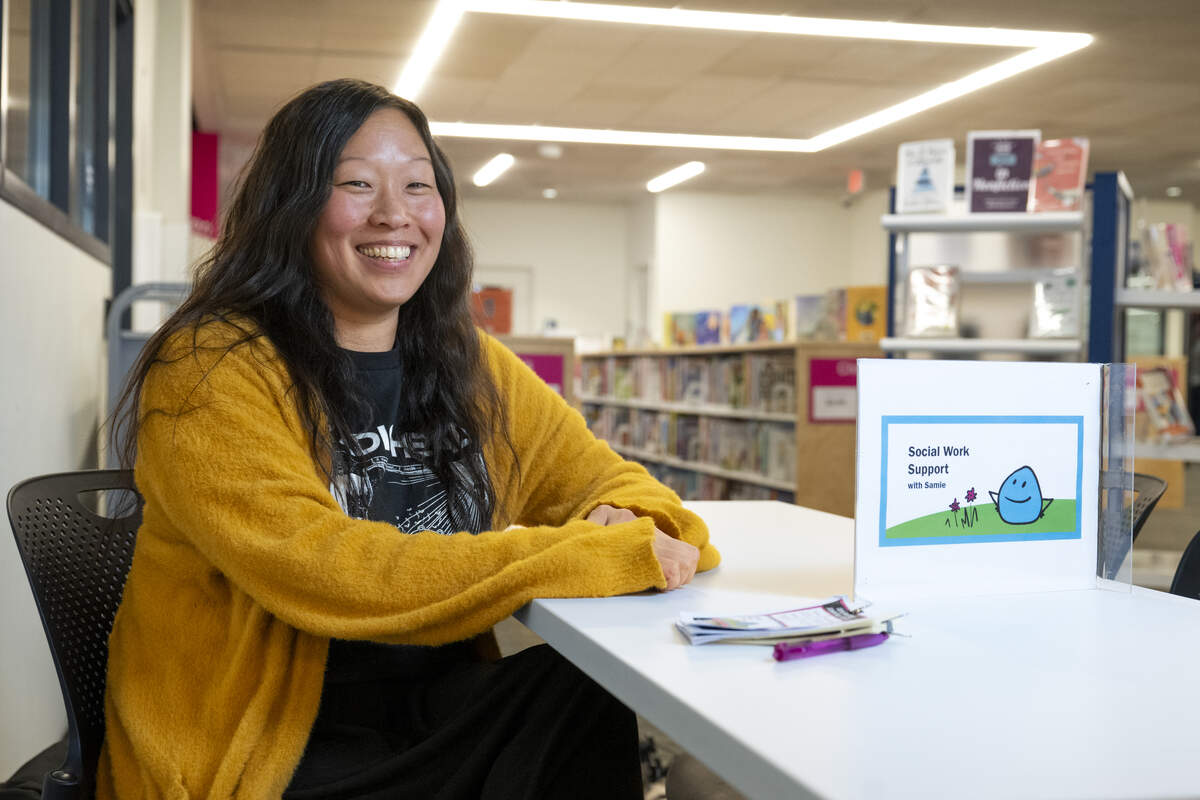
Before taking the job, Iverson had more than a decade of experience helping people navigate social services. She previously worked for the Tacoma Housing Authority, various non-profits and as a Mckinney-Vento liaison helping housing-unstable students at Tacoma Public Schools.
What excited her about the role with Tacoma’s public libraries was that it was centered around interacting with library patrons and building relationships around the community.
“Being at this table and being in front of people is non-negotiably part of what I do,” she said.
She also said she enjoys the flexibility and variability of her job. Iverson said her work is always changing and revolves around whatever a library patron might need. It starts with being accessible and approachable inside the library, she said.
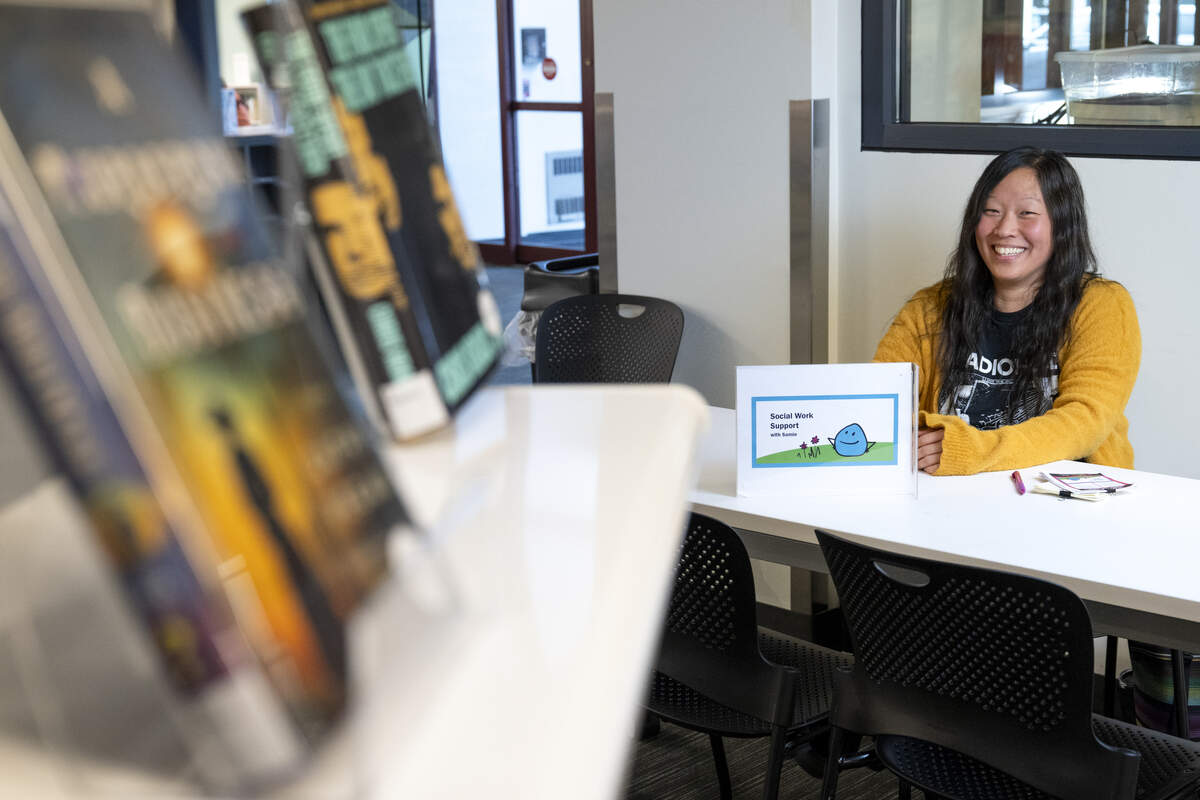
“I sit at a table, people come up to me. And I try my absolute best to never, ever approach folks, and have those folks approach me,” she said. “I do that with intention because I don’t want to interrupt or take away anyone’s autonomy, and I don’t want to make judgment on what people may need.”
The help Iverson can offer isn’t limited or specifically defined. Sometimes she helps to answer a question. Other times she helps someone navigate their way to a resource or service provided by another organization.
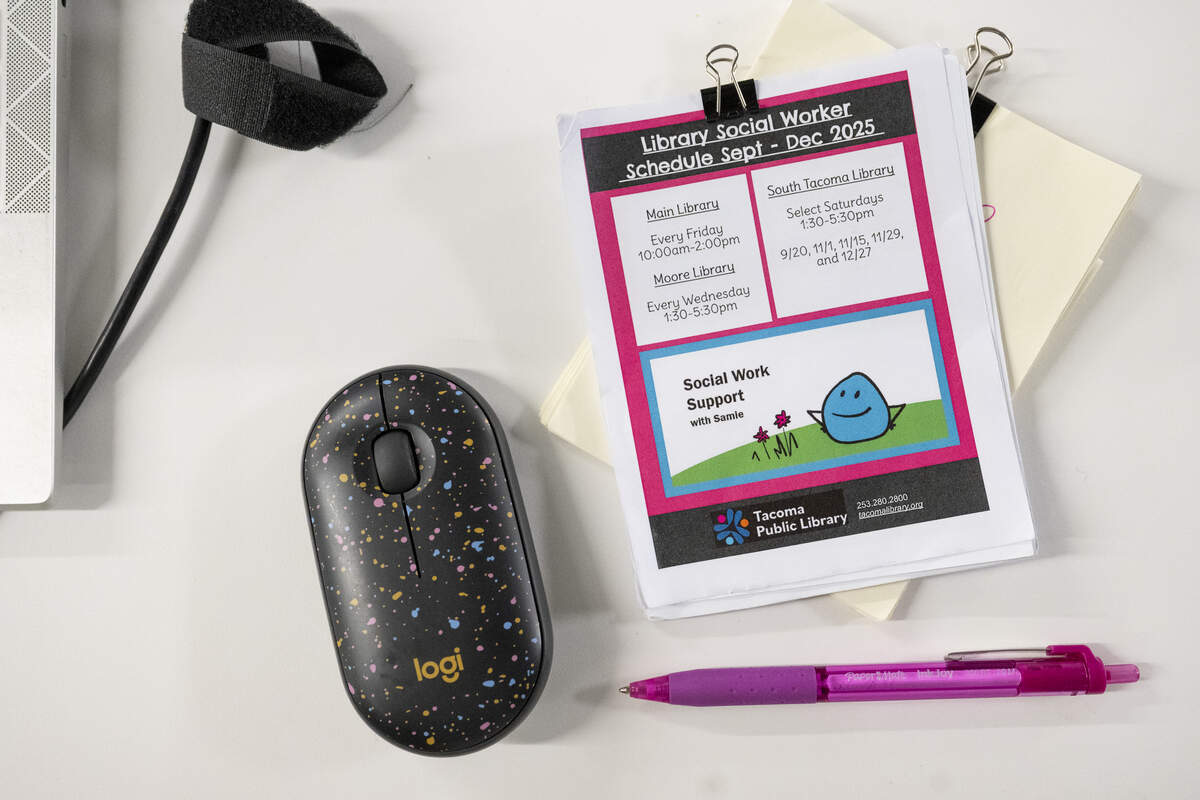
“It can be, ‘Let’s look at this resume.’ It can be, ‘Let me call the detox center and see if they have room for you to go today,’” she said. “The range is insanely wide. It takes a lot of learning together.”
Iverson said the “bright spots” and little wins every day make the work worth it.
She remembered how good it felt to help an individual get a pro bono lawyer to take their case. Their application for supplemental security income had been denied several times by the Social Security Administration, and they needed a lawyer to help them appeal.
‘Doing social work ad hoc’
In June, the University of Washington Tacoma partnered with Tacoma Public Libraries to offer two social work interns to assist Iverson in connecting library patrons with social services.
“Libraries have been doing social work ad hoc, by and large,” said Nathan Ransley, one of the UWT interns, during a presentation to the Tacoma Pierce County Coalition to End Homelessness on Nov. 7. “And now, we are giving them a break and actually hiring social workers.”
Spokesperson for Tacoma Public Library, Mariesa Bus, told The New Tribune the only cost of the program was the social worker’s salary - listed on the city’s website as under $112,000 per year.
When asked how the city measures the program’s success, Bus said Iverson maintains anonymous statistics of all interactions, including what services were provided, age ranges of clients and housing status.

“This allows her to see year to year who she is serving, who may be missed and what the trends are for people visiting the library and needing assistance,” she said. “Housing continues to be the greatest presenting issue.”
Iverson said she worked with 229 library patrons during the program’s first year in 2024. As of Dec. 5, the program assisted 329 people in 2025.
Similar programs around the nation
The library’s social-services program is based on similar programs around the country, like in Denver and the nation’s first program in San Francisco.
The programs are part of a recognition that libraries are an important public resource for some of the community’s most disadvantaged patrons — those living unhoused.
Iverson said if she had to guess, upwards of 90% of the patrons she assists are people living homeless.
She said Tacoma’s libraries not only offer assistance to access social services, they also are a place for folks to get inside and take a moment to warm up, charge their phone or use the restroom.
The City of Tacoma uses its libraries as a place where those living unhoused can come to shelter during inclement cold weather - but they are only available during normal library hours.
Iverson said the libraries get heavy usage from the homeless community during the cold weather, and it can be hard on folks when the library is closed on the weekends.
“I think that people know when we are open, and they feel when we are closed,” She told The News Tribune.
On Nov. 7, Ransley said with the recent closure of local day shelters, such as Nativity House, there has been an increase in patron needs. He said the libraries are one of the community’s “final bastions” for people living unhoused.
“A liminal space where people can just go to be,” Ransley said.
Library program v. camping ban
Some worry that Tacoma’s encampment policies might discourage the homeless community from taking advantage of the intentional resources.
In October, the Tacoma City Council voted to expand the areas in which homeless encampments are prohibited to within two blocks of public parks, schools and libraries.
“The libraries are the only consistent citywide warming and cooling centers for homeless people,” Sally Perkins, an outreach volunteer in the Hilltop neighborhood, said during public comment before the vote Oct 21. “Putting them on the camping-ban list will make it much harder to convince unhoused people to go there for warming and cooling and will increase the risk the city will confiscate their belongings while inside the library. It will be a bait-and-switch.”
The sponsor of the proposal, council member John Hines, said the camping-ban expansion’s inclusion of libraries was not about preventing access to them but rather about making sure they remain publicly accessible.
When asked if she thought the new policy might discourage unhoused folks from taking advantage of the resources available to them at public libraries, Iverson said the library staff will have to go “extra” to make sure people know they are welcomed.
“It creates this thing, and it’s tricky and hard to navigate, right?” she told The News Tribune. “But the hope is that we are still here for people the same way we were before the ordinance.”
This story was originally published December 10, 2025 at 5:00 AM.