Local businesses displeased after spike in Health Department annual permit fees
Stephanie Kooser, the owner of Screamin’ Bean Espresso in Puyallup, was taken aback when she went to pay her annual food permit fee for 2026.
“I was like, this has to be a mistake,” Kooser said.
The fee, collected by the Tacoma-Pierce County Health Department which inspects and permits food businesses including coffee shops, had jumped nearly $300 from the $368 she paid in 2025.
Kooser called the health department and was told there was nothing the agency could do about it.
“I said, ‘Congratulations on your raise,’” Kooser said.
Kooser’s new bill, as well as changes both up and down to prices for everything from school cafeteria permits to inspections of pools and septic tanks, emerged from a fee study conducted last year. TPCHD hadn’t completed such an analysis in nearly a decade, said Ingrid Payne, the agency’s finance director, at a Nov. 19 study session of the Board of Health.
Three board members were present when roll was called at the start of the study session, according to the recording; four more members joined virtually later in the meeting, said department spokesperson Kenny Via. The board consists of eight full-time members and four alternates.
The board, with six members present at roll call, also discussed the new fee structure when it was approved Dec. 3.
Factors like cost of living, benefit rates and technology updates impacted the cost of services, department officials have said. Payne told the board that the agency has tried to “ensure fees align with our operational costs.”
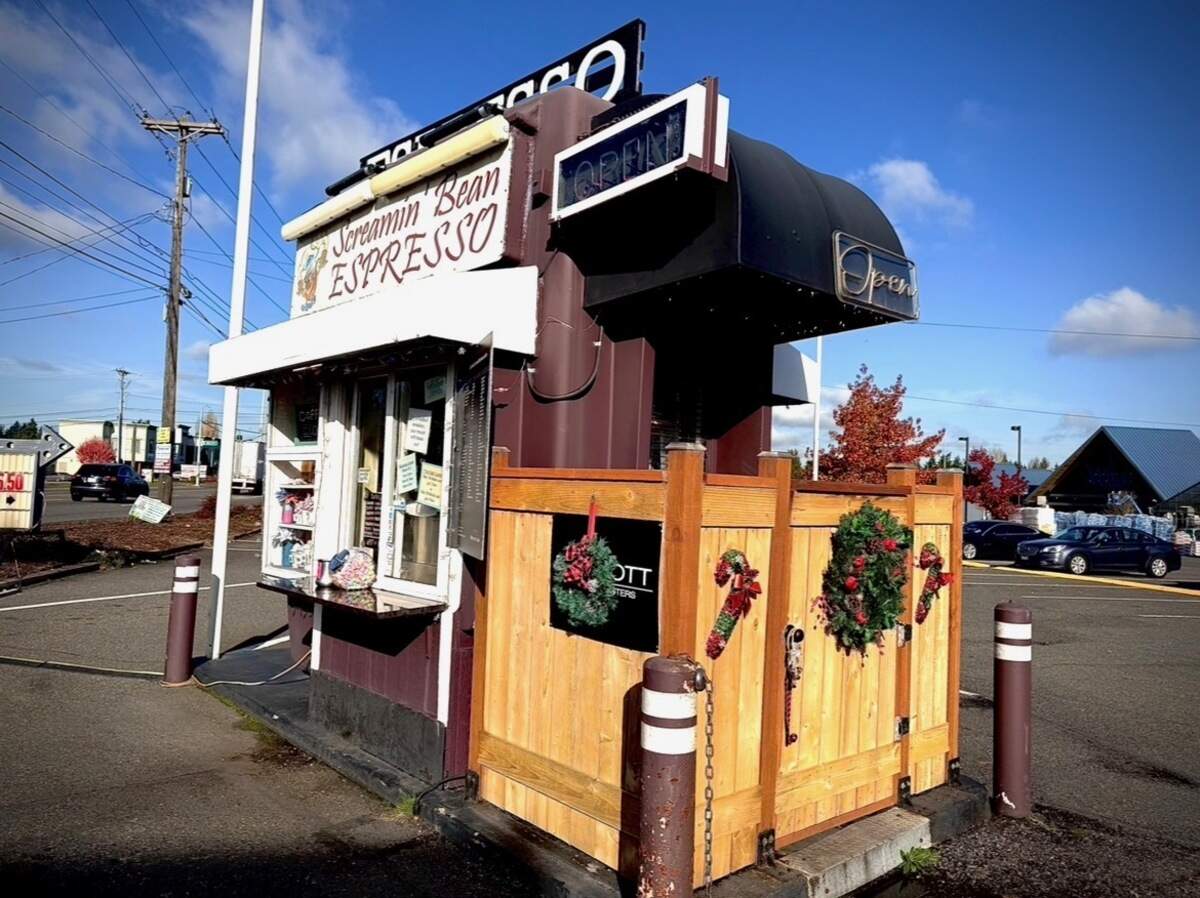
Screamin’ Bean Espresso, along with other drive-thru coffee stands and brick-and-mortar coffee shops, fall into a permit category defined as low-risk. It includes tasting rooms for wineries and taverns without a kitchen.
Of the 23 different permit categories, low-risk establishments had to swallow one of the largest fee spikes — up 79%, from $368 in 2025 to $660 in 2026. In comparison, the fee added just $21 from 2024 to 2025.
Kooser said a change in fees has never been so drastic in her 26 years with Screamin’ Bean Espresso.
Justin Everman, owner of Lux Perpetua, a brick-and-mortar cafe in Tacoma’s McKinley Hill neighborhood, also was surprised to see the new number.
“Tacoma’s small business environment is tough enough as it is,” he said. “The fee increase, without much explanation, is a hard hit for struggling small businesses.”
Everman appreciates the importance of food safety and public health oversight, he added, but what irks him is that his small coffee shop only seats 25 people and sells pre-packaged snacks and pastries prepared off-site by other permitted small food businesses.
The fees feel “very high,” he said, and ignore the “vast disparity” in revenues and operational scale between an independent coffee shop and chains like Starbucks.
Health department prices follow third-party ‘fee study’
The health department hired a third-party consulting firm, FCS Group, last March to facilitate the fee study.
As a core tenet of the analysis, health department workers asked to determine the number of hours they spend in the field and at their desks, including correspondence with a business and drive time to “deliver” a service such as approving a new restaurant to open. According to Gehle’s example shared with the board Nov. 19, staff spends approximately 6.5 hours completing each task related to an annual inspection of a high-school cafeteria. The department tackles 22 such inspections each year, which totals 143 service hours, she said.
The consulting company then developed a cost-analysis model that “incorporates our expenses and our total-hour fees to forecast an hourly rate,” said Jessica Gehle, the director of TPCHD’s environmental health division, which oversees food businesses.
It landed on $240 per hour. That rate is used only on the backend to determine how the health department charges for its services.
“It’s not a complicated equation, and it’s pretty straightforward,” said Gehle at the Nov. 19 study session.
The Health Department receives a majority — 37% — of its operating budget through permits and fees. The 2026 budget sits at around $111 million. The state provides just shy of 30%, the county almost 12% and the federal government 11%. The City of Tacoma supports 2%.
While food-permit fees for low-risk businesses jumped nearly $300 this year, fees in several categories changed by less than $100. Fees decreased for almost half of the categories in 2026, including fish markets and continental breakfasts at hotels.
Christina Sherman, program manager for food and community safety at TPCHD, and department spokesperson Via told The News Tribune in an interview that after the fee study, the agency realized it was significantly underestimating the time and resources spent on businesses in the low-risk category, hence the hefty up-charge for 2026.
Conversely, Sherman said, last year’s fees for other categories were more in line with the refreshed data, so some fees changed only slightly.
New food permit fees can be ‘frustrating’
Payne and Gehle’s November presentation to the Board of Health compared the Health Department’s newly fashioned hourly rate to those of nearby jurisdictions. King County, with a population of 2.2 million, projected a $243 rate, just $3 higher than Pierce County, which is less than half the size of its northern neighbor with 921,000 residents.
At Wolfe Club Coffee Roasters, a drive-thru shop in Parkland, co-owner Mark Larkin described the nearly doubled fee as “frustrating and sad,” an example of another tax, charge or regulation that can feel over-the-top.
At the end of the day, “What’s to be done about it? I just pay my fees and try to not get too worked up about it,” he told The News Tribune in a message. “I have to keep my focus on my creativity with the business, which is my passion!”
In response to a question from board member and City of Edgewood Mayor Dave Olson at the study session, Gehle said the department put a lot of thought into the new fees and acknowledged that higher costs can be frustrating.
“Nobody likes to pay more expensive fees, right? I get that and that’s really valid. I think that people feel like they get high-quality service from us. I think we’ve really dialed in on our review times, and we are trying to make a commitment to getting our applications processed so that our customers aren’t spending a lot of time waiting, and we’re also not sacrificing public health at the expense of doing something fast or quick,” Gehle said. “It really is balancing that three-legged stool, and I think our customers see that. Are they jumping up and down about paying more fees? Probably not, because I’m sure they’re feeling it in other places as well.”
At Screamin’ Bean Espresso, Kooser doesn’t feel assuaged by the explanation, at least not for her business: a small drive-thru coffee stand with five employees.
“I feel like you should charge according to the business,” Kooser said. “I have a low-risk, little tiny building … nothing has changed significantly to where it would make [the fees] jump up that high.”
This story was originally published January 21, 2026 at 5:00 AM.