Should 600-year-old oaks be cut down in Tacoma for a new storage facility?
AI-generated summary reviewed by our newsroom.
- Public and experts oppose removing Garry oaks estimated to be 400–600+ years old.
- Owner cites past encampments and market need for a four‑story storage facility.
- City reviewing Critical Areas permit; mitigation and monitoring requirements under review.
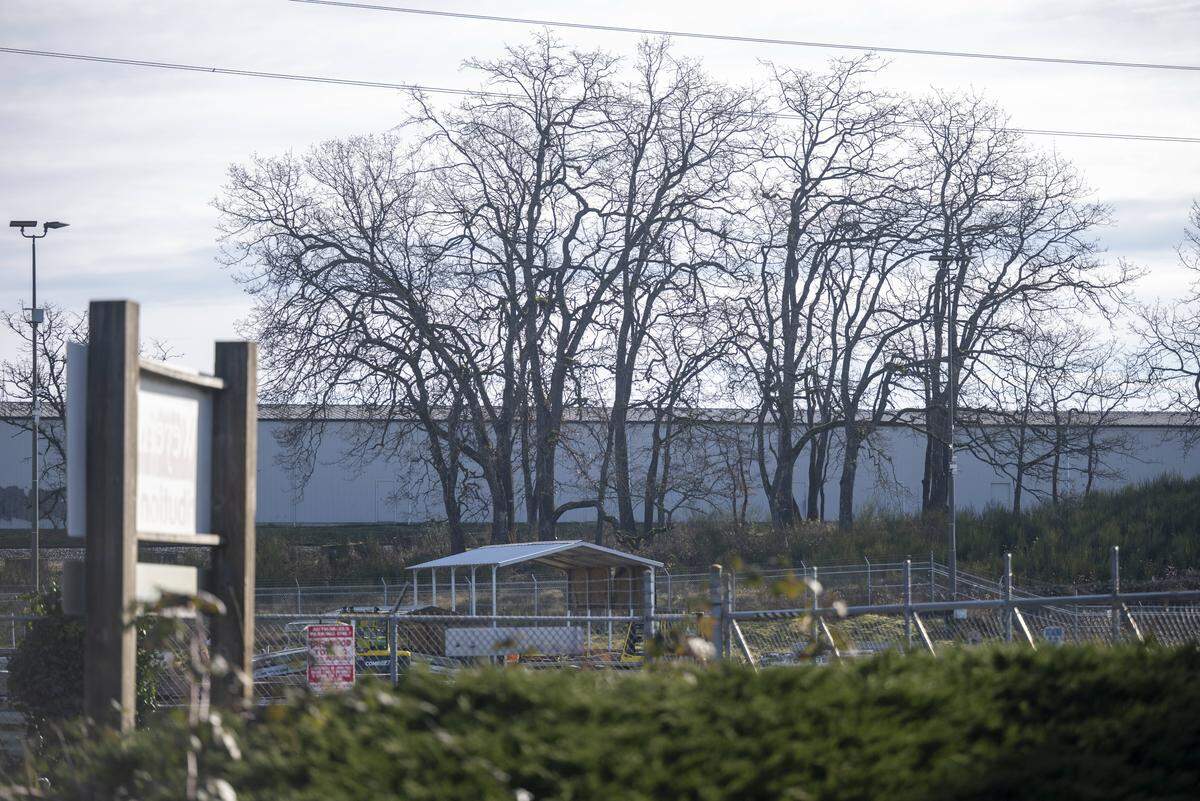
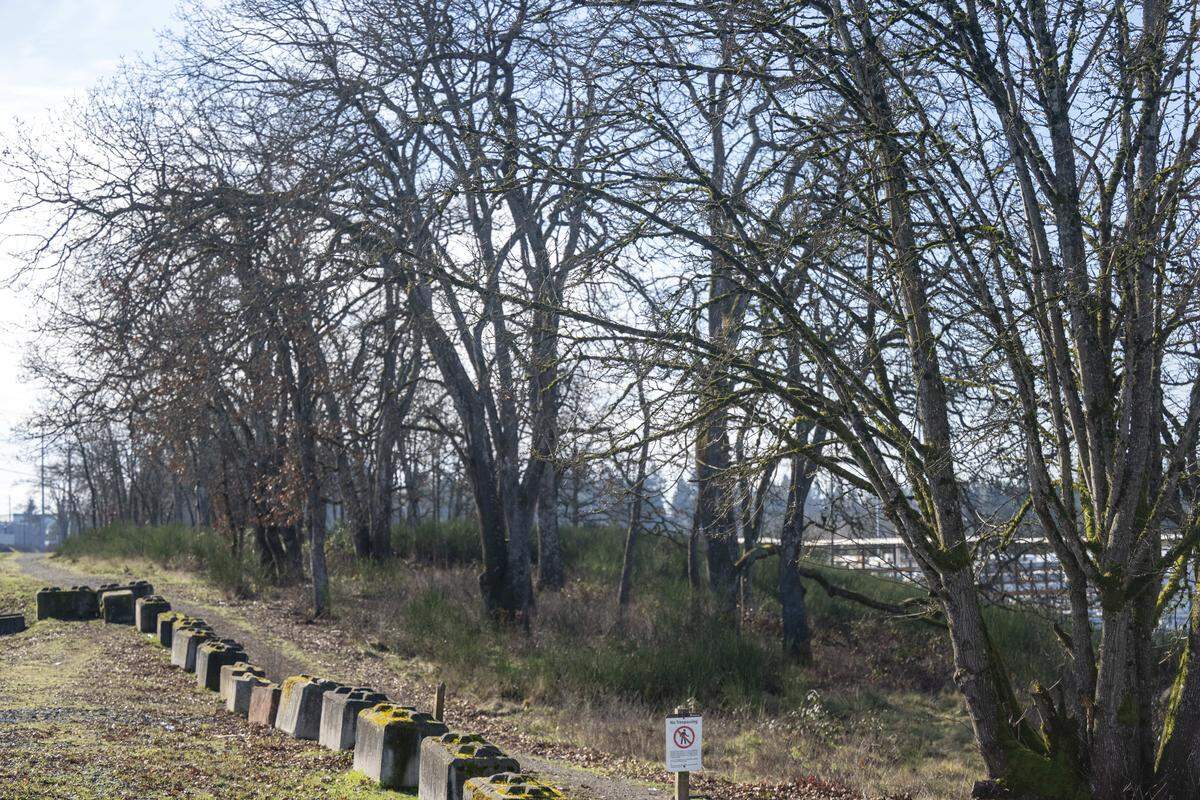
On the side of a busy street in South Tacoma is a small stretch of land surrounded by parking lots, storage facilities, warehouses and a lumber-distribution yard. Next to a set of railroad tracks are 36 Garry oak trees, some of which are thought to be between 400 and 600 years old.
The trees at 3802 S. 74th St. will be cut down if the city of Tacoma approves the landowner’s permits to build a new self-storage facility on the one-acre, triangular site. Public comment has closed, but some Tacoma residents continue to vocalize support for what is thought to be one of the last intact stands of Oregon white oaks in the city.
Makin’ Space LLC proposes to build a four-story building on the site with storage units ranging in size from 5 by 5 feet to 10 by 30 feet, according to permit application documents. Two elevators would service the building, and there would be four loading bays. Eighty percent of the existing vegetation would be removed and 0.43 acres of the site would be landscaped or “left in its native configuration,” per records.
According to an arborist report, there are 91 trees on the site. The planned development would keep 54 trees and remove 37, arborist Bryce Landrud wrote in his report.
All trees but one bigleaf maple are Garry oaks. The largest oaks observed on the site include a two-stem tree with a diameter of 42 inches, a two-stem tree with a 36-inch diameter and a one-stem tree with a diameter of 32 inches, per the report. Garry oak trees grow at a rate of about one inch per 15-20 years, according to the Washington Department of Fish and Wildlife’s growth metric. That means some of the trees are likely between 450 and 600 years old, if not older.
Owner Ed Brooks said he was skeptical the trees are that old. There’s a need for a self-storage facility in the area, and the property has become the site of nuisance activity in recent years, he said to The News Tribune on Thursday.
His company has had to clear no less than five homeless encampments from the property, and there was one case when people living there set some of the trees on fire, Brooks said.
“The reality is, if that site isn’t developed, it’s going to be burnt down by homeless,” he said. “We wouldn’t put the amount of money that this facility would cost in place if we didn’t think that there was a need in the market for it.”
Where do the permits stand?
In 2024 the city issued a “stop work order” on the property after a field inspector learned there were oaks on site, development records show. A site-development permit has been issued, with a few more crucial permits still pending.
Maria Lee, spokesperson for the city of Tacoma, said Brooks applied for a State Environmental Policy Act review, site development permits and building permits. The SEPA review was issued and indicated that the project needs to comply with the city’s critical areas code. Oregon white oaks (also known as Garry oaks) are protected species under the city’s Critical Areas Protection Ordinance, she said.
“City staff are currently reviewing a Critical Areas Development Permit application that includes a request to remove some of the oak trees and mitigate the removal by planting additional oak trees. The application is still under review and staff continue to work with the applicant to provide complete and accurate information,” she said in an email earlier this month. “City staff have visited the site and will continue to do so as needed. Critical Areas permit applications must meet specific code criteria prior to approval, including providing mitigation for impacts. The Director of [Planning and Development Services] is the decision maker on this type of permit, with any appeals heard by the Hearing Examiner.”
Brooks said he wants to be a good steward of the property and plant trees to mitigate the impact of development.
In the arborist report, Landrud recommended that 20 of the 37 trees should be removed from mitigation requirements due to decay, damage or decline. According to his mitigation plan, 34 new trees would have to be planted to replace the 17 “significant” trees cut down.
It’s likely the required tree replacement “will not fit into the available space at this site,” he wrote. “If needed, extra or leftover trees may be planted at a suitable site as directed by the City or [the Washington Department of Fish and Wildlife].”
‘What we have now is what we have left’
Allison Cook is one of more than 600 Tacoma residents who submitted a public comment opposing the development project. Cook worked for seven years in the Washington Department of Fish and Wildlife (WDFW) as a habitat biologist and for two years as a critical areas biologist for the city of Tacoma.
Cook told The News Tribune she left Tacoma’s planning and development department in 2023 after becoming disillusioned with how Tacoma’s Critical Area Preservation Ordinance codes were enforced. She now is a senior ecologist for King County’s stormwater capital unit.
In a letter Cook sent to city planning and development staff, which was shared with The News Tribune, Cook said the proposal would eliminate “one of the last intact stands of Oregon white oak in Tacoma, Washington’s only native oak species and a priority habitat under Tacoma Municipal Code.”
Even dead or damaged oak trees provide valuable habitat and should be protected, Cook said. Mammals and birds live in and around the grove and provide connectivity to the Flett Creek Watershed, she said. Cook said the company’s proposed two-year monitoring period for establishing Garry oak seedlings is inadequate, “particularly on a heavily disturbed site.”
When interviewed Thursday, Cook said the landowner has the right to develop and buy a parcel that is already zoned for a storage facility. Although she doesn’t think the city of Tacoma will deny Makin’ Space LLC’s permits, Cook said she hopes public outcry will convince the company to “heavily modify their application” and provide compensatory mitigation for cutting down trees.
“With the mature oaks, what we have now is what we have left,” Cook said. “They take so long to mature that even planting young species, they are going to take decades and hundreds of years to reach maturity. So they really are a dying and scarce habitat in the South Sound area.”
This story was originally published February 15, 2026 at 5:00 AM.