Tacoma health system once touted robot nursing aide. Whatever happened to Moxi?
AI-generated summary reviewed by our newsroom.
- MultiCare ended its Moxi robot contract, citing poor financial sustainability.
- Nurses said Moxi needed human help and didn’t deliver meaningful time savings.
- Diligent is being acquired by Serve; they expect revenue growth with Moxi deployments.
As many workers fear losing their jobs to artificial intelligence, in one local case it was the robots that were handed pink slips.
In 2023, Tacoma-based MultiCare Health System announced it was introducing Moxi, an AI and machine-learning programmed robot that would assist staff with simple tasks such as delivering medical supplies and carrying samples to laboratories.
“Nurses and other clinicians spend a significant part of their day gathering and delivering supplies,” June Altaras, MultiCare executive vice president for quality, safety and nursing, said in a statement at that time. “Enabling nurses to spend more time with patients will help improve patient safety and quality outcomes ... .
“Moxi is a tool that we can use to reimagine how we deliver health care.”
Last year, the health system decided to let Moxi go.
‘Wasn’t financially sustainable’
In response to questions from The News Tribune, MultiCare media representative Scott Thompson said via email on Feb. 12, “We ended our contract with Moxi about a year ago.”
Thompson wrote, “We found it wasn’t financially sustainable for us to keep using the robots. The cost didn’t justify their level of usage.”
“At their peak” he noted, MultiCare had 14 Moxi robots in the system.
“Most of them were at our hospitals in the Puget Sound with a few in Eastern Washington,” he added.
The News Tribune followed Moxi along on its first day on the job at Tacoma General and Mary Bridge Children’s Hospital, noting that the robot stood at 5 feet, weighed in at 300-pounds and was personalized with blinking blue eyes that turned heart-shaped when interacting with people.
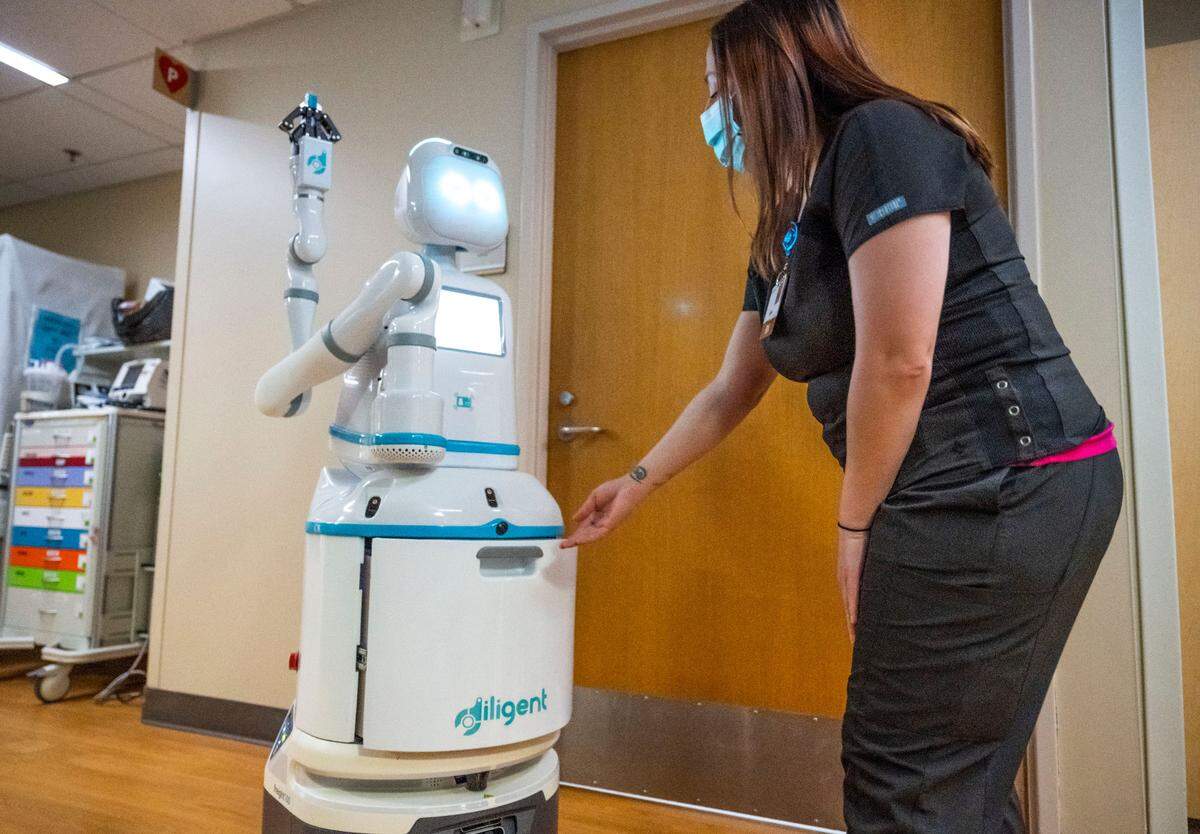
Moxi had its own security badge and was touted as being able to work 22 hours a day before needing a recharge. Optimism was high on incorporating more of the robots as time went on.
A mention of nursing-support robots made its way into the hearing over how to better support staffing levels in planning for a new patient tower at Good Samaritan Hospital in Puyallup.
‘Got in the way’
While Thompson didn’t elaborate on factors other than finance, the Washington State Nurses Association told The News Tribune in a statement that the “robots did not lighten the load.”
WSNA, in its emailed statement, said, “The technical realities, including the need for human support to move Moxi between floors, meant it would never deliver meaningful time savings.”
The statement added, “Nurses at Tacoma General Hospital and Good Samaritan Hospital reported that the Moxi robots were annoying and often got in the way.”
WSNA-represented nurses at Tacoma General and Mary Bridge this month ratified new contracts with MultiCare, gaining average wage increases of 15.46% over three years, among other gains.
“The reality remains unchanged. Nurses are, and will always be, MultiCare’s most critical resource,” WSNA said Feb. 13 in its statement about Moxi.
But don’t count out other robots elsewhere in the medical network, notably in the surgical wing.
Moxi’s next journey with new company
As for Moxi, it appears to be moving on, too.
The company that makes Moxi, Diligent Robotics of Austin, entered an agreement in January to be acquired by Serve Robotics of Redwood City, California.
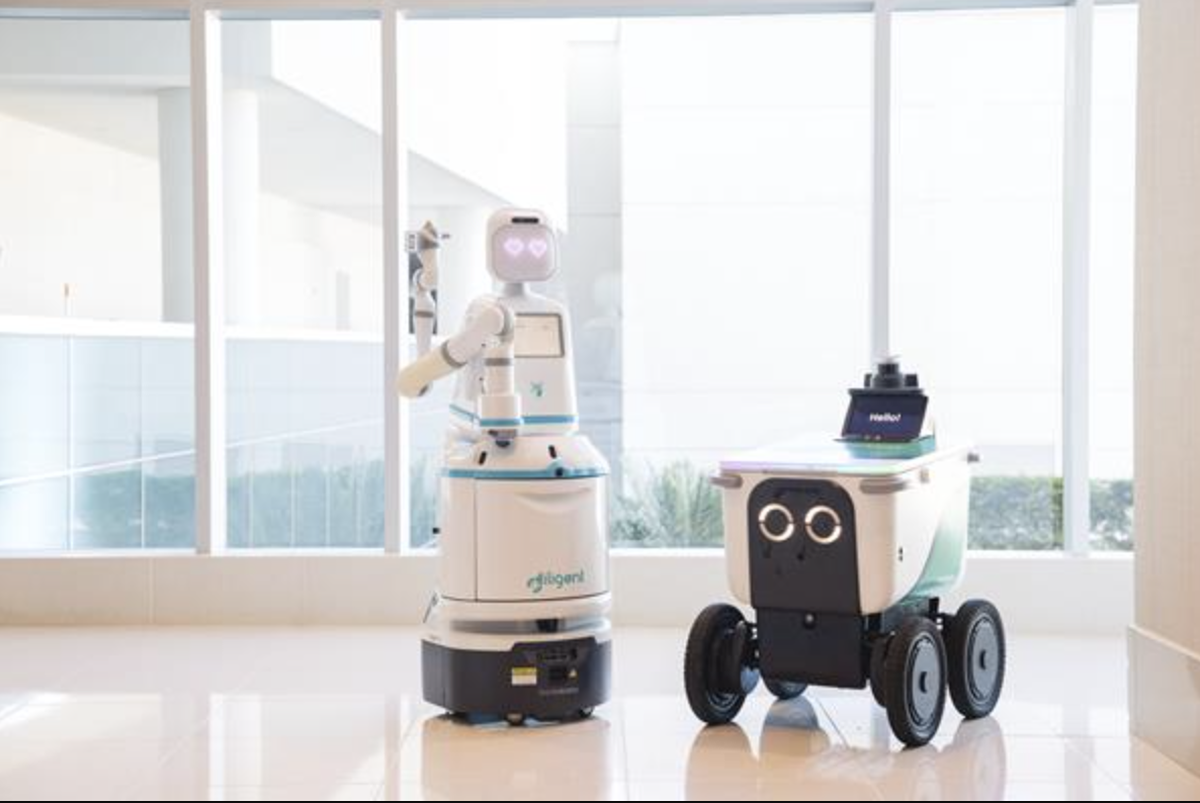
Serve designs and operates sidewalk robots for contactless, last-mile food and goods delivery.
According to a news release touting the deal, “Diligent’s Moxi robot (is) among the largest autonomous robot deployments in hospitals nationwide,” with nearly 100 robots deployed in more than 25 hospital facilities, including “Northwestern Medicine, ChristianaCare, and Rochester General Hospital.”
Diligent noted that Moxi “has already saved hospital staff hundreds of thousands of hours by completing over 1.25 million tasks successfully.”
The release added that the two anticipate revenue growth, “with each hospital facility deploying Moxi robots expected to range between $200k to $400k in annual sales.”
Serve, for its part, sees a new frontier to be explored with Moxi.
“Indoor environments, such as hospitals, add a powerful new dimension to Serve’s Physical AI flywheel. ... Every foot traveled by Moxi and every interaction navigated will feed back into a shared autonomy stack, which strengthens AI models across all applications.”
This story was originally published February 17, 2026 at 5:30 AM.