How is Tacoma’s encampment ban expansion impacting how it addresses homelessness?
AI-generated summary reviewed by our newsroom.
- Most post-expansion reports (≈79%) were within newly prohibited areas.
- Outreach contacts fell slightly (588 vs 614) as reports rose.
- Most reports after expansion (≈79%) occurred in prohibited areas; hotspots persist.
Since Tacoma made more than half the city off-limits to the unhoused, the number of reports made related to homelessness seems to have increased when compared to the same season of the prior year.
Despite increased reports related to homelessness in prohibited areas, the city’s homeless outreach team has not increased its number of contacts with the homeless.
According to the city’s data, the prevalence of encampments does not seem to have decreased since the expansion. Encampments have been commonly reported in the same parts of town as they were prior to the policy change.
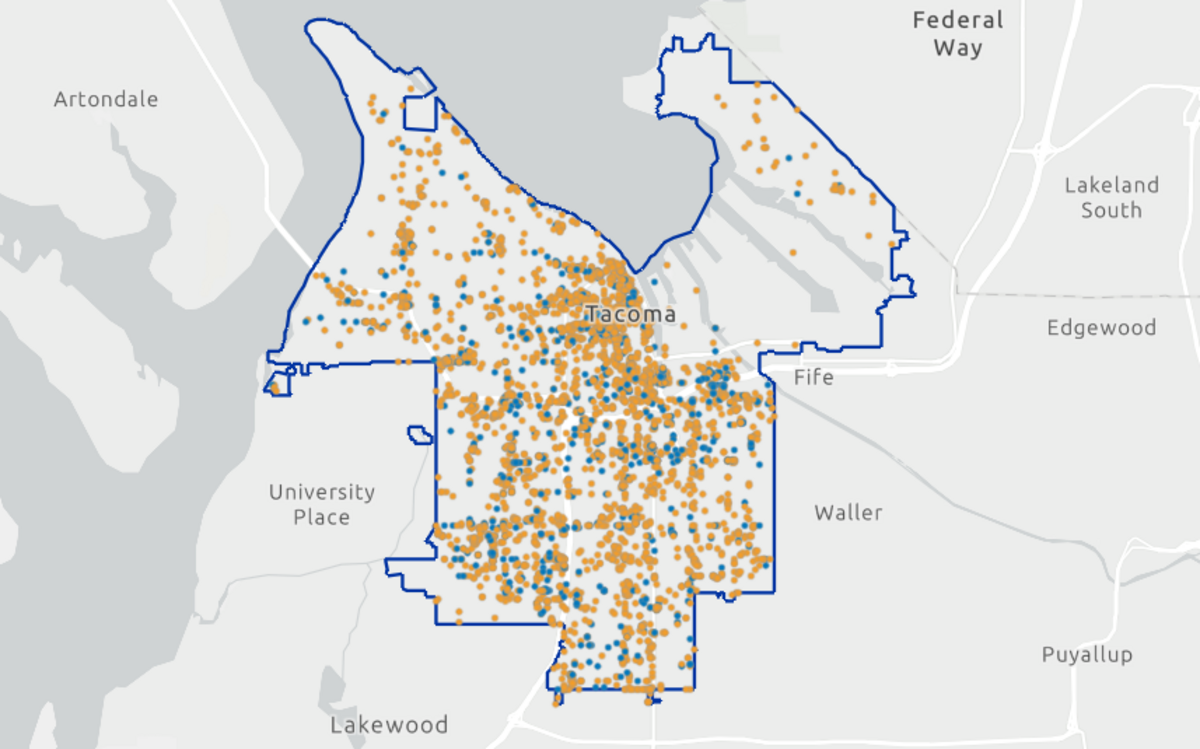
In 2022, the Tacoma City Council passed an ordinance that prohibits camping and the storage of personal belongings in a 10-block radius around temporary shelters and all public property within 200 feet of Tacoma’s rivers, waterways, creeks, streams and shorelines. Under the ordinance, violators face fines of up to $250 and up to 30 days in jail.
In October 2025, the council voted to amend that ordinance to expand the camping ban to areas within two blocks of public schools, parks and libraries. It also added buffers around permanent shelters. The amendment entirely prohibited encampments in the downtown area and the Hilltop neighborhood.
Before the expansion took effect in November 2025, camping was prohibited across approximately 22 square miles, according to city spokesperson, Maria Lee. After the expansion, encampments are prohibited across approximately 30 square miles.
According to U.S. Census Bureau data from 2020, Tacoma has about 50 square miles of land area - meaning most of the city is now prohibited for encampments.
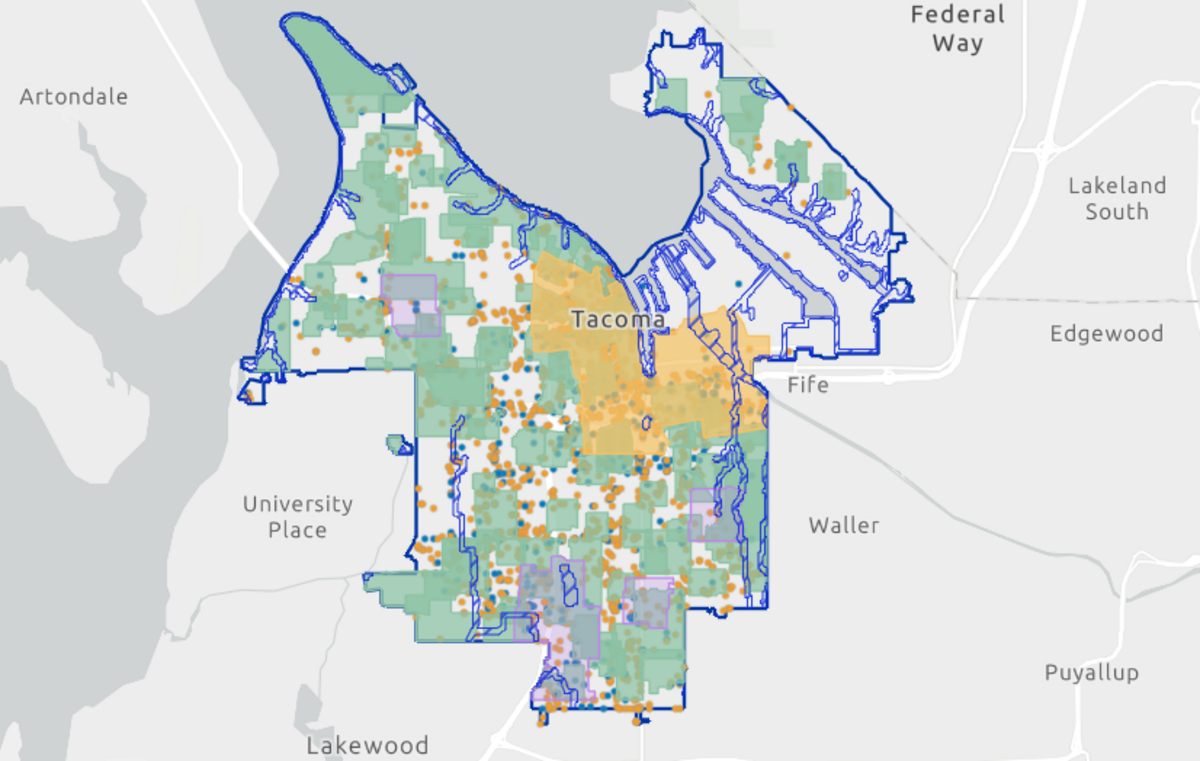
The city’s homeless engagement dashboard shows that 4,996 reports related to homelessness were made between Nov. 3, 2025 —when the expansion took effect — and March 3, 2026. During the same months in the previous year, 4,522 reports related to homelessness were made.
In the four months prior to the expansion, 5,959 reports were made related to homelessness around town - up 76% from the same time in the previous year. The uptick in reports related to homelessness came in the months following the city’s closure of nearly 200 shelter beds.
At the time, homeless advocates and outreach specialists said the loss of shelter beds contributed to the increase of people visibly living on the streets. City Council members that opposed the camping ban expansion expressed concern that the city was not giving enough shelter and services to justify expanding the areas where encampments are not allowed.
How is the expansion effecting Tacoma’s outreach efforts?
Only about 23% of the reports made from Nov. 3, 2025 to March 3, 2026, were “closed” by the city. All but one report was closed during the same time frame in the previous year.
Lee said the reports made at the end of 2024 to the beginning of 2025 were closed during a review process at the end of 2025.
“In contrast, the reports from November 2025 to February 2026 represent recent and active requests. Because the [homeless outreach team’s] standard timeframe for assessing and addressing these specific reports is typically 20 days, it is entirely expected that a larger percentage of these recent reports are still currently moving through our standard response process,” Lee told The News Tribune on March 23.
In the four months following the expansion, the city’s outreach team made 588 contacts with those living unhoused, with 60% of those contacts expressing interest in services. The team made 614 contacts with a 52% rate of interest in services during the same timeframe the previous year.
The number of reports made in areas where camping is prohibited drastically increased with the expansion of those areas across the city.
According to data from the city, about 79% of the reports made following the expansion were in areas where camping is prohibited.
“Ultimately, the shift in those specific numbers reflects the boundaries moving, rather than the people themselves moving,” Lee wrote in an email to The News Tribune.
During a presentation given during a City Council study session on Feb. 3, Mayor Anders Ibsen asked if the expansion was effectively pushing unhoused people from a prohibited area into a non-prohibited part of town.
“Yes, we are seeing an increase in non-prohibited areas,” answered Javon Carlisle, program manager with the city’s Neighborhood and Community Services Department. “That is a good question. I don’t think I actually have the data to supplement that question at the moment.”
Lee said it is too early to draw definitive conclusions about the expansion’s impact on people living on encampments inside and outside prohibited areas.
A map on the city’s Homeless Engagement Dashboard shows the hotspots where encampments are frequently being reported in non-prohibited areas.
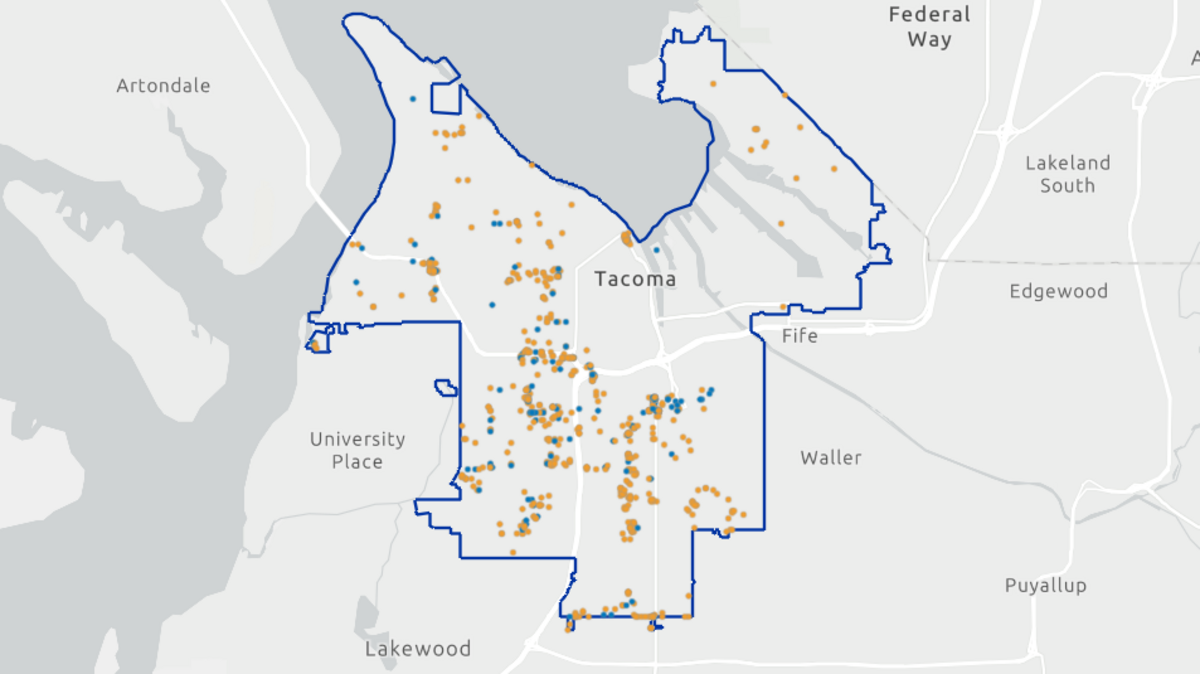
Encampments are commonly being reported near:
- The overpass of State Route 16 at Union Avenue
- The overpass of State Route 16 at South Cedar Street
- The overpass of State Route 16 at 6th Avenue and Pearl Street
- In between South Stadium Way and Schuster Parkway
- Pacific Avenue and South 37th Street
- Pacific Avenue and South 97th Street near the southern border of the city
This story was originally published March 26, 2026 at 5:30 AM.