WA decertifies about 47 cops accused of misconduct a year. Here’s how it works
Gov. Bob Ferguson on Wednesday signed a bill into law that, among other things, makes it so elected sheriffs are removed from office if they fail to maintain their certification as a peace officer with the Criminal Justice Training Commission.
Decertifying a law enforcement officer is the most severe action the CJTC can take when the officer is accused of misconduct. Doing so generally requires a complaint, an investigation of the allegations, a statement of charges, and if requested, a hearing before a five-member panel presided over by an administrative law judge.
Police officers can seek judicial review of the CJTC’s final decision.
The CJTC has decertified about 47 officers each year for the last four years, according to annual reports from the commission. For context, the commission opened 982 certification cases in 2024, and it closed just over half (511) instead of moving to revoke the subject officer’s certification.
Much like how the Department of Health has the authority to suspend or revoke the licenses of health care providers for misconduct, the CJTC’s Certification Bureau is responsible for certifying police and corrections officers. Investigations of misconduct can lead to suspension or decertification. Officers can also be required to undergo remedial training.
Investigations often start with public complaint
A certification case most often starts with a complaint from the public, but law enforcement agencies are required to make reports to the CJTC in certain circumstances, and the Certification Bureau can self-initiate an investigation if it learns of misconduct through news media or other avenues.
Law enforcement agencies are required to make a report to the CJTC within 15 days when:
- A police officer leaves the agency for any reason, including misconduct that could result in decertification.
- The agency learns of a use of force that caused serious injury or death, including dog bites.
- The agency learns a police officer has been charged with a crime.
- The agency makes an initial disciplinary decision for any misconduct listed in RCW 43.101.105.
If the allegations could result in the officer being decertified or required to undergo remedial training, the CJTC will investigate. If the CJTC determines the complaint alleges criminal misconduct, it will refer the matter for criminal investigation, and it may suspend the review until the criminal investigation is complete.
In some circumstances, if misconduct allegations are found to be true, state law says the CJTC must revoke the officer’s certification. In other cases, state law says the commission may suspend or revoke the certification or require remedial training.
There’s a list of instances when the CJTC must revoke certification outlined in RCW 43.101.105. A few include:
- The officer has been convicted of a felony, gross misdemeanor domestic-violence offense or a crime with sexual motivation.
- The officer was fired or otherwise separated from their agency after unlawfully using force that resulted in serious injury or death.
- The officer was fired for or otherwise separated from their agency after witnessing excessive force, failed to intervene when they were in a position to do so or failed to report it.
A few instances when the CJTC may suspend or revoke an officer’s certification or require remedial training are:
- The officer engaged in a use of force that violated the law or policy and could be expected to cause injury.
- The officer committed sexual harassment as defined by state law.
- The officer used their position as a peace officer for personal gain through fraud or misrepresentation.
- The officer made statements, online posts or other types of speech that involve prejudice or discrimination against a person based on a number of protected statuses, including race, religion, immigration status, disability, gender, gender identity, age, sexual orientation or military status.
Many officers surrender certification after investigation
How long it takes the CJTC to investigate a complaint depends on the circumstances of the complaint. There is also a large backlog of complaints.
David Quinlan, a spokesperson for the CJTC, said at the end of January there were 1,875 open cases. The CJTC has nine investigators and two chief investigators. Those employees are also responsible for the CJTC’s internal investigations and investigations at the state’s five police academies.
Some investigations of police misconduct can be prioritized. The CJTC has a policy for doing so. It considers factors such as whether the officer is employed or is seeking employment, or if the investigation begins to find that a subject officer has been dishonest.
Once the investigation is complete, it’s reviewed by all levels of leadership within the Investigations Division. Then a decision is made on whether to close the case without recommending disciplinary action or to issue a statement of charges. That informs the officer that the CJTC intends to revoke or suspend their certification.
The statement of charges comes with a notice that if an officer wants to contest the charges, they have 60 days to request a hearing. If they fail to do so, the CJTC may enter an order of default and decertify the officer.
Many officers opt to voluntarily surrender their certification. In 2025, there were 62 certification actions that fell under revocation, surrender, settlement, post-hearing discipline or dismissal of charges. Officers surrendering certification made up 62 percent of those actions.
In some cases, the officer and CJTC staff agree to settle the case after a statement of charges is issued. Quinlan said such settlements generally include a lengthy period of certification probation, retraining or other terms aimed at rehabilitation. Sometimes it can include suspension. In 2025, 11 percent of cases were settled following a statement of charges.
State must prove misconduct occurred
If the officer requests a hearing, they can defend themselves by presenting witnesses or exhibits. Or they can just require the CJTC to prove its case. The CJTC, represented by assistant attorneys general, must prove its case by a preponderance of the evidence, meaning the evidence shows it’s more likely than not that the officer engaged in misconduct.
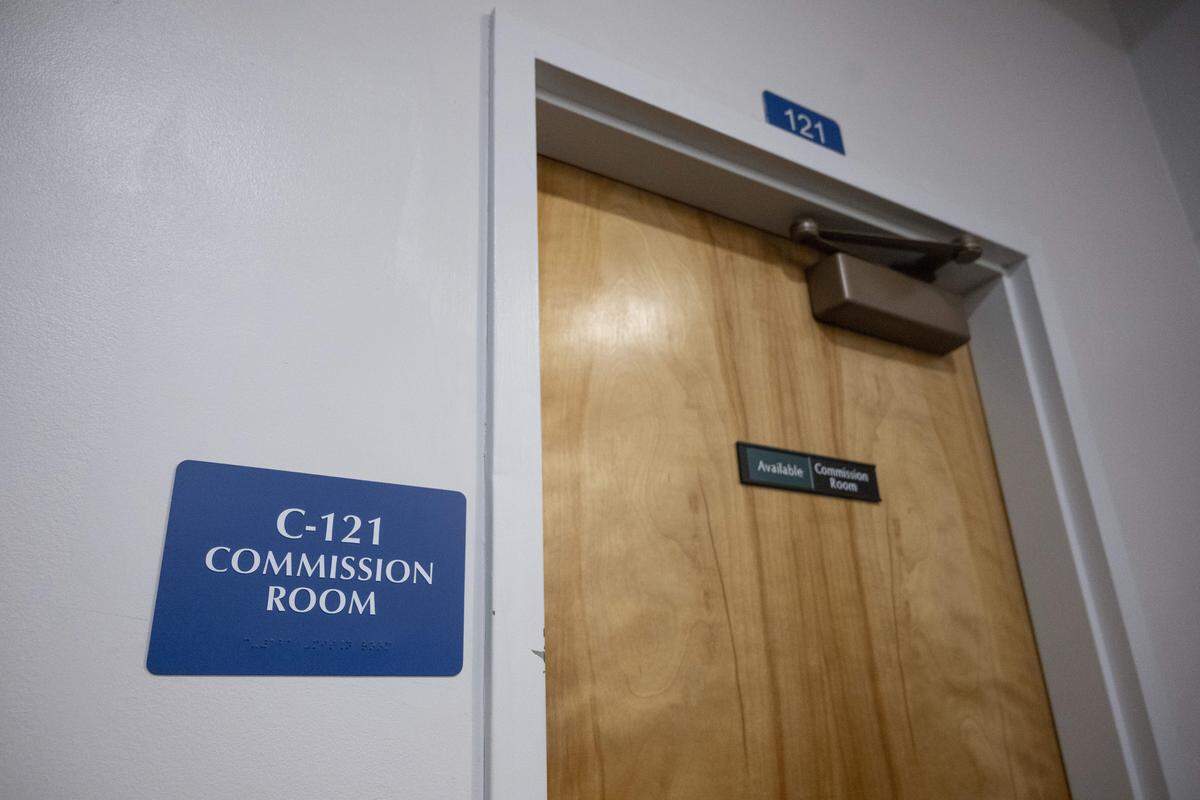
The CJTC works with the Office of Administrative Hearings for that process, and an administrative law judge — a position appointed by Chief Administrative Law Judge RaShelle Davis — presides over the hearing.
The hearing is open to the public, and the case is heard by a five-member panel. The panel’s deliberations are not open to the public. For police officers, the panel includes:
- A police chief or sheriff who is not a current or past employer of the subject officer.
- A police officer with at least 10 years of experience who is at or below the level of a first-line supervisor.
- A civilian appointed under a portion of RCW 43.101.030.
- A member of the public who is not a prosecutor, defense attorney, judge or certified police officer.
- A person with a background in police accountability who is not a current or former certified police officer.
At the end of the hearing, the panel will deliberate and make a final decision on the officer’s certification. The panel can revoke certification, dismiss the charges or impose some other discipline such as suspension, probation or retraining.
Police officers can file for judicial review of the decision through the Administrative Procedure Act, RCW 34.05.
This story was originally published April 1, 2026 at 9:53 AM.