Health leader’s ‘harsh’ style left workers in tears, per report obtained by TNT
AI-generated summary reviewed by our newsroom.
- Investigator found Reed’s communication style demeaned staff and caused distress.
- Board implemented coaching and later reported culture improvements.
- Report found no discriminatory animus but noted ethical boundary breaches.
Last year Tacoma-Pierce County Health Department public health director Chantell Harmon Reed came under fire from three employee unions that alleged bullying, unethical behavior and creating a toxic work environment.
Following an outside investigation ordered by the Tacoma-Pierce County Board of Health in February 2025 and completed June 18, 2025, Reed was not found to have violated any laws or health department policies and was not disciplined. She was ordered to receive executive coaching services by the Board of Health on July 2, 2025.
The News Tribune requested information about the investigation into Reed on July 15, including a copy of the final investigative report and related records. For more than eight months, the health department refused to make the investigator’s findings public, citing “attorney-client privilege.” On Feb. 4, The News Tribune’s lawyer sent a letter to TPCHD arguing the records should be released under the Public Records Act, as “they clearly relate to the conduct of a governmental or proprietary function” and involve an investigation of “the agency Director for allegations about on-the-job actions.” Likewise, TPCHD paid for the investigation and “relied upon the report in its determinations made regarding the allegations,” wrote attorney Michele Earl-Hubbard.
On Wednesday, March 25, The News Tribune received the final workplace investigation report and more than 1,300 pages of related emails and documents. A majority of witnesses who spoke to the outside investigator described a culture where Reed “routinely and overtly” demeaned, belittled and was disrespectful to staff, to the point of reducing some of them to tears during the work day, per the report.
The board has said it “fully supports” Reed and takes staff complaints seriously.
As previously reported by The News Tribune, Reed has been the TPCHD public health director since March 2024. She makes $225,555 annually, TPCHD spokesperson Kenny Via confirmed Monday. Reed is responsible for leading and directing the operations and programs of the health department and reports to the Board of Health.
The TPCHD addresses known and emerging public health risks in Tacoma and Pierce County, including the prevention and control of disease, ensures healthy access to food, water and air, and substance-abuse prevention, counseling and treatment, per its website. The department has 284 full-time staff in 2026 and a $103 million budget for 2026-2027. The News Tribune submitted a public records request for how much the investigation into Reed cost the department on Monday.
What did the report say?
According to the investigation’s final report, evidence showed that Reed’s communication and leadership styles demonstrated “substantial room for improvement in order to conform more closely to the TPCHD’s core values and the expectations for the Director as set out in her position classification/job description,” including respect and leadership, wrote investigator Brenda Bannon.
Many witnesses interviewed in 2025 described specific examples of Reed degrading staff in meetings, showing up late and unprepared to meetings, rolling her eyes, looking at her phone during presentations, interrupting and “making disinterested or impatient facial expressions” during meetings. Others told Bannon they feared retaliation from Reed for participating in the investigation, given that Reed receives all complaints made to human resources.
Per records The News Tribune received, on April 9, 2024, Reed sent an email saying, “Please inform all HR staff that effective immediately, all complaints, investigations and employee concerns must be route[d] through me.” The name of the email recipient was redacted.
“The weight of the credible evidence does not support a finding that discriminatory animus motivated the Director’s communications and behaviors towards the many complaining witnesses here,” Bannon wrote in the report. “By many accounts, the Director is harsh and rude to many employees regardless of gender, race or skin color.”
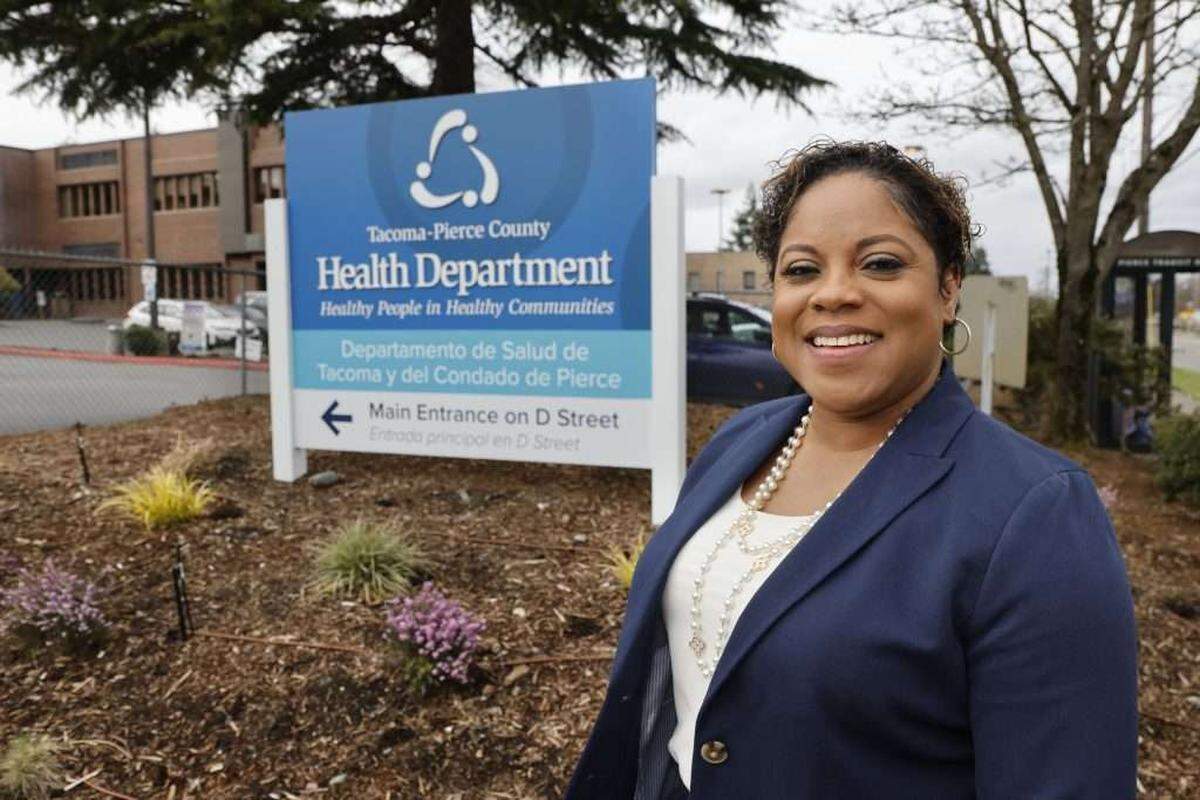
Upon the release of the documents to The News Tribune, Reed said in a statement she was pleased to see the report released because she values transparency and welcomes “every opportunity to learn and improve.”
“The findings … clearly indicate that I did not violate any law. As stated in the report, ‘There is a consensus of evidence to support a conclusion that the Director’s management style is very direct, public, detail and data driven, goal oriented and fiscally focused,’” Reed said. “I recognize this approach can sometimes create waves. I’ve taken this opportunity to reflect on that, improve my relationship skills and work diligently to continue to strengthen the culture at Tacoma-Pierce County Health Department from the top down.”
In a statement, Board of Health Chair Jani Hitchen, who is also the chair of the Pierce County Council, said the Tacoma-Pierce County Board of Health fully supports Reed.
“We take all complaints seriously and are committed to addressing concerns in a thorough and responsible manner. In response to the investigation into complaints against Director Reed, the Board immediately implemented the recommended actions in the June 2025 report, including hiring an executive coach to work with Director Reed and her leadership team,” Hitchen said. “Over the past 10 months, we have seen significant improvement in the Health Department’s culture and operations. We are encouraged by this progress and are confident in Director Reed’s vision and leadership. Although the Board contends the report is exempt from disclosure under the public records act, the Board is choosing to release this report now after providing Director Reed and her team time and space to work toward meaningful change.”
Reed asked subordinates to do her homework
According to the investigative report, in two cases Reed was found to have asked subordinates to complete some of her doctoral homework. One case involved Naomi Wilson, who joined the Ruston City Council in November. Wilson, who was Reed’s subordinate at the time, wrote in a letter to the Board of Health in April 2025 that Reed messaged her on a Sunday and “requested that I complete a portion of her graduate-level academic assignment.” When Wilson instead offered feedback, Reed “insisted and asked me to complete the remainder of the assignment because it was due that day.”
“I was stunned and deeply uncomfortable. This crossed a serious ethical boundary. I declined and hoped that the matter would end there,” Wilson wrote in her letter, which was obtained in records received by The News Tribune. “While there was no clear act of retaliation, there was a noticeable change in tone. Our communication became strained, and the mutual respect we had previously established eroded. I was no longer invited into collaborative spaces where my voice had previously been valued. I began to feel that my presence and contributions were unwelcome.”
Six months after the email exchange, Wilson resigned because she “believed that stepping away was in the best interest of my well-being, my team’s stability and to minimize further tension within an increasingly stressful work environment.”
In response to a question about Wilson’s allegations, Reed told The News Tribune Monday, “As I told the investigator, this is one of many claims that do not accurately reflect what occurred. Throughout this process, I remain focused on constructive feedback and opportunities for growth as I continue to lead the Health Department and serve Pierce County.”
Hitchen told The News Tribune in a statement Monday that the Board of Health takes all complaints seriously, “especially when one is filed against someone in a position of leadership.”
“The Board is committed to addressing concerns in a thorough and responsible manner,” she said. “That is why the Board hired an outside investigator and took immediate action to implement the recommendations of the June 2025 report, including hiring an executive coach to work with Director of Public Health Chantell Harmon Reed and her leadership team.”

Other types of behaviors Reed was found to have, according to the report, “routinely engaged in” from April 2024 to April 2025 were sending meeting invitations with no agenda, joining meetings without reviewing the agenda or provided slides she requested, arriving late, looking at her phone during meetings, asking questions and then interrupting the person who was answering, telling employees they are incompetent, telling employees their program or project has no value and that the staff member has accomplished nothing, raising her voice with employees, demanding that all HR complaints are routed to her office and “creating a sense of powerlessness because the Director cannot be pleased,” per the report.
In response to the investigator, Reed said her assistant sends the meeting invitations, and agendas are not routinely provided. Reed said meeting materials are often provided too late for her to review, and she is sometimes late because other meetings run long, or she is overbooked. Reed said when looking at her phone during meetings she is taking notes, sending Teams messages and watching three screens. Reed said she sometimes interrupts people to ask follow-up questions to assist her understanding. Reed denied telling staff they are incompetent. Reed said she tells employees there needs to be measurable value to programs, and she is generally a loud talker and more so on issues she is passionate about. Reed said she began reviewing HR complaints “to move them along in the process after employees complained that complaints were stalled in HR.” She denied projecting a persona that she cannot be pleased, “but described that there is more to be fixed than celebrated at the Department,” per the report.
Many witnesses told Bannon they were initially excited and hopeful to learn Reed’s vision for the department, but many found her “curt, abrupt or sharp” communication style “off-putting and demoralizing,” not only to “the recipient of [her] questioning, but also to the assembled meeting participants as a whole.”
“Many witnesses described to the Investigator an effort to avoid being the target of the Director. This effort may include not offering information, not correcting misinformation or not interjecting when the Director is uncomfortably scrutinizing a particular staff member’s contribution to a meeting,” Bannon wrote. “Many witnesses described becoming tearful during or in the immediate aftermath of meetings with the Director.”

Reed came on amidst many department changes
Bannon wrote in her report that Reed “tends to speak loudly, publicly probe and evaluate projects and programs, second guess the efficacy of projects and programs, and conduct herself in this workplace in a stridently hierarchical manner.”
“The Director engages in meetings as though oblivious to how her positional power or manner of addressing subordinates is emotionally impacting employees in the moment,” Bannon wrote. “Executive Coaching may provide valuable resources in this organization that doubled in size during the COVID pandemic and that is now ‘reimagining’ itself in the pandemic aftermath with a new Director, Health Officer, budgetary constraints and a consolidated, more centralized and much smaller workforce.”
Bannon said many TPCHD employees were hired through COVID-19 funding streams designed to combat the pandemic, and reorganizing the department and its programs “in the aftermath of all this upheaval, change, growth and resizing was … a challenge for the new director,” she wrote.
Reed’s leadership and communication style is also “materially different from that of the previous Director,” Dr. Anthony Chen, who tended to “’table’ disagreements for later 1:1 discussion,” Bannon wrote. The investigator also noted that Reed told her the culture in the Pacific Northwest is “very different” from the South, and she has “tried to ‘dial back’ her naturally ‘bigger than life’ personality style.”
“In her interviews with the Investigator, the Director agreed that she has a fast, loud and direct communication style that is a part of her overall leadership style,” Bannon wrote. “She told the Investigator that she agreed with the ‘praise in public’ and ‘criticize in private’ concept as a general proposition but explained that at times she believes that dealing with an issue in the moment of meeting with her Leadership Team, Managers or staff is more effective.”
This story was originally published April 1, 2026 at 5:00 AM.