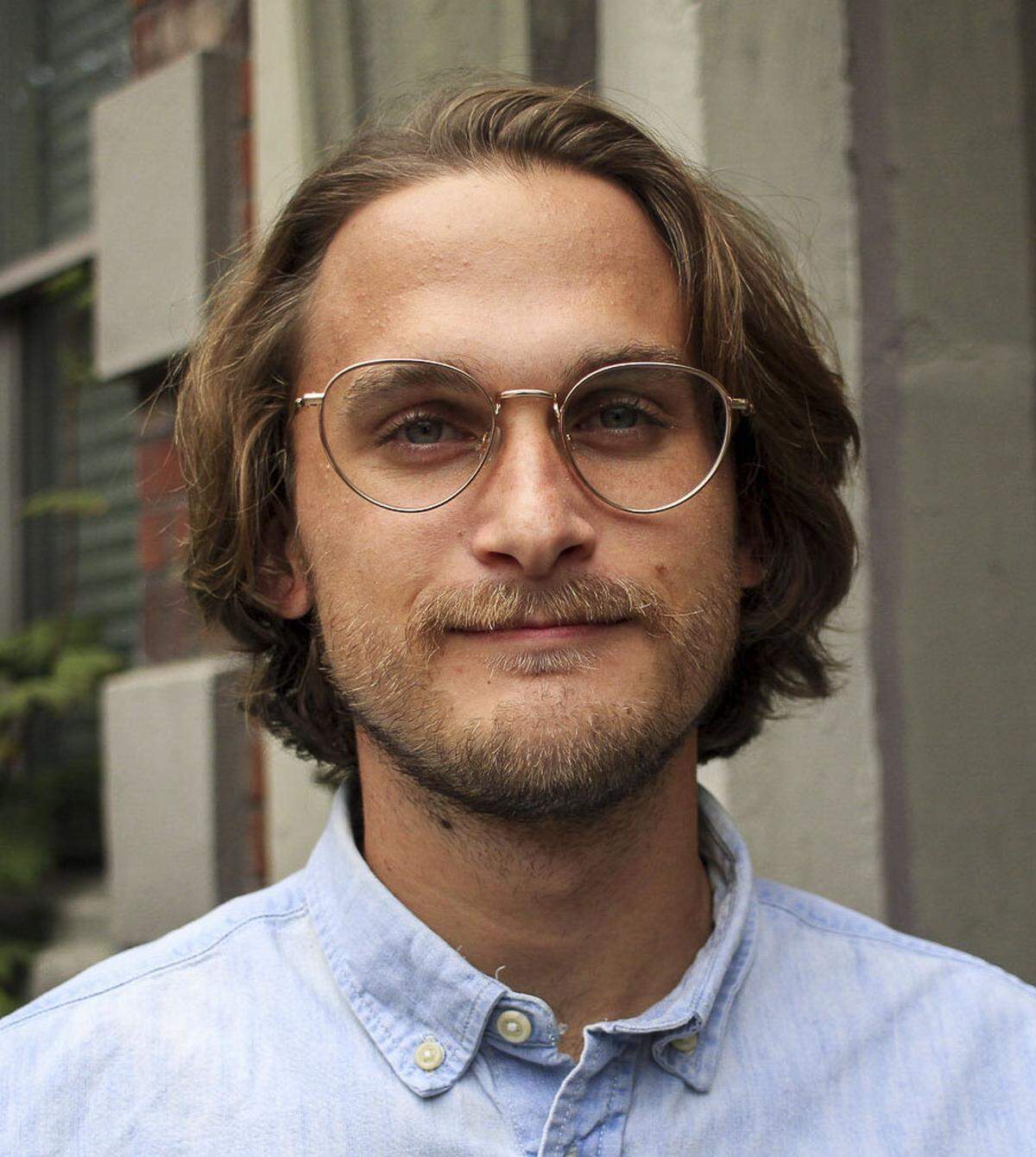
Does Sheriff Keith Swank have discretion to not enforce laws he deems invalid?
Online and in front of state lawmakers, Pierce County Sheriff Keith Swank has displayed defiance in response to a new law that prohibits law enforcement from hiding their identities with masks.
Swank on Jan. 15 told legislators on the Senate Committee on Law & Justice that he would encourage his deputies to wear masks to see what the state will do in response, and he has asked Gov. Bob Ferguson on X who will enforce the new legislation.
Swank has previously declared a new state law tightening firearm regulations “unconstitutional” and said that the Sheriff’s Office wouldn’t enforce it.
Legal experts say it’s not up to law enforcement officials to determine whether a law is valid, and electing to outright not enforce it is a violation of their duties.
Police officers and sheriff’s deputies do have discretion about how best to enforce laws, and they’re not going to enforce violations to the fullest extent each and every time. Consider the scenario of an officer stopping a speeding driver and letting that person go with a warning.
But that’s a different use of discretion than what we’re seeing with Swank, according to Cornell Clayton, a professor and the director of the Thomas S. Foley Institute for Public Policy and Public Service at Washington State University. In a phone call on March 27, he said courts generally give broad deference to executive-branch officials in exercising discretion about enforcing laws. He said limited resources mean the police can’t enforce every law all the time.
“That is different than an executive-branch official saying I refuse to enforce a law,” Clayton said. “And that is simply a violation of their constitutional duties.”
Clayton explained that the issue is about the basic separation of powers between the executive, legislative and judicial branches of government. The role of the executive branch, Clayton said, is to enforce laws passed by the Legislature and signed by the governor. A law enforcement official who disagrees with the validity of a law, according to Clayton, should ask a court to review it.
“The courts can declare a law unconstitutional or strike it down, but until they do that they are bound to enforce the law,” Clayton said of a sheriff’s duties.
Swank told The News Tribune courts in Washington are “a joke” and said he thinks it’s important for sheriffs to push back when the need arises.
“Everybody who’s a judge, who’s going to be making a decision on whether something is constitutional or not, is a leftist,” Swank said of state courts in a phone call on March 30. “And so they disagree with it anyhow. It doesn’t even matter if they say it’s constitutional. It doesn’t mean it is.”
Sheriff Swank says he won’t risk deputies being sued
He said laws he calls unconstitutional are often ones the Sheriff’s Office isn’t enforcing anyway. He called it “technicality stuff.”
“If somebody called up and said to me, ‘Hey Sheriff Swank, my next door neighbor has a magazine that has more than 10-round capacity to it,’ I’m not going to send my deputies out to investigate that,” Swank said.
The sheriff was referring to the state’s 2022 ban on the sale of firearm ammunition magazines that hold more than 10 bullets. It does not ban the possession of those magazines. The Washington Supreme Court in May 2025 upheld the ban on the sale of the magazines in a 7-2 decision after the law was challenged by a gun store in Kelso.
Swank has also said it’s his job to not enforce unconstitutional laws. Clayton said that’s true, but that Swank doesn’t have the authority to unilaterally declare a law unconstitutional.
Would Swank take a stand against a law he deems unconstitutional? He says he would, but that it hasn’t come to that yet, and he hopes it doesn’t. He gave a hypothetical to explain his position. What if state lawmakers and Ferguson created a law that allowed police to enter residents’ homes without a warrant? Swank said he wouldn’t abide by it.
“I would say that’s a constitutional violation,” Swank said. “And people go, ‘That’s far-fetched.’ Of course it is. But my point is it’s either constitutional or it’s not, whether it’s a big law or a small law or whatever. And that’s the way we should look at it. And I think that’s the role of a sheriff.”
When sheriffs fail to enforce the law, Clayton said, it’s up to the state Attorney General to hold them accountable.
In the case of the new masking law, holding law enforcement accountable is essentially up to the public.
Mike Faulk, a spokesperson for the state Attorney General’s Office, said the law does not empower Attorney General Nick Brown’s office as the enforcer. Instead, Faulk said, it provides a private cause of action for individuals targeted by masked law enforcement operations.
“For example, if a deputy sheriff illegally wears a mask, they can be sued by an individual they target, regardless of whether the elected sheriff disagrees with the law or says he won’t enforce it,” Faulk said in an email Friday.
The law also outlaws masks for federal immigration agents. When Ferguson signed the bill into law March 19, he said he was standing against ICE, U.S. Immigration and Customs Enforcement and the “un-American” activities he said they seem to engage in each day.
Asked about the law, Swank seemed to soften his stance on encouraging deputies to violate it. He said he’d recently been informed that the new law does not prohibit deputies from wearing medical masks such as N-95s. The law does ban face coverings such as balaclavas, gator masks, and the like. Swank said his deputies are probably not going to wear masks.
“I’m not asking the deputies to jeopardize themselves or put themselves at risk for any civil lawsuits or anything like that,” Swank said.
Does the sheriff have a duty to uphold state law?
The duties of sheriff are prescribed in state law, RCW 36.28.010. Among other duties, it says a sheriff, “Shall arrest and commit to prison all persons who break the peace, or attempt to break it, and all persons guilty of public offenses …”.
The duties do not include upholding and enforcing state laws or upholding the state and U.S. constitutions. Anne Levinson, a former Seattle judge who has helped draft police-reform legislation, said that is a gap in state law. She helped draft Senate Bill 5974, which among other things, aims to fill that gap. The bill passed the state Legislature on March 11, and it was delivered to Ferguson’s desk.
The bill is mostly known for proposing new eligibility requirements for police chiefs, sheriffs and town marshals, creating new background investigation processes for candidates for those positions, making it so sheriffs are removed from office if they lose their certification as a law enforcement officer and limiting what types of roles volunteers and youth cadets can perform for a police agency without being a certified law enforcement officer.
The bill also amends RCW 36.28.010. It makes the first prescribed duty that the sheriff “shall uphold and enforce the Constitution and laws of the state of Washington, as interpreted and applied by the state supreme court, and uphold the United States Constitution …”.
In a March 13 letter to Ferguson asking him to sign the bill, Christy E. Lopez, a professor at Georgetown Law, said the bill’s requirement for sheriffs to uphold the law is overdue.
“One of the more dangerous and dismaying developments in law enforcement over the past decade or so has been the popularization in some law enforcement circles of the idea that sheriffs can decide which state and local laws are valid, and selectively enforce laws accordingly,” Lopez wrote.
Lopez told Ferguson her assessment of the bill was based on what she’s learned in more than 30 years of working with law enforcement of all ranks and implementing and studying patterns of law enforcement misconduct as well as efforts to correct those patterns.
“A law enforcement officer’s responsibility to uphold state and local law, alongside the Constitution, is such a foundational principle in our democracy that one might have expected to see it already reflected in state statute,” Lopez wrote. “It seems plausible that, previously, a sheriff’s responsibility to uphold the law was viewed as so obvious it was unnecessary to spell out.”
Although not prescribed by state law, the duty to uphold state law is included in sheriffs’ oath of office. Swank was publicly sworn into office Jan. 15, 2025, by Pierce County Superior Court Judge Rebecca Reeder.
“I, Keith Swank, do solemnly swear that I am a citizen of the United States and the state of Washington,” Swank said then, according to a recording of the ceremony. “That I will uphold the Constitution of the United States and the state of Washington. I will enforce the law and abide by the law enforcement code of ethics to the best of my skill, judgment and ability. I will faithfully, truly, diligently and impartially perform the duties of the office of sheriff as such duties are prescribed by law and for Pierce County, so help me God.”
An elected official violating their oath of office can be grounds for official misconduct under state law. RCW 9A.80.010 states: “A public servant is guilty of official misconduct if, with intent to obtain a benefit or to deprive another person of a lawful right or privilege … He or she intentionally refrains from performing a duty imposed upon him or her by law.” Official misconduct is a gross misdemeanor.
“Sheriffs may not decide whether they and their deputies will faithfully execute a law enacted by the legislature, based on whether a sheriff personally agrees with it,” Levinson told The News Tribune. “Doing so is contrary to their oath of office.”
This story was originally published March 31, 2026 at 5:00 AM.