He’s one of Tacoma’s highest paid employees. Here’s how he plans to earn it
When Hyun Kim first moved to Tacoma, he spent months living in nearly each of the city’s neighborhoods.
As he was waiting to sell his house in Wyoming – his home prior to moving to Tacoma – he stayed at hotels and Airbnbs in areas ranging from Hosmer to Northeast Tacoma. It gave him a chance to see the city in an immersive way and learn about each neighborhood beyond the surface-level perceptions that people can have about them.
“The beauty of Tacoma is just the diversity of our neighborhoods,” Kim told The News Tribune.
Kim, 43, has moved nine times with his wife April in their 19 years of marriage. His career in local government has taken him from Nevada to Wyoming to Washington, cities with populations ranging from 2,000 to 200,000. He has worked as the Fife city manager, a city administrator for the city of Gillette in Wyoming and Tacoma’s interim city manager.
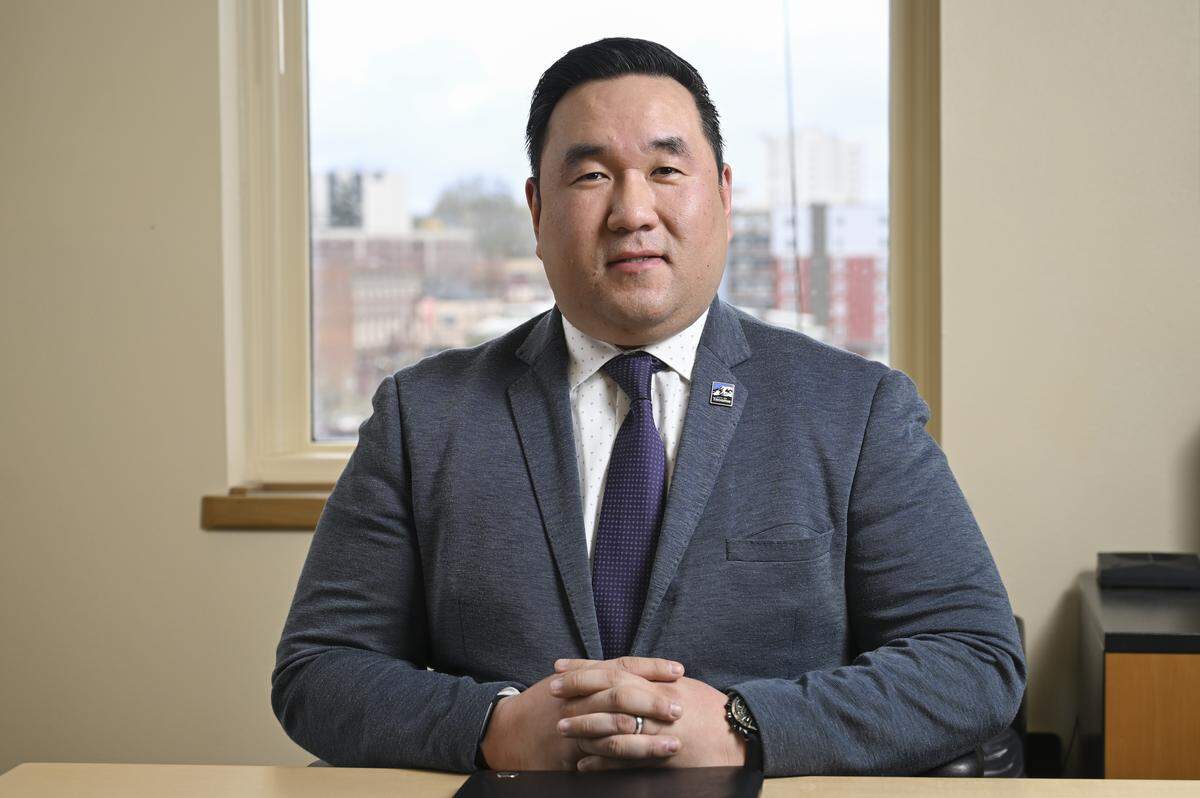
As Tacoma’s newly appointed, permanent city manager, Kim said he’s ready to settle in and have a place his four children can call home for the long term, he said. He’s occupying the top spot in Tacoma’s council-manager form of government, earning $358,363.20 a year to serve as the city’s chief executive officer.
“It’s really paramount for me, personally and professionally,” Kim said. “I want to stay somewhere to see things through.”
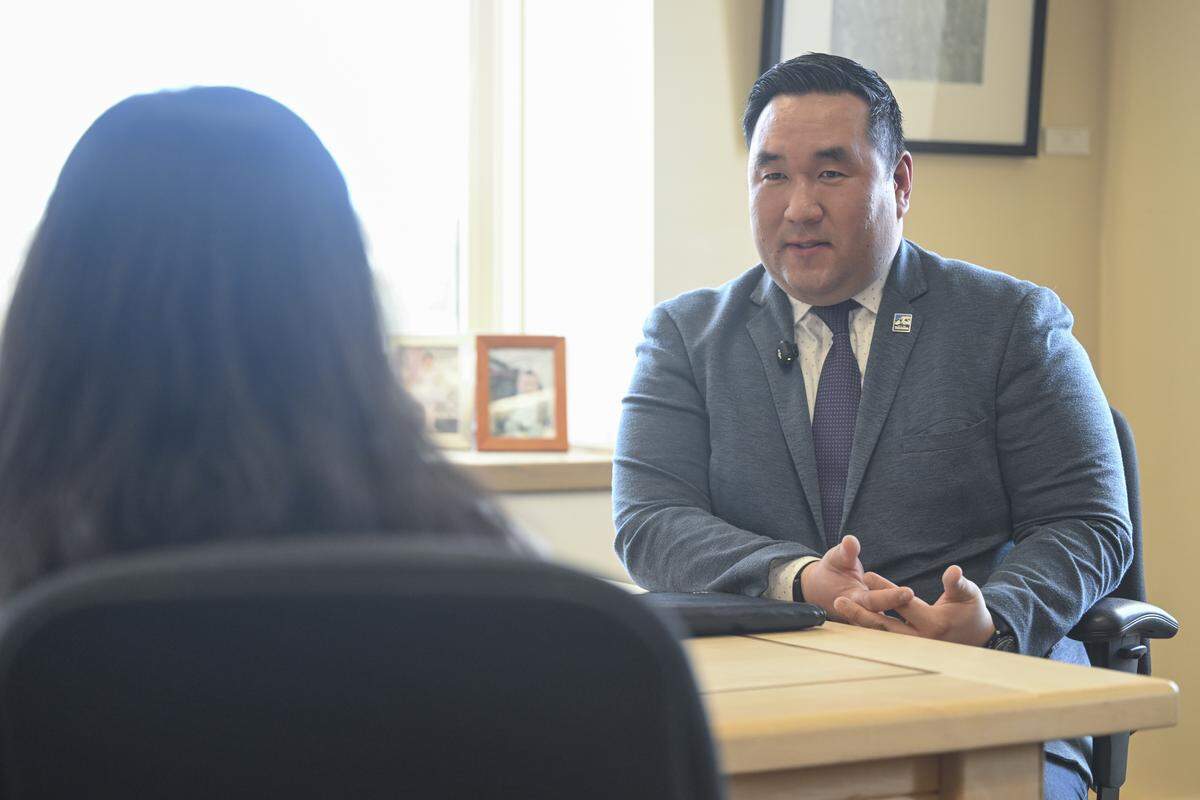
The News Tribune sat down with Kim during his second day on the job to discuss his background, his approach to the job and priorities. Questions and answers have been edited for length and clarity.
How do you pronounce your name?
It’s pronounced “h-yuhn.” My wife tells me it’s easier to start with the “yun” and then just add the “h.”
You started your career working in a bank in Wyoming. Tell us about how that influences how you approach this job?
I worked in both commercial as well as retail banking for a community bank called Rocky Mountain Bank. They no longer are around. They were bought by another big bank. But in my formative years it was my first true supervisory team. I started with a project that led to opportunities to lead a market in the Rock Springs market. Lot of lessons learned, [like] the importance of seeking buy-in. Working for a bank, I also worked on the public side of our major depositors, so our public customers, the town of Pinedale, the town of Jackson and so got to work through there. It really did give me an opportunity and actually, from that opportunity, had an opportunity to jump into small town America where a small town gave me a chance to manage a municipality. That’s where I had a chance to start my career by literally balancing a budget, mowing the grass, taking care of a cemetery, a golf course, those kinds of things. It’s been great, and I’ve been doing that ever since.
Why did you want to work in local government, as a city manager?
When I was going to school, I had not just a nominal notion, but I had a real interest in working for the federal government. I had a chance to have some opportunities, but in local government. When we talk about quality of life and impacting changes through not just policies but lines of service, there’s no better way to reflect in serving your fellow neighbor than in city government. I am biased. I do believe that we in local government are ... nimbler than other layers of government. Not to say we don’t work in partnership — that’s not to cast any aspersions for our partners at the county and the state and the federal government. But what happens here is so localized it impacts our residents’ true quality life. I think that’s really important.
What are your top priorities as you take on this job in a permanent capacity?
My top priorities are, number one, I execute the policy aims of the council, so making sure to work in partnership with them to develop a work plan as well as priority stack over the course of this next two years. Overriding a lot of those things is our structural deficit, coming together with a recovery effort upon which we can actually address that as well. I think basic services, too, ensuring that we can take care of the basic services, the core services for our community, and to level-set where we can get that accomplished on behalf of the council and to provide options for the council. That’s my number one priority. As they make decisions, our team has to provide them with the best options so that once they make the decision, we execute.
What do you hope to accomplish in your first 100 days?
Getting out there. I think demystifying the city manager role. I’m a public servant, along with my 4,000 colleagues here at the city. The authority and the power that’s vested in me administratively comes through the council. And so I’ve heard a lot of just really passionate points of contention, of we don’t know what you do, or we think you do this. Well, it’s my job to go out there and talk to community groups. I’ve heard from a number of groups that I’m meeting with now, the question I’ve received is, why now? Why different? Well, as the interim city manager, I was charged with a work plan that was predicated on ensuring there was a clear path for the council to choose their next city manager that did not advantage me and also didn’t disadvantage me if I was going to apply for that position. So in my first 100 days, I want to get out there. I’m not saying that I’m going to be the face of the city. That’s the mayor, that’s the council, that’s our police chief. I’m gonna work in support with them. But people should know what the city manager does for the city.
How do you understand your role? How do you explain it to people who don’t know what a city manager does?
The power is vested in the right place, with the city council to pass laws and ordinances. So as they execute policy aims and set policy, I’m their one employee that I need to effectuate – if it’s a change, that change – or ensure that that policy is executed ... . That’s probably a broad sweep of what I do here. I also work the day-to-day operations of the city to make sure that, as we pass a biennial budget, we will be spending a lot of time in that first 100 days as well, working to that point as well, so that by October, November, we’ll have a budget that will be passed by council that’s pursuant to state law ... . I want to also share with the community, I want to share with businesses and nonprofits and residents, that I’m ultimately accountable every day to them through the council.
The city’s budget is obviously top of mind right now. How do you approach tackling that issue?
When I talk about policy and I talk about budget options, I have to preserve options from a budgetary standpoint, through cost containing. So you’ll be hearing about our efforts to put together what we’re calling a ‘roadmap to recovery.’ The City of Tacoma is, like many other municipalities up and down the Puget Sound, grappling with structural deficits. To say we continue to have structural deficits is important, but what’s more important, I think, for our patrons that we serve, is to have a plan to recover, even with uncertainty, even with macroeconomic, geopolitical forces. These things are out of our control. What’s in our control is we can cost contain what we need to do, working with our labor partners, with our departments, to think creatively about how we’re structured in the best way, and to be nimble and to be able to take on new challenges. Our internal service departments have received some budgetary direction from me, from the standpoint of putting together some options for cost containing. And from there, we’ll be talking through our external departments, and then we’ll be bringing options to council.
The city has seen several leadership changes in the last year – an election for five council positions, a new police chief and a new city manager. How do you approach leading a city with so many new faces?
About 20% of our department directors have retired or transitioned, or other circumstances. Stabilizing and, more importantly, bringing on the talent that the community deserves – we’ve brought on new department directors: our HR director, our neighborhood community services director. We’ve also brought in some other key staff, making sure that we get them out and visible with their departments, especially going through this budget process as well. We’ll be trying to get out in the community – not just trying. We will be getting out to the community to talk about our process in introducing these key principles and these executives for the city.
The role of city manager has been the target of criticism in the community. There’s a group in Tacoma that has an effigy of your predecessor in its office. How do you feel about that? How are you approaching that challenge?
This job is an accountable job. And as the administrative head, as the chief executive officer for the council, and I own that. In terms of what I plan to do in my tenure here, and I hope it’s a long tenure, I also want to get things done. That’s going to require that any criticisms that come to the city, it should stand with me, because I’m ultimately responsible to the council. That being said, I hope I never hear, ‘Well, he was unwilling to speak with me or talk.’ I will come wherever anyone wants me to come talk to their group. I spoke through my interview process. I don’t deny that inspiration or aspiration is the currency of what we do here. To discount that would be not something that I’m interested in doing. I’m going to channel that and speak to balancing. Here’s what we have, from a challenge standpoint, with the budget, if it’s an outlay of dollars. One thing I’m hearing with the changes that have happened at the federal level, with our social services and our human service groups in town, they are looking to us and the county and the state for support where funding is potentially being materially impacted. What else can we do? And that’s what I want to have those conversations, where can we support, if it’s not dollars, what can we do to support you when it comes to strategy or coordinating together?
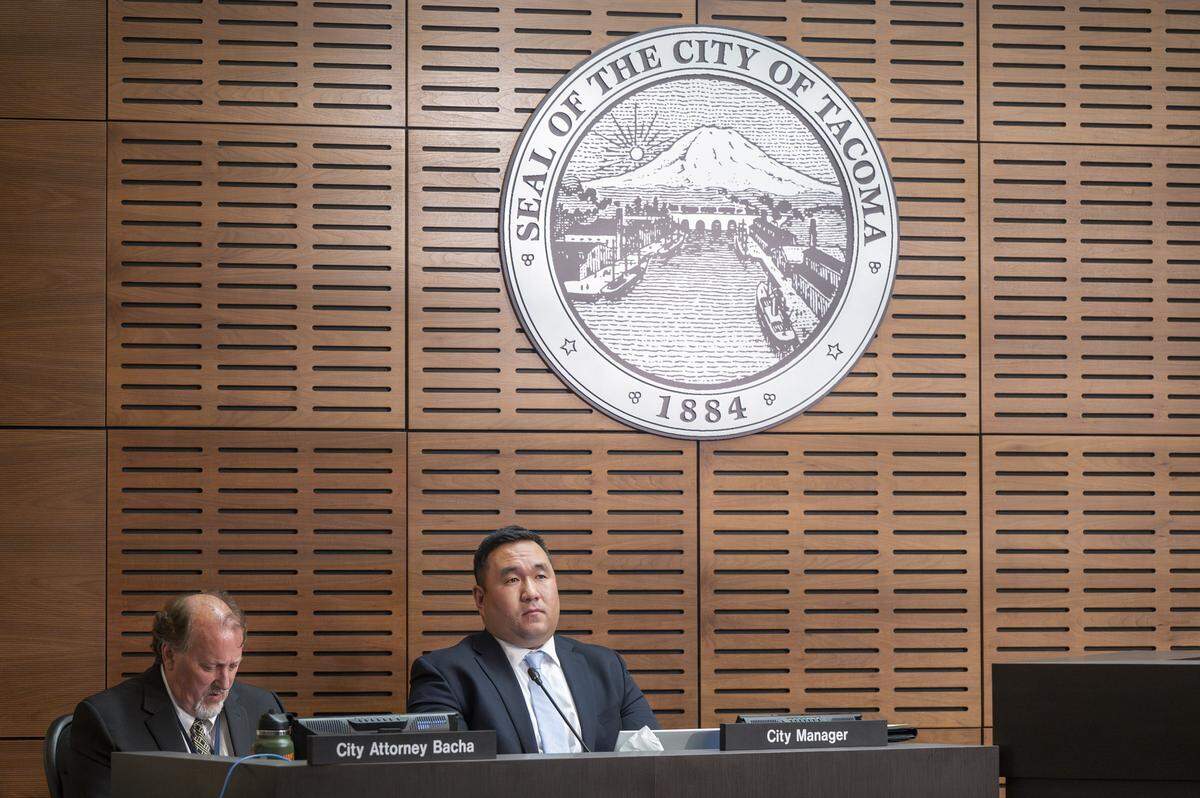
Many of the speakers at public comment during the meeting in which the city council voted to hire you spoke in favor of Yolanda Lewis, the other candidate for the job. How do you feel about taking on this role after it seemed like community support went the other way?
I want to go directly at that. Actually, the very next day, I heard from some of the folks that testified about concerns. [I said] let’s meet. So that’s what I’ve been doing, especially with our labor partners, our nonprofit [partners]. Let’s meet about this. Because if it’s about perception, let me be the author of that reality of where I’m accessible and where my team can be accessible to. If it’s about an outcome or a decision, let me explain how we came to those decisions. And I think there is some grace there, too, where it’s being afforded to me that people want to talk to me. And so I’m going to try my best to work with council in partnership with them, too. I don’t want to step out of bounds in terms of speaking for them, but I need to speak through them in terms of what the council is working on.
What do you do for fun?
I had an accident where I was in physical therapy. So I’m riding a bike. I’m a big dude, so if you see me in Tacoma riding my bike around, please don’t laugh. So I’m doing that for fun. I also love gardening. My kids and I, we are trying to live the best Pacific Northwest [life]. So, you know, backpacking, getting out there. I have teenagers, too, so the reality of my aspirations, in terms of what I want our family to be working on, they also have other priorities, too. So it’s balancing that. Other things that I do for fun, I like working with my hands. Quite frankly, maybe this is not fun for anyone, but mowing my grass. And maybe this does resonate with other folks. If there’s a contentious thing that’s happening at work that has some tension, the best thing I do is get on my lawn mower and just mow my grass, because I can look back and say, ‘I did that.’ So, amateur landscaper, that’s what I try to do. Don’t come and look at my hedge bushes, though. I try my best.
Is there anything else you want people to know about you?
I would say I am approachable. There’s this notion of, ‘You’re so busy.’ Reach out. Reach out directly: citymanager@tacoma.gov. Reach out. Let’s get together. Let’s have a conversation. From a professional management perspective, I’m a student of public administration and proving value and a return on the investment in terms of what the taxpayers pay for my wages and my benefits for the City Council, I’m yearning to earn it every day. So please reach out.
This story was originally published April 6, 2026 at 5:00 AM.