Mayor says Ruston is 2 years from going broke. Can controversial condo save city?
AI-generated summary reviewed by our newsroom.
- Mayor warns Ruston will exhaust reserves in two years without new revenue.
- TaraCotta offers $500M condo project if city approves taller mixed‑use zoning.
- Lead and arsenic in soil, unpaid debts and legal battles complicate development.
If nothing changes in two years for the city of Ruston, the small Pierce County city will run out of money. The most straightforward way to save it? The city council will need to approve a $500 million luxury condo project that will negatively impact one of residents’ favorite aspect of the city: its view of the Puget Sound.
In a recent council meeting, Ruston Mayor Bruce Hopkins said the city will have no funding reserves left after expenses continue to outpace revenue.
Hopkins framed the situation “as a critical business challenge for the city,” which has lost $500,000 in parking tax revenue as a result of free parking at Point Ruston, per the Feb. 17 meeting minutes. Without the condo development, the city “risks severe financial strain, potentially threatening services like police and internal staffing,” he said.
To approve the condo plan, the city would need to approve changes to its commercial/mixed use height restrictions, meaning many residents would lose their views if it goes forward. As previously reported by The News Tribune, the situation is further complicated by the fact that hazardous soil is buried under the parcels up for development, remnants of the Asarco smelter plant that operated there until the mid-1980s. Ongoing legal battles have left Point Ruston mired in unpaid debts and back taxes.
On April 24, a Pierce County Superior Court judge will decide if several lots in Point Ruston can proceed for sale, city councilor Jenn Jensen told The News Tribune this month. The TerraCotta Group is the only developer that has shown interest in the site, Jensen said. Representatives with TerraCotta Group could not be reached for comment Monday.
‘We as a city are trying to survive’
At the Feb. 17 meeting, Hopkins underscored “the urgency of the situation: the City does not have two years to wait for another developer, and the only path forward is to work with TerraCotta under these challenging circumstances,” according to the minutes.
“He framed the choice as a trade-off between short-term discomfort or aesthetic impacts for residents and the long-term viability and survival of the City.”
Hopkins did not respond to multiple messages The News Tribune left seeking comment. Ruston community development director Rob White declined to comment April 1, saying under city policy he cannot speak to the press, as Hopkins serves as the city’s official spokesperson.
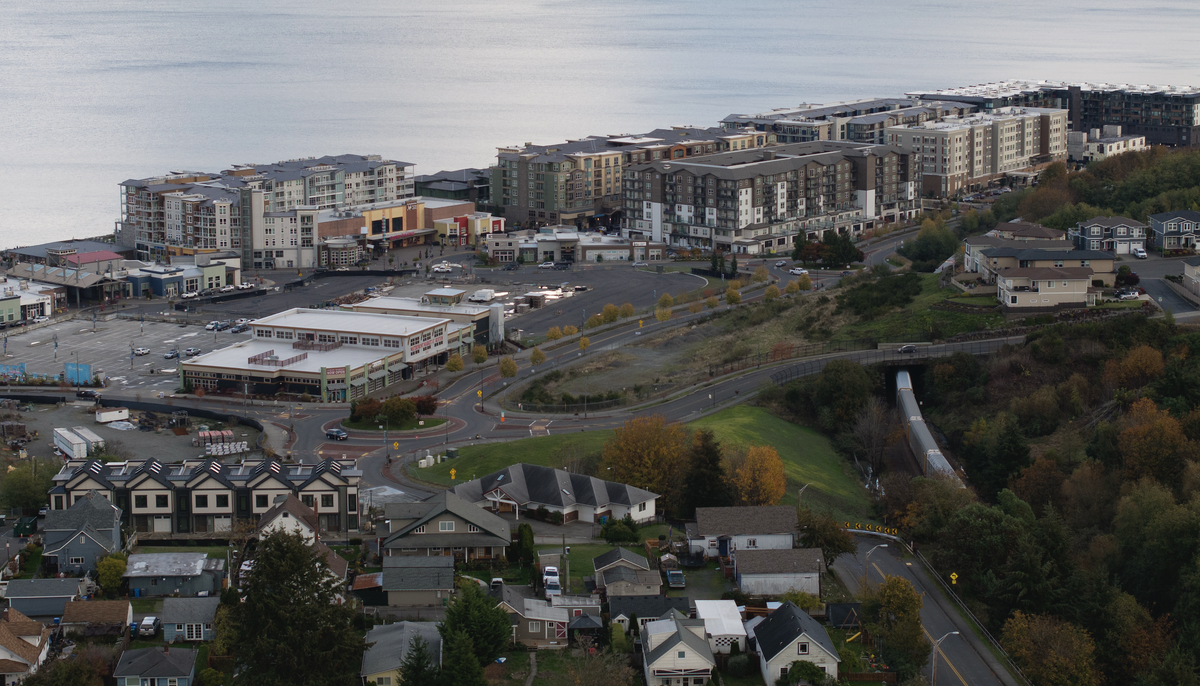
Ruston appropriated $5.6 million in expenditures for 2026 and planned to take in $5.7 million in revenue, according to budget documents. The five largest sources of revenue for Ruston, in order, are property tax, sales and businesses-and-occupation tax, hotel/motel tax, utility tax and parking tax.
“Expenses in our General Fund continue to outpace our revenue, and 77% of our expense is tied directly to public safety. The Levy LID lift that passed two years ago helped offset some of the increases, however expenses continue to outpace revenue increases,” Hopkins wrote in presenting the 2026 budget. “In order to continue to support our public safety it will require deficit spending currently forecasted at $95,290. Again, this year I will not be forecasting any new business/development growth but remain hopeful that we will experience some.”
In a March 31 interview, Jensen said the city is in its financial position because it has not seen a reliable income stream from expected Point Ruston development. At the same time, the city has seen an increase in costs, like other jurisdictions.
“The police force and the fire department [are getting] more calls,” she said. “There are times people have knocked down the road signs on the roundabout. And light posts. We have had to go replace the light posts multiple times. Traffic has increased because of the development. Our expenses as a city have gone up. Our income has not. We as a city are trying to survive until, and if, there can be some development.”
At the Feb. 17 meeting, council member John Holland said TerraCotta might walk away if the city doesn’t accommodate certain requests and “failing to move forward with development could jeopardize Ruston’s continued existence, likening the situation to a previous annexation threat,” per the minutes.
Council member Naomi Wilson “stressed that land use policy should be guided by planning principles and the long-term vision of the community, rather than by short-term financial pressures, cautioning that letting fear override data and analysis could lead to poor decision-making,” per the minutes.
Toxic soil, risk to views still a concern
Jensen said many Ruston residents oppose the TerraCotta development proposal, noting the tension between maintaining the city’s fiscal viability and honoring constituent input. At the Feb. 17 meeting, she stressed that “the residents’ voices should not be discounted simply because they conflict with the City Council’s or a developer’s interests,” per the minutes.
If the Point Ruston sites are developed, the toxic soil underneath (containing lead and arsenic) would need to be “uncapped” and put elsewhere, as the current on-site containment facility is sealed and full, Jensen said.
“There will be contaminants in the air if there is a disturbance,” she said.
Ruston resident Mary Anne Bell is part of the Residents for Environmental Accountability and Community Health group. Bell, who lives next to Rust Park, is concerned about where the toxic soil would go if development progresses. She connected with four residents who regularly attend council meetings to form the REACH group. Bell has concerns about TerraCotta’s proposal, too, although she recognizes the city needs money.
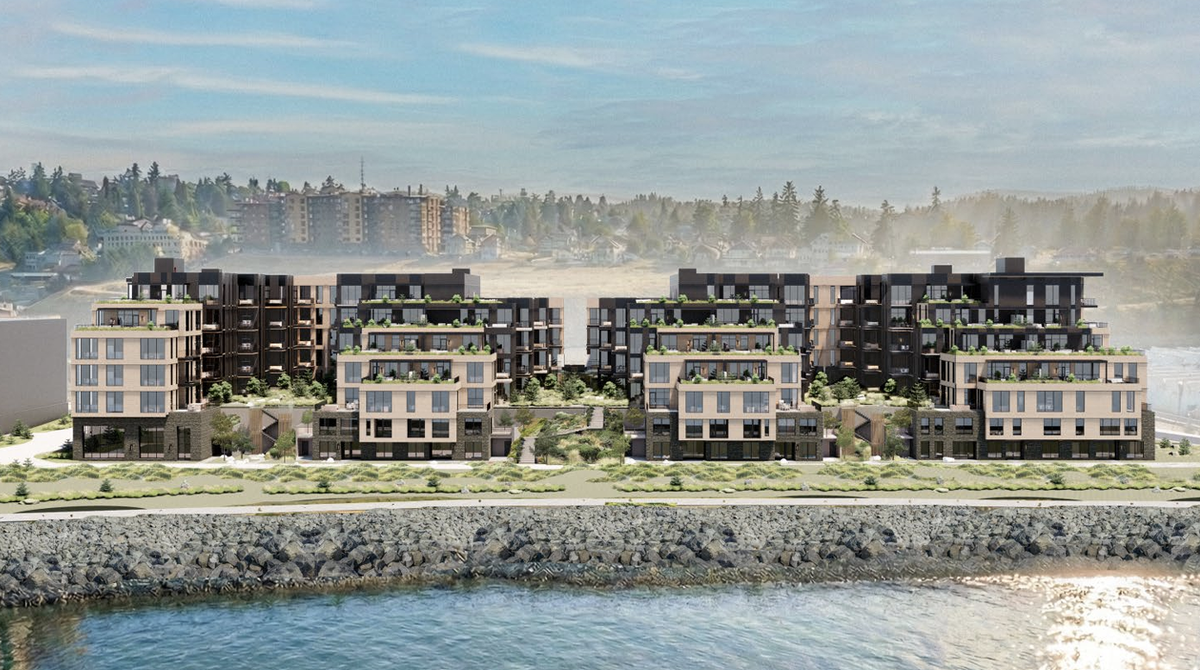
Bell knows many in town who bought their properties with the assurance their views would be protected under the master development plan.
“You can imagine now that the city is asking the people to agree to a height increase, why that freaks people out,” Bell said April 3. “It’s like, we invested our money on that promise, and the very people that made that promise are attempting to vote to break the promise. That’s kind of a problem from a trust standpoint, that’s a problem from a legal standpoint, and it just sours the relationship.”
Bell remains skeptical TerraCotta will commit to Ruston “for the long haul,” like its representatives have said, given the development expenses and high risk. If TerraCotta is looking for a property-tax abatement — a temporary reduction or elimination in property taxes granted by cities to incentivize development — Bell said “the city won’t last another two or three years while the homes are being built.”
“I just think we’ve got to be less tunnel vision about this,” she said.