Why does it feel like we’re always voting on something in Tacoma?
With Tacoma Public Schools’ recently-approved property tax measures in the rearview mirror and Parks Tacoma’s bond measure looming, Tacoma residents might feel that they are constantly voting in special elections.
Washington state law allows for up to four elections per year: an August primary and a November general election, which typically happen every year, plus additional February and April special elections.
Though local jurisdictions are not required to run elections on each of the special-election dates, Pierce County Elections manager Kyle Haugh said that Pierce County voters have seen four elections per year for the last roughly 15 years, with only one exception in April 2021.
Why is that the case?
At least part of the answer, as it often is in the state of Washington, is taxes. Derek Young, executive director of the Washington State Association of Counties, said without an income tax, special districts like Parks Tacoma are primarily dependent on property and sales taxes for funding.
The state sets a 1% limit on increases in property taxes, which means that taxing districts can’t increase the tax revenue they collect by more than 1% each year. If they decide to do so, they need to put the request to the voters for approval, according to the state Department of Revenue’s website.
Often taxing districts like Tacoma Public Schools or Parks Tacoma will choose to put such measures to the voters to fund new projects or maintain existing programs, and Young said those districts prefer to do so during the annual April and February special elections because they’re less likely to get drowned out by presidential or congressional elections that have more eyes on them in August and November.
“It gives the voters the time to actually think about that particular race,” Young told The News Tribune. “Otherwise, it can get lost in a large ballot with a lot of candidates — there’s a lot of noise.”
Young said Washington state law used to allow for six special elections – February, March, April and May, in addition to the August primary and November general election.
Young said the state sought to change that around 2009 due to the Great Recession.
“Auditors basically said, ‘Look, having a special election each month is a tremendous administrative burden,’ and when we were looking to try to reduce costs, that was seen as an easy give,” Young said.
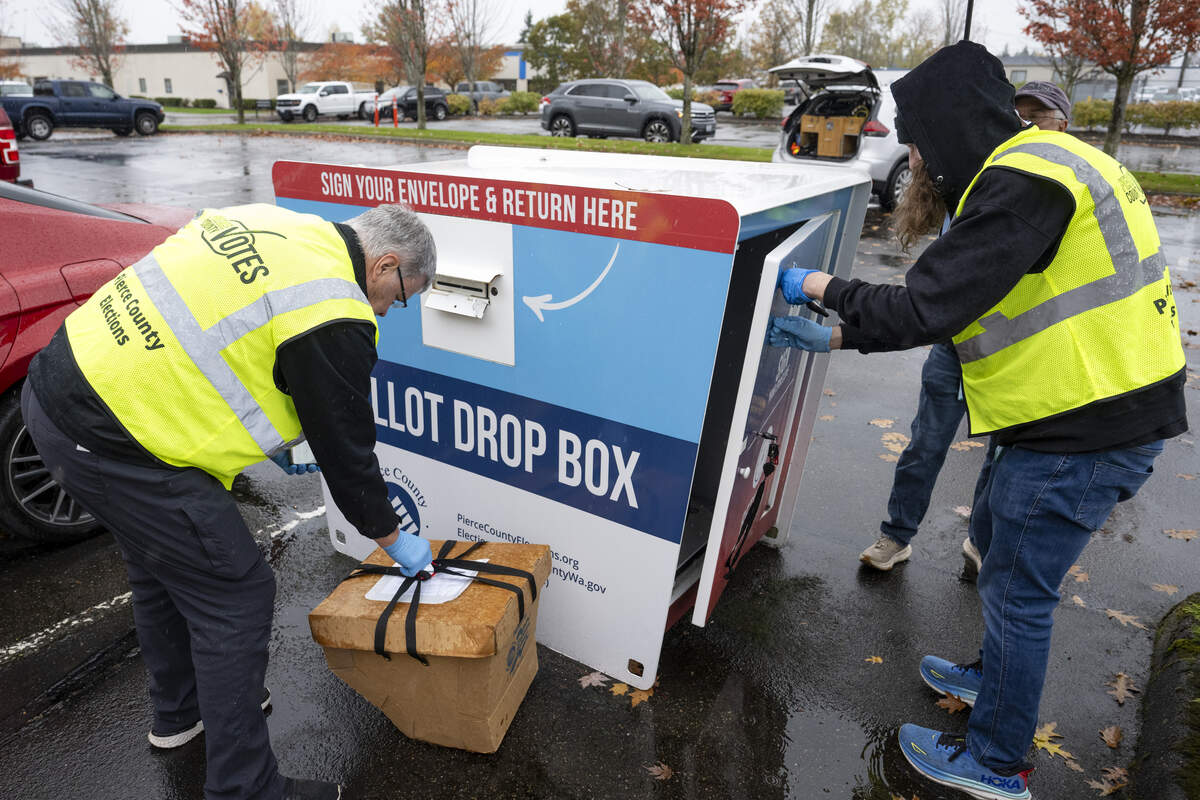
Why agencies in Pierce County are running special elections
The fact that Pierce County residents have been voting four times a year for the last roughly 15 years doesn’t come as a surprise to Young.
Parks Tacoma, Tacoma Public Schools and the city of Tacoma have faced budget deficits in recent years on the scale of millions of dollars – which has elevated the stakes in special elections to renew or impose new taxes. Having a total of four election dates in a year also gives those agencies the chance to try putting a measure to the voters again if it fails the first time.
In 2026, all three agencies sought or are seeking to increase taxes or renew existing property taxes – like Tacoma Public Schools educational programs and technology levies, Parks Tacoma’s bond measure and the city of Tacoma’s renewed streets levy.
Haugh said the agencies that have measures on the ballot for any given election are responsible for splitting the cost of running the election proportional to the number of registered voters who could vote on their measures.
As so many local government agencies face budget deficits, and as the state looks to address its own budget gaps, Young said it’s possible that the state could look to reduce the number of special elections – though no one has made the move to do so yet.
The cost of running a special election is part of why so many cities in the region have moved recently to implement a 0.1% criminal justice sales tax, he said. State law allows those cities to impose that sales tax without voter approval.
“We said, basically, ‘If you’re going to rely on locals to raise this revenue locally, you have to give the ability to the jurisdictions itself and their elected leaders to make that decision,’” Young said.
The cost of running an election is why smaller counties tend to run fewer elections, and why larger counties like King, Pierce, Thurston or Snohomish tend to have more, Haugh said.
Young said leaders of government agencies seeking voter approval on tax measures also take into account voter fatigue – the possibility that voters might be less inclined to approve tax measures if they feel like they’ve approved a handful already.
What do opponents say?
Paul Guppy is a senior researcher with the Washington Policy Center, a pro-business think tank. He said because special elections see a smaller voter turnout, it’s easier for outside organizations or people to play a bigger role in the outcome of the election.
“There’s a point where the electorate becomes so specialized and so small, it’s no longer effective in determining what the public wants,” Guppy told The News Tribune.
He said special elections tend to be less well-known among the public and more obscure, which means public opinion surrounding a certain measure is less likely to include opposing voices.
“Voting and democracy is obviously good, but there’s a point where voters get confused,” Guppy said.
Reducing the number of special elections could also save on costs, Guppy said.
“The main impression I got is that it’s just harder for the Secretary of State’s office to run so many elections during the year in so many different jurisdictions,” he said.
This story was originally published April 17, 2026 at 5:15 AM.