Is Tacoma’s ambitious ‘missing middle’ housing plan working one year in?
AI-generated summary reviewed by our newsroom.
- Home in Tacoma Year 1 shows increase in proposed housing units within newly rezoned areas.
- Permit applications in new Urban Residential zones increased from prior 5-year snapshot.
- Developers and council point to struggle of balancing costs with increasing units.
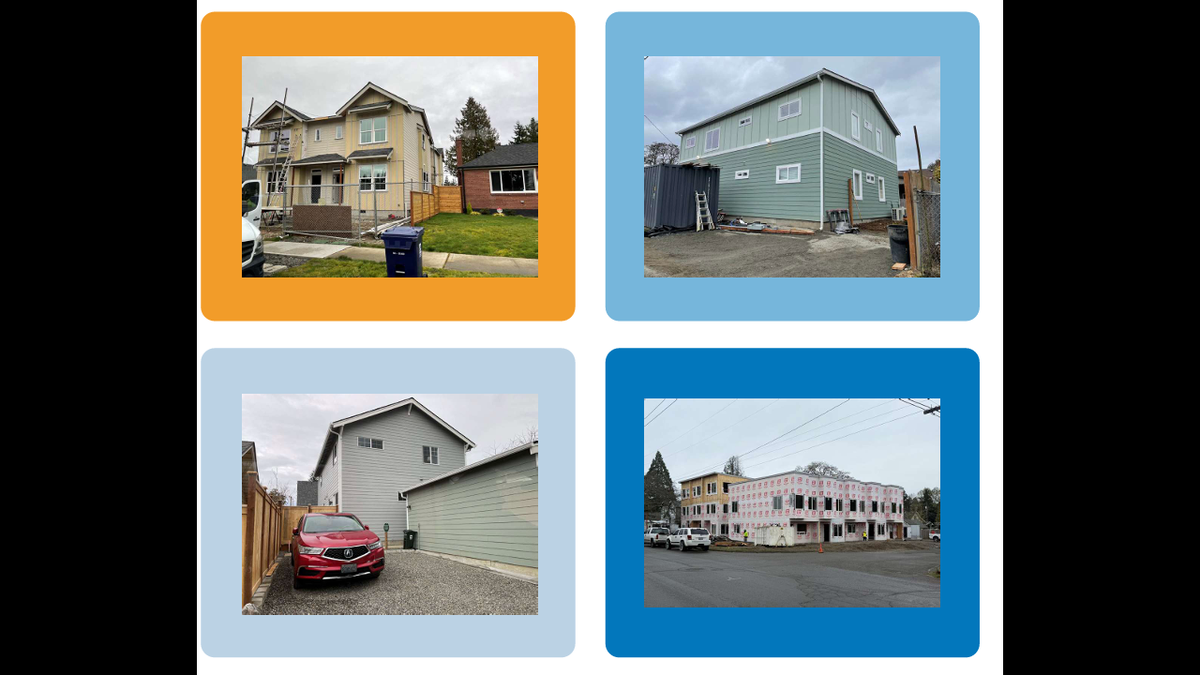
It’s been just over a year since the City of Tacoma launched an ambitious plan to increase housing diversity in residential neighborhoods under its Home in Tacoma program.
In its first review of the project, city officials say initial data is positive, with developers responding to the new zoning offering more opportunities for townhomes, duplexes, rowhouses and more in formerly single-family-zoned home sites.
The report announced a 62% increase in the number of proposed housing units within newly rezoned areas. It also showed a 39% increase in permit applications within the specific zones “despite broader, overall slowdown in permitting activity across the region,” according to the report.
It noted proposed projects becoming denser, with a 16% increase in units per application.
“I think we’re feeling fairly good about the report and the encouraging signals that are coming out of that,” Brian Boudet, assistant director for the city’s Planning and Development department, told The News Tribune in an April 27 interview.
“We are seeing more applications. We are seeing more units per application. We are seeing development move through. So I think there’s no doubt that people are availing themselves of the new regulations, and they are finding their way through the process.”
At least one developer told The News Tribune following the presentation that program adjustments need to be made, with new fees pushing builders toward smaller projects to avoid extra costs.
“From the stats, it is clear that HIT is successful in providing new land development opportunities that didn’t exist before in the form of two DADUs, duplexes, townhomes, etc. In this case, HIT is a win,” developer Ryan Meacham told The News Tribune via email after listening to the April 28 City Council study session.
“The problem is that the unit count doesn’t take into account impact fees that are coming into place ... the front loaded permits that have been applied for to beat-out impact fees, or other high costs that are burdening unit count,” as well as “new departmental criteria that is disproportionate to the build size and cost,” he added.
Still to be seen is how many projects reach the finish line, which the city also intends to measure.
What is Home in Tacoma?
Home in Tacoma was approved by council in two parts starting in late 2021, first to establish a broad framework for the city’s vision in overhauling residential land use, and then again in 2024 to establish new zoning and other residential land-use regulations, taking effect February 2025.
All of it is tied to state housing regulations, also enacted in the past few years, meant to address housing affordability and housing-supply issues.
The program is part of Tacoma’s broader Affordable Housing Action Strategy, approved in 2018.
Home in Tacoma aims to bring more types of what’s described as “missing middle” housing — something between single-family homes and apartments — to accommodate more levels of income and families. Examples include duplexes, cottage homes and other multifamily projects on lots subdivided for more types of residential construction.
First-year applications
The city’s first-year review of Home in Tacoma was presented to the City Council at its April 28 study session. It measured permit activity spanning February 2025 to January 2026 vs. the prior 5-year average.
The city’s report noted that in the five years before Home in Tacoma, the city averaged about 250 units added and about 150 applications submitted without Home in Tacoma’s rules/zoning. In Home Tacoma’s first year, the city received 213 permit applications for 385 housing units in the Home in Tacoma program. Of the 213 applications, 92% of them are in progress (issued, ready, or in-review) and 8% are completed.
It noted that among the new projects, about 40% of the 213 permit applications in the Urban Residential-zoned lots “are in the North End and Eastside, and housing density (by number of units) is highest in the Eastside (25%), West End (21%), and South End (18%).”
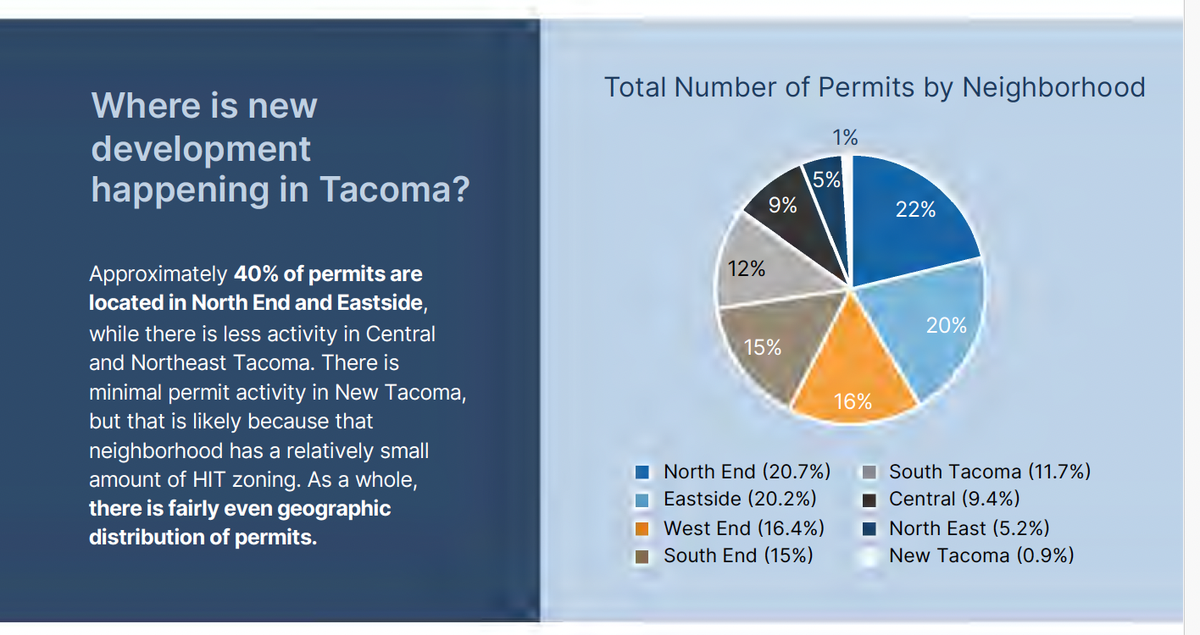
That density factor comes with the caveat that the report is only tracking Home in Tacoma’s Urban Residential zones (formerly single-family areas) “and does not reflect concurrent residential growth in Downtown Tacoma or designated Mixed-Use Centers, which operate under different zoning frameworks,” the city pointed out in a release issued after the report’s presentation.
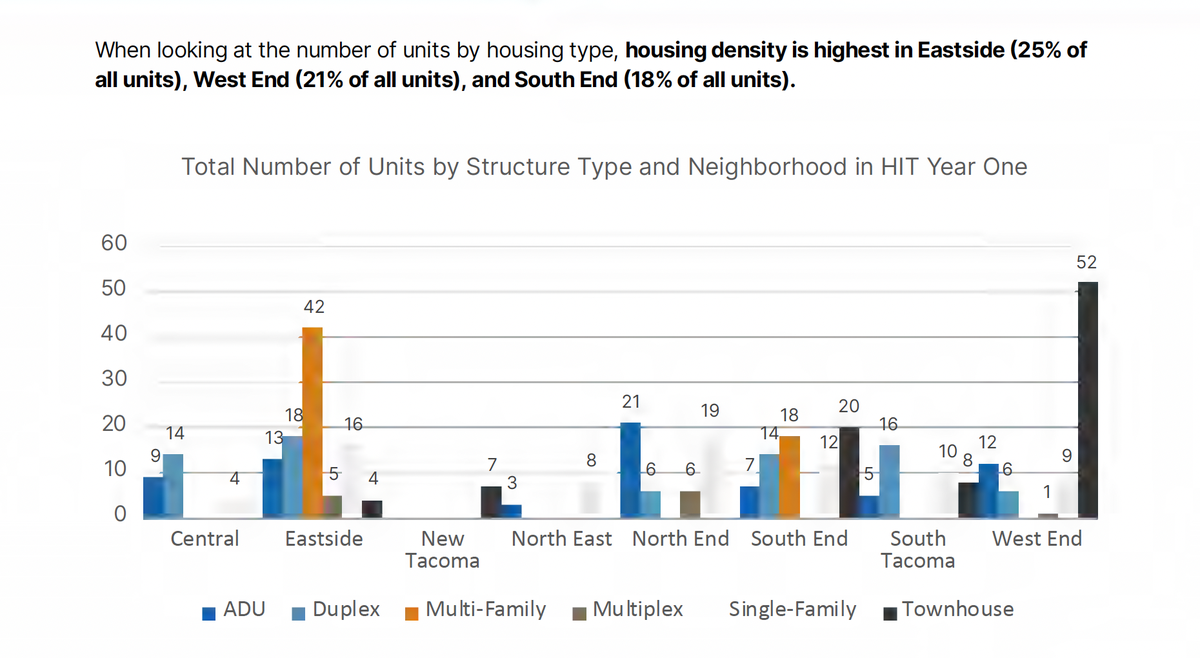
“It was not intended to serve as a comprehensive audit of all citywide residential development,” Maria Lee, city media representative, told The News Tribune via email in response to questions. “There are absolutely other areas of the city in which residential activity is occurring.”
“Because this policy represents a major shift that replaces single-family zoning citywide with new, more flexible Urban Residential zones, the report focuses on measuring early application data and behavioral changes in those specific areas,” she added.
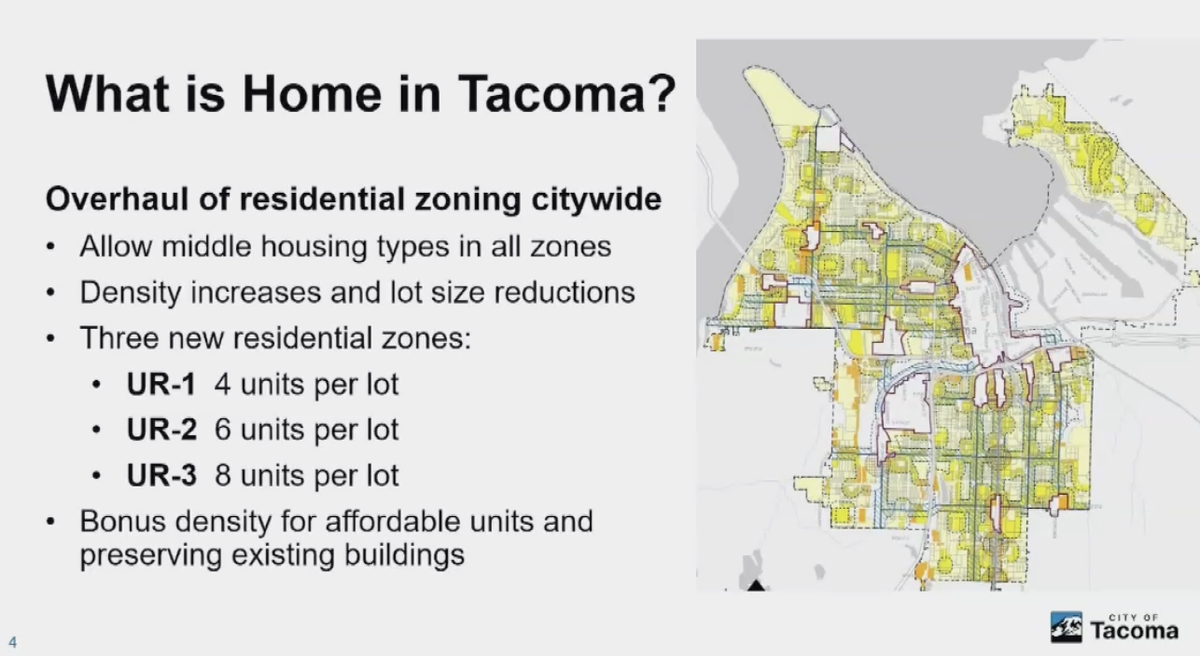
What the report did track, according to the city’s release, “highlights a clear shift toward ‘missing middle’ housing,” with townhomes and duplexes and other multifamily projects generating the highest number of proposed units in areas previously restricted to single-family lots.
“As you can imagine, it would take a lot of duplexes in an Urban Residential zone to equate to essentially a single, 200-unit apartment building in downtown, or something like that,” Boudet told the council on Tuesday. “But the encouraging thing is that, as we’ve seen in the permitting activity, we are seeing a shift in both the level and density and diversity of housing coming into the city.”
Development fees at issue
Some developers who have contacted The News Tribune contend the city’s work at streamlining reviews to help boost missing-middle residential development is helpful for those who already have funding and can make the project profitable or hold it as rental property.
Meacham and others also contend the focus on the review process misses the mark for some developers, along with added costs from fees tied to water, electricity, off-site costs, tree-canopy regulations and more.
There’s also a new transportation impact fee starting June 1 to help with local infrastructure costs. The move came after Tacoma voters rejected a tax hike last year that sought to renew and make permanent the city’s existing streets levy.
Meacham works in both local real estate sales and development and is a participant in the Tacoma Permits Advisory Group. He told The News Tribune this week that while he appreciated Home in Tacoma, more adjustments are needed to gain more types of housing.
He noted that his comments are from his perspective and not on behalf of any real estate groups or the permitting advisory group, and that “planners have been interactive and good to work with.”
“It would be beneficial to provide more incentives to builders and developers to increase unit count,” he said via email. “HIT is a success but not being maximized” to help meet Urban Growth Area requirements, he added.
Meacham noted that most of his team’s projects are kept small (four or fewer units) to avoid triggering higher costs, and that accessory dwelling units and detached accessory dwelling units had led the way as affordable projects to avoid higher fees.
He predicted that future development in the new UR zones primarily “will be DADUs by wealthy or on rental properties or duplexes. The rest of the development will be rentals by investors that can afford to build and keep them within a portfolio.
“Multiplexes will stay the same or diminish in count due to project complexity and high development cost.”
City Council member Sandesh Sadalge represents District 4, which includes Tacoma’s Eastside, and spoke with The News Tribune following Tuesday’s presentation, noting he found the early results from Home in Tacoma’s new regulations encouraging.
“We’ve really led the way, I think, in the state and in policies like this,” Sadalge told The News Tribune, “Yes, there are pains with growth when you don’t do it right, but we’re really trying to do it right, and that’s why I was just so pleased to see these early results.”
He also emphasized the importance of balancing developer responsibilities with community needs, such as off-site improvements and tree preservation.
“We did a lot of community input. And, you know, some of the things that people have said is, ‘Hey, growth needs to pay for growth,’” he told The News Tribune.
“I think there needs to be a balance and make sure that your responsibility in building doesn’t stop at your property line all the time. And we can talk about what that next responsibility and the reasonableness of these other requirements, but quite frankly .. communities want to see that if you’re going to have growth, that you add things to community — and that helps with the growth.”
‘Learning curve’ and data tracking
Council members in general said they are encouraged by the first snapshot of permits but also offered suggestions at the study session for improvements, such as comparing performance with other similar metros and looking for ways to encourage more homeownership.
Council member John Hines, who was part of the original Home in Tacoma council approval process, stated he is interested in a “comparison of number of permits issued versus number of units that come online.
“What we’re seeing is a trend at the national level ... of permits at one level, but the number of units actually coming online and being occupied is below that. So, once we get more permit data, how many of those are turning into actual units?”
Boudet said that learning curves still existed for property owners and developers and the city itself, and that as time goes on future reports can focus more on completed projects, not just applications.
“That will also allow us to get into more detail about some of the other key pieces of Home and Tacoma,” he told the council, “so items like the use of the bonuses and the incentives that are in there. I know there are questions about ownership versus rental, questions about unit sizes, parking, trees, other things like that, which in many cases aren’t reasonable to report on until we have completed projects ... and in addition to hear more from the community.”
Lee told the News Tribune via email, “Moving forward, as staff shared during its study session presentation to the City Council, the city is committed to improving its data tracking and reporting capabilities,” with dashboard tools and regular reporting updates, “to provide ongoing transparency to the City Council and the community regarding broader housing outcomes.“
In his interview with The News Tribune and at the council study session, Boudet underscored Home in Tacoma’s early track record compared with the larger economy.
“I would say if it wasn’t for the increase in this residential development activity, we probably would basically be flat overall from a development activity level,” he told The News Tribune, “because larger projects, in particular commercial and multifamily projects, are notably down because of just general market uncertainty across the country, and certainly in the Puget Sound region as well.”
Tacoma Mayor Anders Ibsen at Tuesday’s study session also noted the tension between developers’ concerns vs. the city’s fiscal responsibilities.
He noted the “necessity of having some frank conversations about how we tackle and how we thread the needle between the necessity of funding infrastructure and making sure that we’re not simply subsidizing projects on the entirety of the ratepayers while at the same time making projects actually able to pencil — especially in an increasingly uncertain market with very small thresholds.”
The full Home in Tacoma Year 1 report is online.
Previous reporting from The News Tribune contributed to this report.