Controversial Pierce County homeless village gets ‘green light,’ will move ahead
AI-generated summary reviewed by our newsroom.
- Court of Appeals rejected the group's claim and affirmed project approval.
- Tacoma Rescue Mission will begin infrastructure work this summer on the site.
- Good Neighbor Village plans 150 total homes to be completed by 2028.
A proposed village for about 300 chronically homeless people in Spanaway cleared its final legal hurdle Tuesday and will move forward with construction on 150 homes and several buildings, to be completed by 2028.
Three judges with the Washington Court of Appeals issued a decision Tuesday rejecting a claim from the group Spanaway Concerned Citizens, which opposed the project and raised concerns about its potential impact on neighbors, adjacent wetlands and wildlife, as previously reported by The News Tribune.
Spanaway Concerned Citizens “failed to demonstrate” its allegations that Tacoma Rescue Mission’s development applications were incomplete and affirmed that the Tacoma Rescue Mission’s proposal was consistent with the Pierce County Comprehensive Plan, according to the opinion. The decision affirms a prior decision made by a Pierce County hearing examiner approving the project in June 2024.
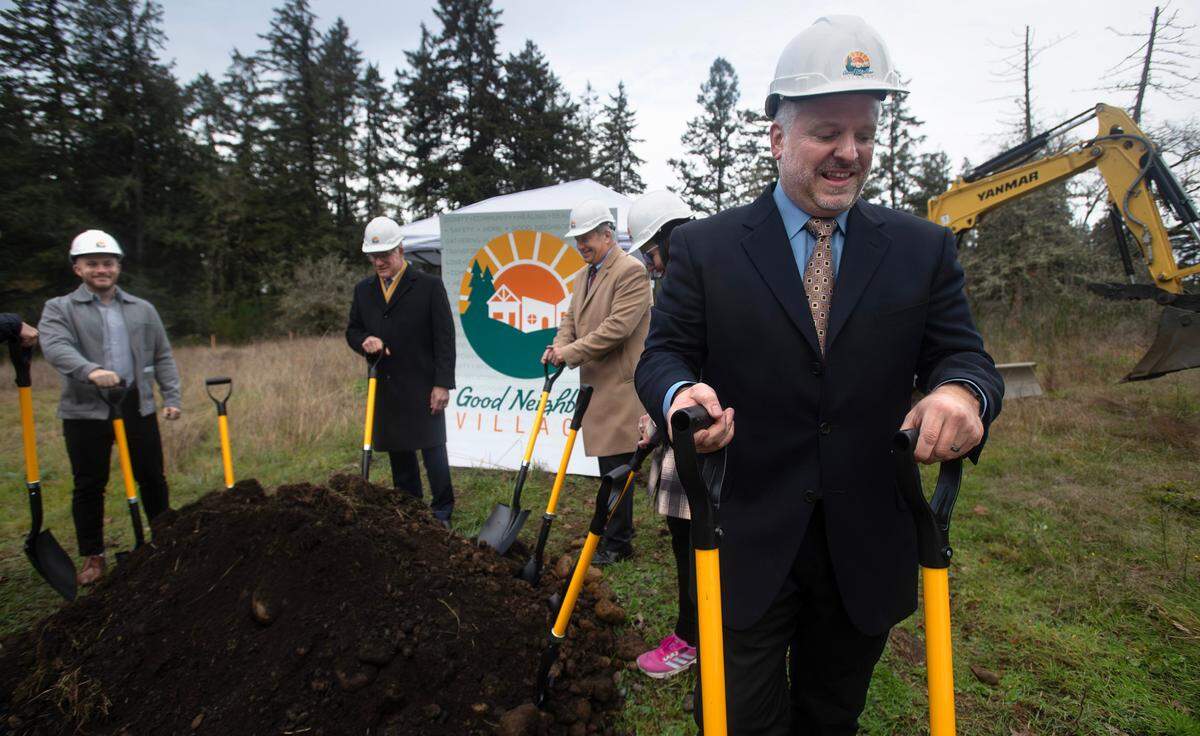
The “Good Neighbor Village” will be built on 86 acres at 1609 176th St. S. and 17320 Spanaway Loop Road S. Per court records, the Tacoma Rescue Mission has proposed to build the development with 189 park model style recreational vehicles, 96 micro-sleeping units, maintenance buildings, an administrative building, a civic building, five bath/laundry buildings, a community farm and garden, three single-family dwellings for volunteers and staff and 285 parking spaces, as previously reported by The News Tribune.
The shared-housing village would provide permanent, supportive housing for those who have experienced chronic homelessness for a decade or more. Residents would pay rent to live in the village, and there will be onsite social services to assist residents in rehabilitating their lives, according to the Tacoma Rescue Mission’s proposal.
On Tuesday the Washington Court of Appeals judges ruled that Tacoma Rescue Mission and Pierce County are entitled to attorney fees “in an amount to be determined by the court commissioner.”
First 50 homes built in 2027
Duke Paulson, executive director of Tacoma Rescue Mission, told The News Tribune on Wednesday he was “very excited” and relieved to hear about the decision.
“It’s a long process,” he said. “It just is a real relief to be able to communicate with the community and our partners and donors and people that want to be involved and say, ‘Great, we now have the full green light to go forward.’”
The site is cleared and graded, and this summer Tacoma Rescue Mission will begin putting in the village’s infrastructure, like sewer, water, power, roads, sidewalks and internet cables, Paulson said.
The plan is to have the first cohort of 20 to 25 residents move in by March or April 2027, he said. Tacoma Rescue Mission plans to have 50 homes built in 2027 and 150 total homes built by 2028, Paulson said.
Counsel for Spanaway Concerned Citizens David Bricklin told The News Tribune on Wednesday that the group was “obviously disappointed” with the judges’ opinion. No decisions had been made about next steps the group would take, he said.
A representative with the Spanaway Concerned Citizens group could not be reached for comment via email Wednesday.
“This shared housing village model aligns with Pierce County’s goal to expand innovative housing options for those who cannot access or sustain traditional housing. Unlike temporary shelters, Good Neighbor Village provides permanent, stable community and housing where individuals rent their homes, have an opportunity to earn dignified revenue through jobs on location and can rebuild and live out their lives in a community where they are welcome and safe,” Tacoma Rescue Mission said in a press release Wednesday. “At its core, the village is designed as a community where a person’s autonomy and dignity is restored, creating an environment where one can work, pay rent and make choices to participate in community life and experience healing through supportive, consistent relationships.”