500-year-old Lakewood fir must come down. Could it end up in your dining room?
Hidden in a Lakewood neighborhood, a tall Douglas fir stands resolute by the road, towering about 150 feet tall and 80 inches wide. Its bark is riddled with holes, and it’s between 400 and 600 years old, likely one of the oldest of its kind in the city, said tree cutter Micah Glastetter.
On Tuesday, Glastetter will be chopping it down after the city of Lakewood determined it was sick and at risk of falling on neighboring homes and public infrastructure. The situation is bittersweet for Glastetter, who remembers growing up in Lakewood and biking to this tree, showing it off to his friends who were also in awe of its sheer scale. He plans to reuse the wood and turn it into beautiful live-edge tables, in addition to fireplace mantles and mementos sold at his workshop, Lakewood Live Edge.
Glastetter spent his whole life climbing trees. He founded Ranger Tree Service following the big deadly ice storm of December 1996 when all of a sudden “there was a year’s worth of work all at once.” Over the years, Glastetter and his team started specializing in bigger trees and more difficult removals.
The city of Lakewood hired Ranger Tree Service to cut down the tree, which is in the public right of way on Lake Steilacoom Drive Southwest. It will cost taxpayers about $29,000 and result in the closure of Lake Steilacoom Drive Southwest from June 23-24 to through traffic, according to the city. Ranger Tree Service will implement all traffic-control measures, like detours and on-site management, the city said in a statement Tuesday.
According to the arborist report, the fir tree was the largest tree arborist Alan Haywood had ever measured on a street right-of-way. Haywood said the tree was at “moderate risk” of falling and noted there were mushrooms on the trunk that are the common cause of heart rot, which can hollow out the tree, rot roots and lead to breakage. The city said the tree was condemned due to decay, root disease and a significant lean.
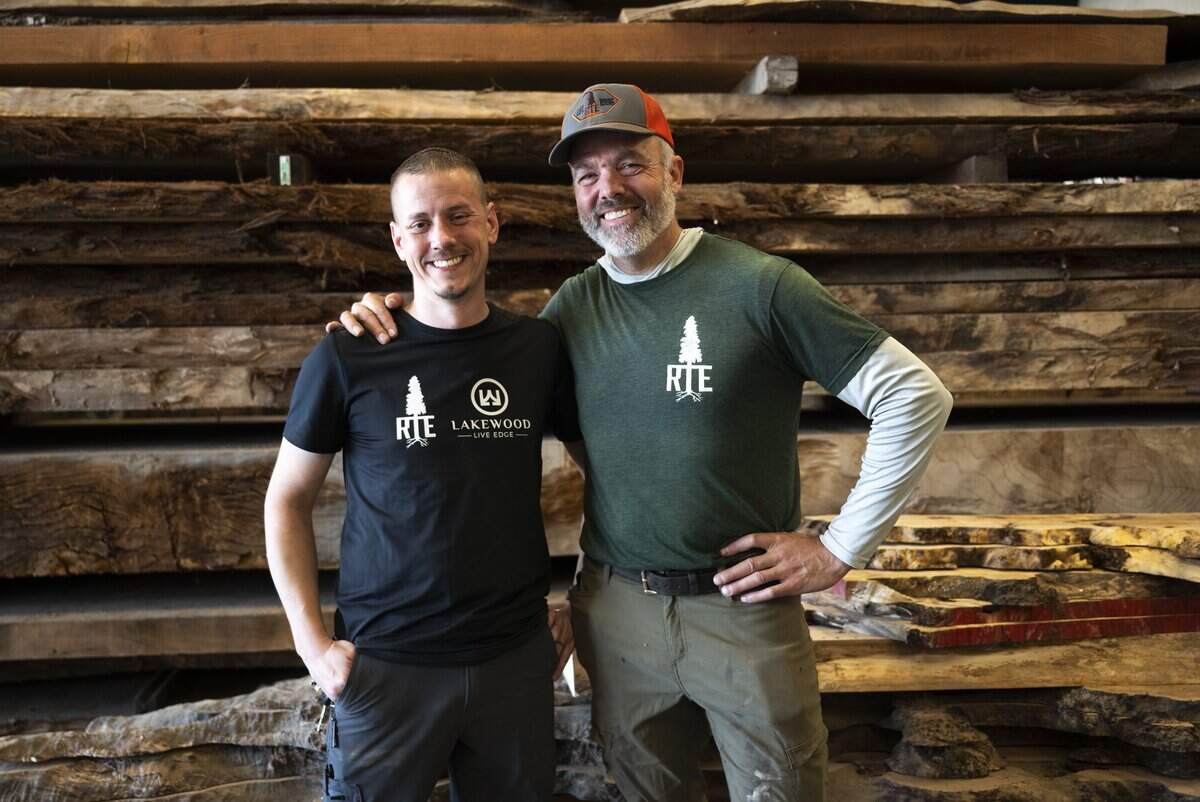
Inside the ‘wood laboratory’
The first local tree Glastetter turned into a table was a 100-foot-tall, century-old coastal Redwood he chopped down in North Tacoma (that story made The News Tribune’s front page on May 9, 2012). Some of that wood is still sitting in his lumberyard, sliced and ready to be sanded into furniture.
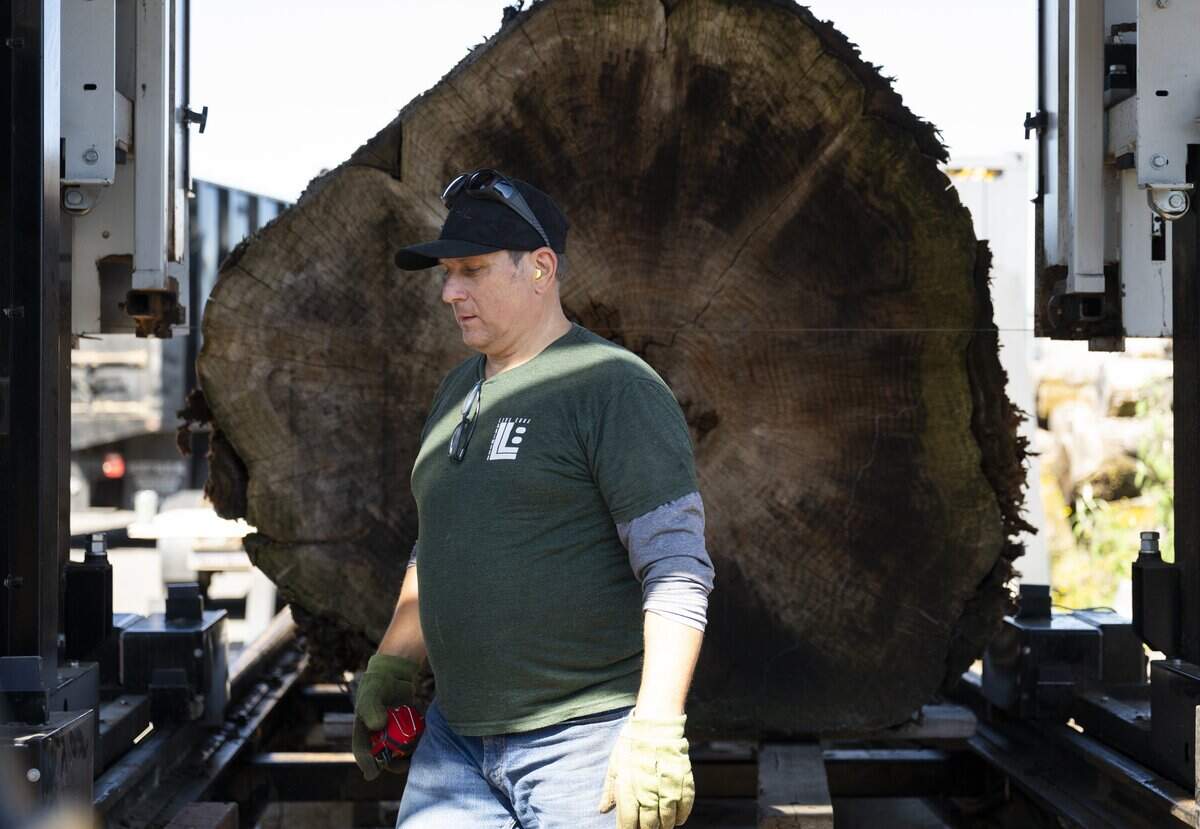
Upon a visit to the yard and the wood shop (which Glastetter calls “the wood laboratory”), sawyer Larry Blackshaw was using a large machine with a long thin blade to cut a “young” 60-year-old Redwood from University Place into huge horizontal slabs, leaving behind a cloud of sawdust (or as Glastetter calls it, “man glitter.”)
Years of cutting down big local trees wore on Glastetter. There’s no market for logs over a certain diameter or of a certain species. Many logs, even old high-quality logs, are sent to the sawmill, the pulp mill or cut to become firewood, he said. The market doesn’t value wood that’s irregularly knotted or doesn’t have a consistent curl, and so much wood is wasted in pursuit of a perfect piece, Glastetter said.
It’s that guilt of “big beautiful trees being turned into firewood” that’s prompted Glastetter to preserve everything he can.
“Everything organic is beautiful,” he said. “This tree lived a long time, and it faced a ton of adversity — hot, dry summers, cold butt winters … all that for nothing? If we burn it, I mean, literally, that is what we call wasting money, is burning cash. This is burning a beautiful, precious resource. And so the fact that so much wood does go up people’s chimneys in the Northwest, it’s because we have so much of it, and it’s easy to take for granted.”
Lakewood Live Edge gets its local wood for free from Ranger Tree Service, “so we can turn it into products and upcycle stuff a lot cheaper, make [it] a lot more attainable to people than the high-end stuff,” Glastetter said. As for the types of wood available, “If we didn’t cut it down, or someone didn’t give us the logs, then we don’t have it,” he said.
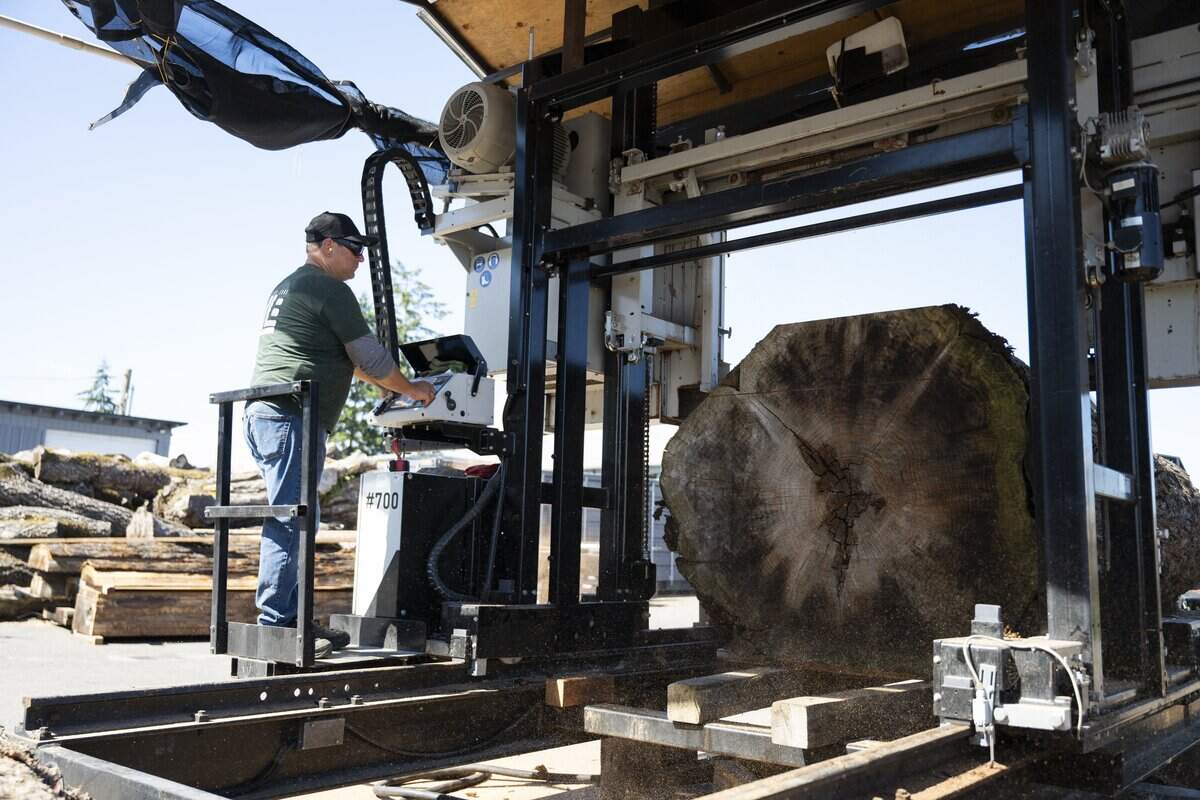
Much of their equipment is special-made to cut, sand and dry huge trees. A massive kiln can dry most logs in seven to 31 days (air drying takes a year per inch, Glastetter said). In the workshop, slabs of sanded wood rippled under the light. Lakewood Live Edge business manager Matt Couch held up a homemade wooden whiskey smoker kit they’re planning to sell soon, complete with fresh red oak shavings.
Glastetter anticipates the Lakewood fir tree will have “bright blonde and salmon orange” grain lines and make beautiful tables. He expects the tree to yield 50,000 board feet, 12 inches long, 12 inches high and one inch thick. If enough people are interested, Glastetter wants to make and sell small replicas of Mount Rainier out of the wood with the grain lines horizontal, to look like a topographical map.
Dining and conference size tables are typically sold for between $2,000 and $20,000, Glastetter said. Adding a steel base is about $1,500, he said. The company also sells coffee tables and custom pieces.
“Woodworking to me, it’s a natural fit, because the trees are just so stinking beautiful. There’s just endless fascination if you like organic things and organic colors,” Glastetter said. “The brilliance of all of it, it’s like if somebody gave you a giant pile of geodes, and they’re all different colors and all different formations on the inside. Trees are just bark on the outside. They have their own beauty, but when you actually finish the wood, it’s magical. Then the tree could live as long as an object as it did as a tree.”
How will this tree come down?
Nowadays Glastetter spends most of his time in the Lakewood Live Edge shop, “but I personally am going to remove this tree, because I feel like I have a relationship to it,” he said.
Some of the branches have full trees growing out of them “and then the top is just a candelabra of tops — there’s probably six tops,” Glastetter said. If it were to fall over, it would cost the city 10 times as much money as removing it now, he said.
Ranger Tree Service plans to use a crane to remove the branches from the tree on June 23, and then bring down the logs in sections on June 24, Glastetter said. Once they set up the crane, there is a lift that goes up 95 feet that will help the crew take out some of the “hairier branches” and float them to the ground.
“We’ll probably take this tree out one branch at a time from the bottom branch all the way to the top of the tree, and that’ll be the first day,” he said, noting that some of the sections will weigh about 20,000 pounds.
There will be five people on the ground and one person in the tree, Glastetter said. Everything will be loaded into trailers and brought back to the Lakewood Live Edge Shop, he said.
Although there’s the temptation in the tree-cutting business to encourage people to remove trees, to get paid more, Glastetter says he encourages people to trim their trees, enjoy their trees and plant more trees.
“It’s such a permanent thing to remove a tree,” Glastetter said. “I’ve always encouraged people to keep their tree and make their tree a good neighbor.”