Will Tacoma become WA’s next ‘Bee City?’ Mayor wants to save local pollinators
Rick Samyn wakes up at 4:30 a.m. every morning to check on his girls, except they aren’t his daughters, they are honeybees.
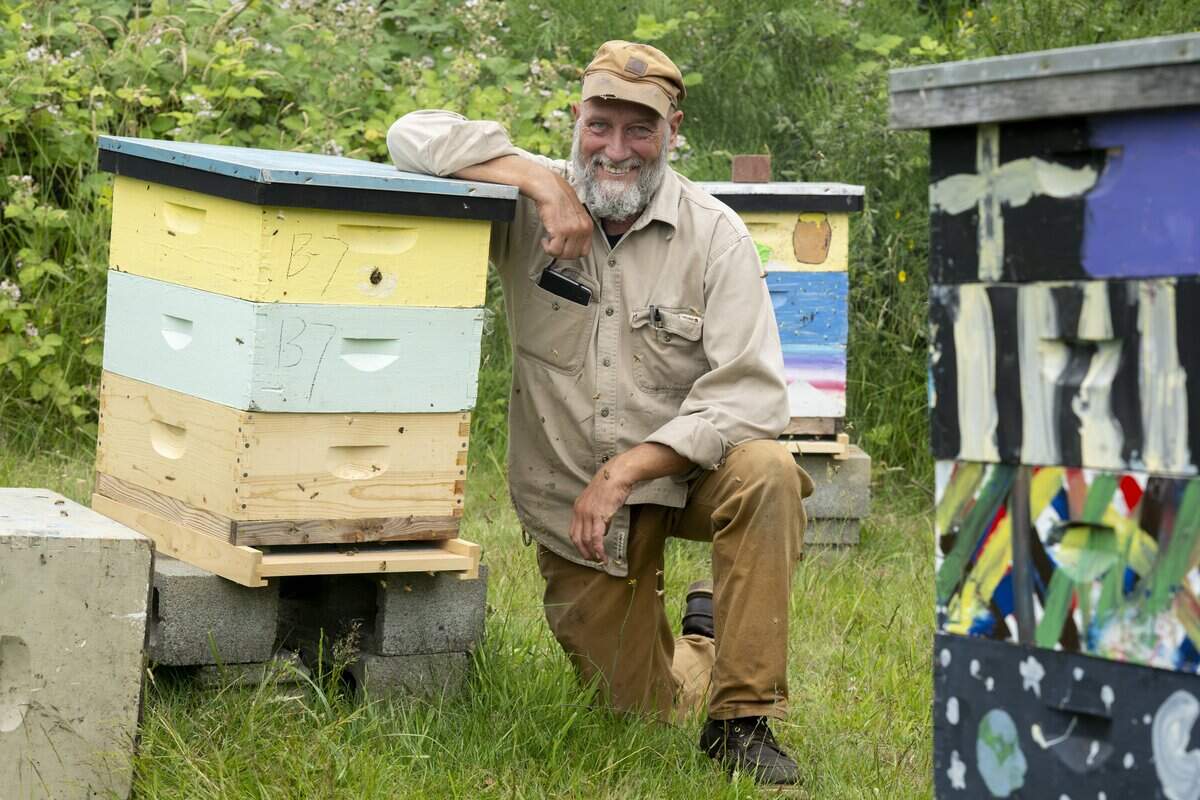
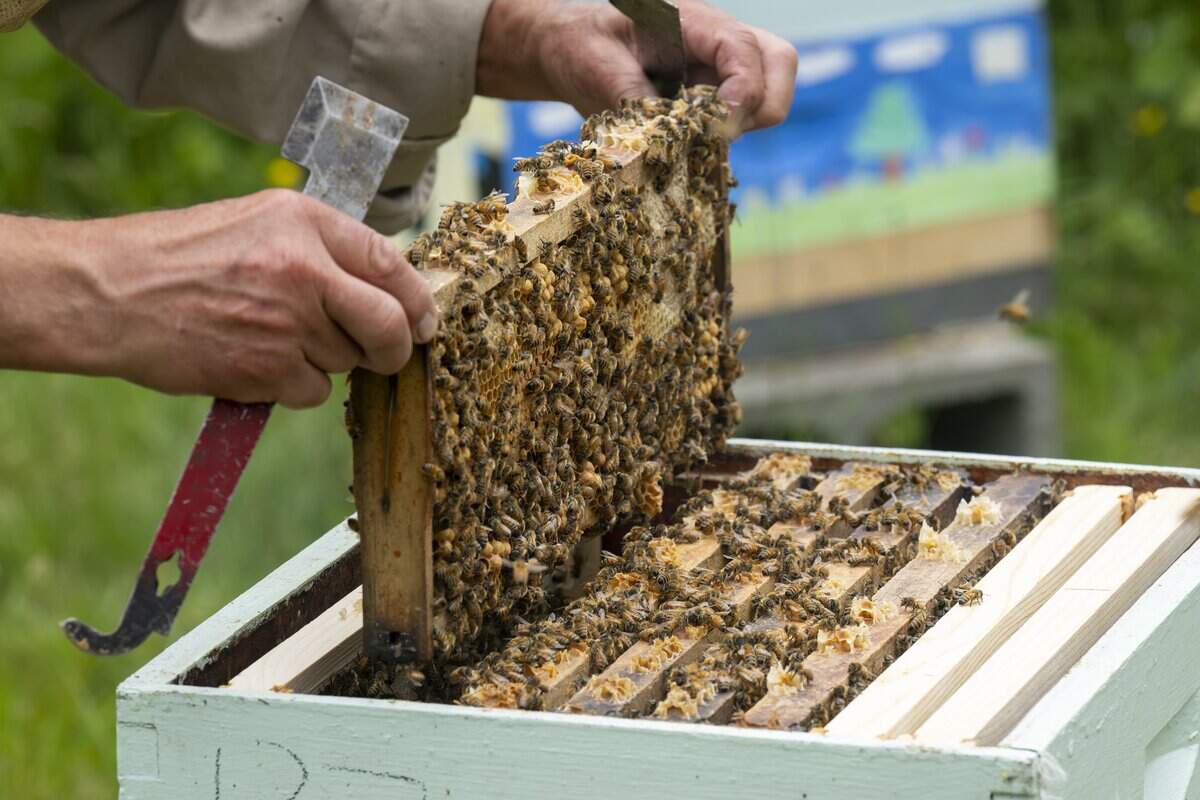
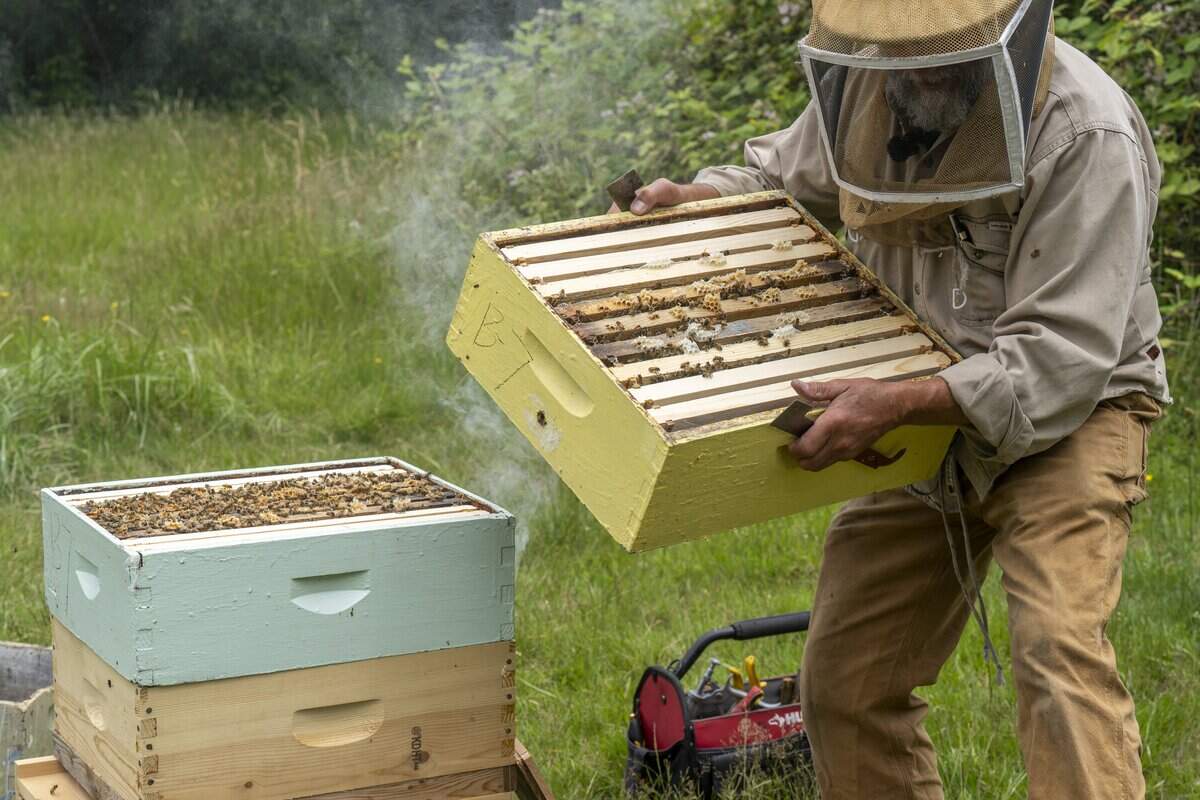
Born in Detroit, Samyn first began beekeeping after a neighborhood teacher gifted him a hive. He quickly became enthralled with the practice and moved to Tacoma, where he began an apiary program called the L’Honey Program at St. Leo Parish in partnership with the L’Arche Tahoma Hope Farms.
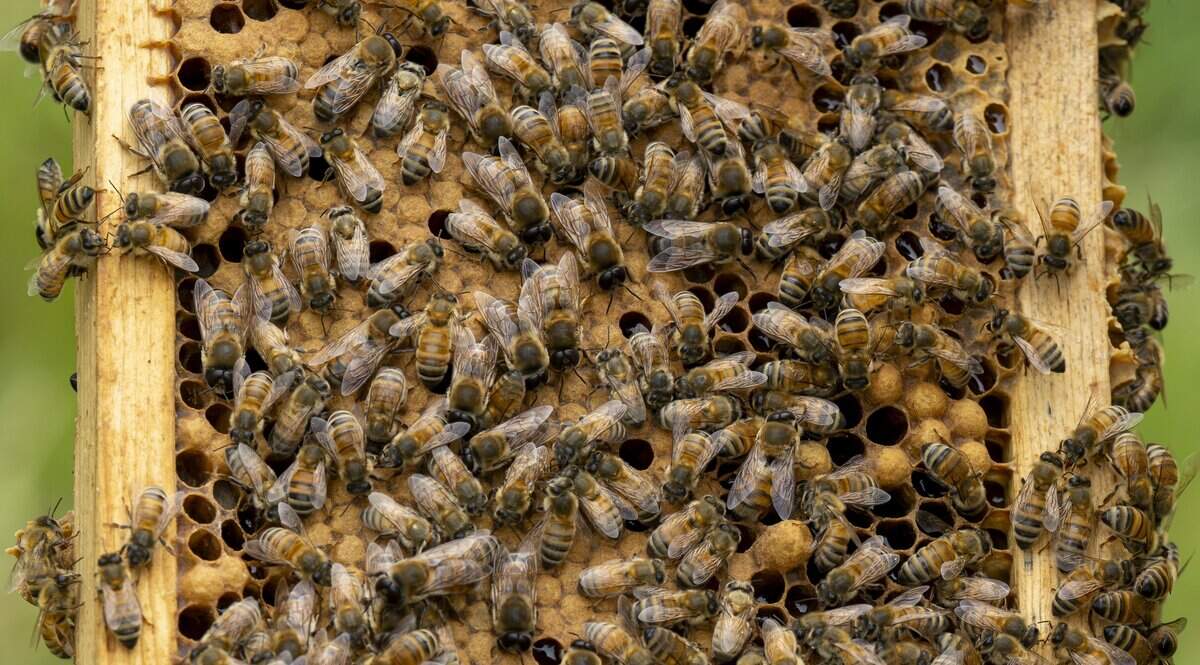
The 70-year-old currently operates seven apiaries with the parish, tending to about 40 to 50 hives, with each holding, at most, 80,000 bees. He said he manages about two million individual bees.
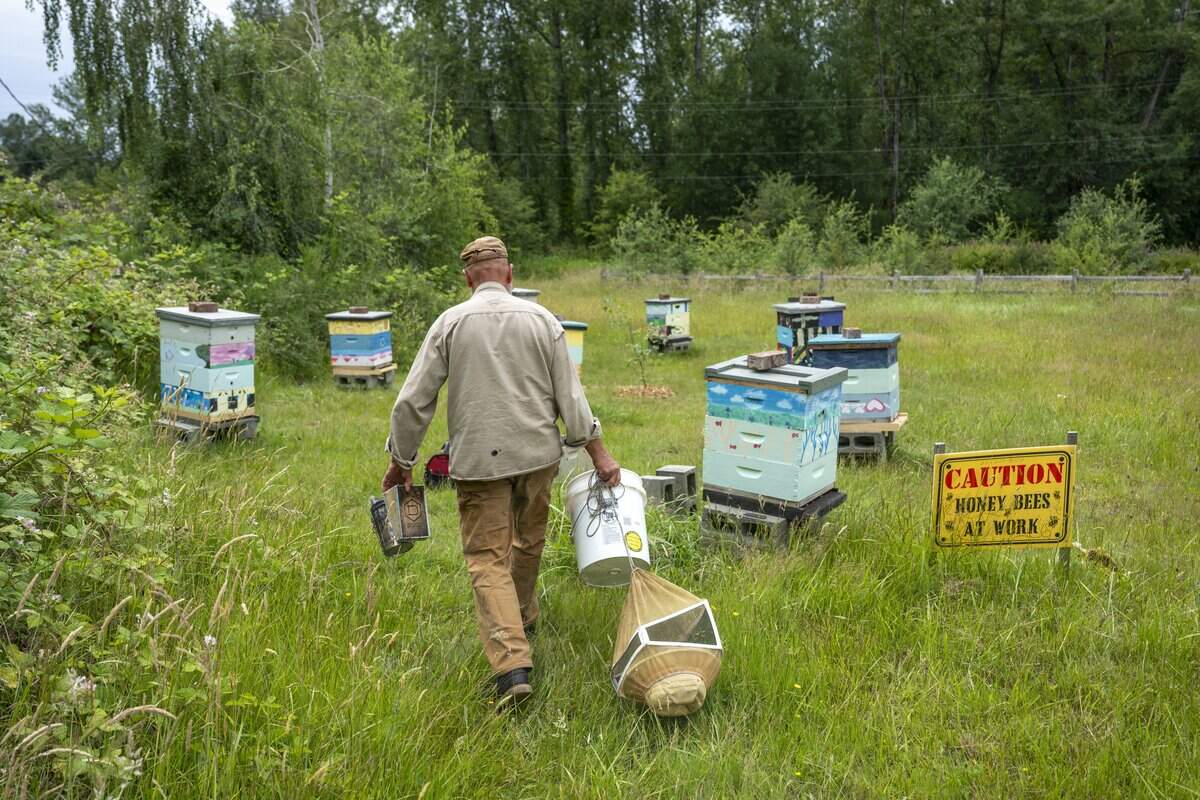
To Samyn, humans have a lot to learn from the bees.
“They do exactly what we normally like to do,” Samyn told The News Tribune. “We raise our young, we try to build a home, we get food, and we grow for future generations. They’ve been doing it for 10 million years, and they do it by doing no harm.”
Native pollinators, including honeybees, are facing significant population declines due to habitat loss, pesticide use, and climate change. According to a 2025 study by NatureServe, a nonprofit research organization, 22% of native pollinators in North America are at an elevated risk of extinction with bees considered most at threat.
In response to extinction risks, the city of Tacoma is considering becoming a Bee City USA affiliate, an initiative spearheaded by a nonprofit called the Xerces Society for Invertebrate Conservation. The initiative encourages communities to work together to conserve natural pollinators by providing a framework to create and restore healthy habitats.
Washington has seven Bee Cities, including Seattle, Puyallup, Olympia, Vancouver, Bellingham, Sammamish, and Woodinville. As Bee Cities, they receive national recognition for their work to conserve pollinators and have access to a variety of resources and training on pesticide use and native plants.
“We’re not the elders on this planet,” Samyn said. “The bees are the elders, the trees are the elders, the fungi. All that teaches us how to be. So, when I see a group like in Tacoma thinking: ‘Oh, wow, we could do this differently.’ Yeah, we could.”
Tacoma Mayor Anders Ibsen hosted the city’s first Bee City meeting in June, inviting Parks Tacoma, the Pierce County Conservation District, Tacoma Public Utilities, and local beekeepers, including Samyn, to discuss ongoing pollinator-supportive work and general starting plans.
According to Ibsen, becoming a Bee City is not just about protecting pollinators, it’s a community effort toward improving public spaces.
“It’s not just Tacoma as a city, it’s Tacoma as a community,” Ibsen told The News Tribune. “So that means that our governing partners, non-governmental organizations in the community all have a shared sense of what we’re trying to do together, and that we’re acting in unison.”
Ibsen joked at the Bee City meeting that he recently entered the “bee illuminati” himself as his partner, Jade Monroe, keeps three hives in his backyard. Monroe was in attendance at the meeting and offered her expertise as a local beekeeper.
“When we walk around town, he’ll point out when someone has the perennials or the native vegetation in their yard, and he goes: ‘Now that’s Bee City,’ and he will identify what’s already in motion,” Monroe told The News Tribune. “It’s just so cool to see how we’re both understanding what’s already here and how it can be scaled.”
In order to become a designated Bee City, the city has to pass a resolution, committing itself to a series of requirements. These requirements are establishing a standing committee, creating and enhancing pollinator habitat on public and private land, reducing the use of pesticides through an integrated pest management plan, incorporating pollinator-conscious practices into city policies, and hosting one annual pollinator awareness event.
Throughout the meeting, committee members identified early action items to take, including expanding existing city-led habitat efforts.
Bronwyn Clarke, board member of Parks Tacoma, said that while she cannot speak on behalf of the entire organization, she views this as an opportunity to transform browning and underutilized lawn areas into pollinator-friendly habitats that feature native drought-resistant plants. Parks Tacoma recently reduced water irrigation by 50% due to budget challenges, resulting in the browning of areas that are not typically used by the public. She said, however, that these conversations are still in the early stages.
Other ideas discussed during the meeting included improving coordination among city departments, community partners, and external stakeholders regarding pollinator-related work. They mentioned possibly using Tacoma Public Utilities’ existing mailers and customer outreach channels to inform the public about any new pollinator-friendly spaces.
The committee also mentioned the idea of developing a Tacoma-specific pollinator seed mix in partnership with maintenance staff, land managers, and environmental experts to be used for city projects and commercial applications. Standardized seed mixes help provide pollinators with a diverse food source and reliable habitat.
The city will continue to meet with the committee each month, inviting additional community partners and stakeholders as they work to pass a Bee City proclamation and resolution by June 2027. The city then has to submit an application for approval to the Xerces Society to receive its official designation.
The Bee City initiative comes as the city grapples with a $40 million budget deficit. City spokesperson Marie Lee said the city doesn’t have an estimative for what it will cost Tacoma to become a Bee City. However, she said the mayor anticipates that some parts will save the city money. For example, rewilding public spaces could mean reduced land maintenance costs, she said.
Samyn said he will match about $10,000 from his beekeeping program to help jumpstart the initiative. He hopes becoming a Bee City will teach people that every creature on this planet, not just humans, deserves a home.
“We are human beings ... soil, earth. We are earth.” Samyn said. “If we could just start thinking about that a little bit and giving other creatures a break. I’m hoping this Bee City is just that — give other creatures a break.”