75 years of concrete: Inside a record-breaking Tacoma powerhouse
Nestled between the Port of Tacoma’s waterways is a concrete company responsible for much of the city’s infrastructure, from the buildings people work in to the bridges they cross. This year, the company is celebrating the 75th anniversary of its founding.
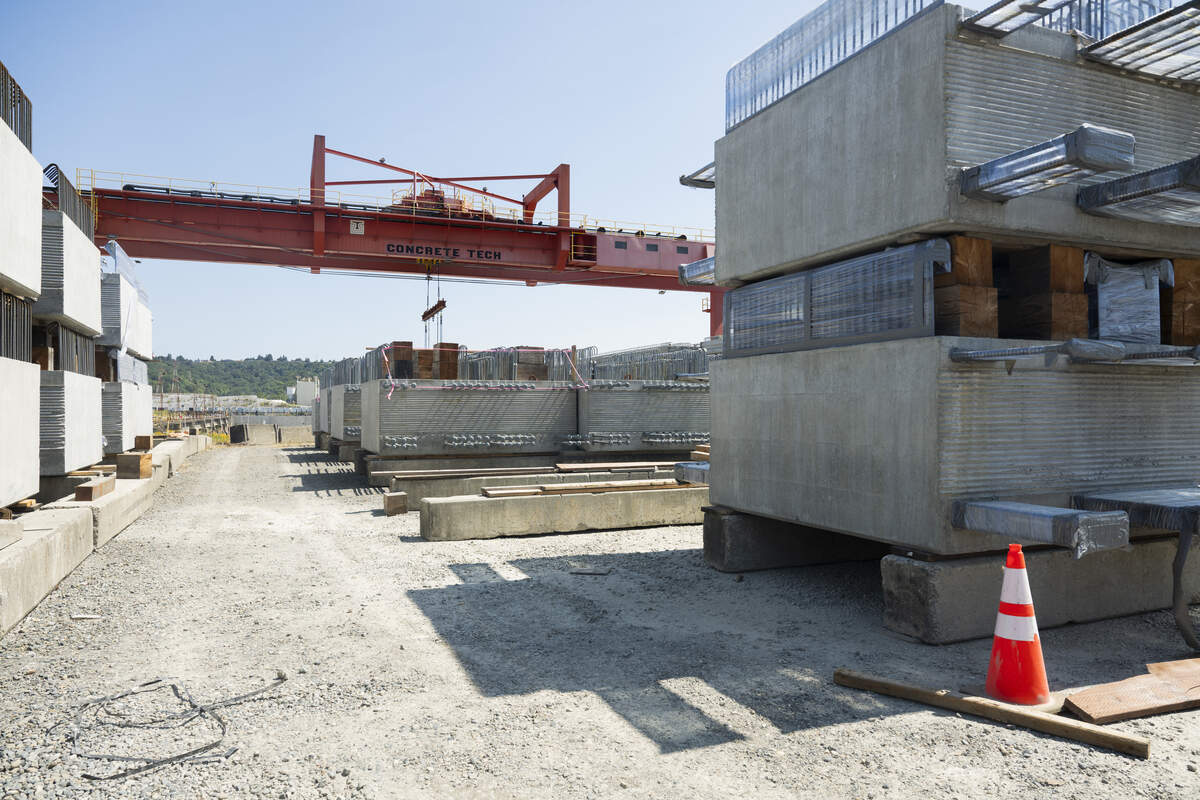
On Monday, The News Tribune visited Concrete Technology Corp.’s manufacturing site at 1123 Port of Tacoma Road. In the morning sun, a massive crane moved overhead, emitting a grating whir. Attached to its hook was a concrete component, the result of an entire day’s work.
CTC’s concrete has found home in locations throughout the country and across the world. In 1970, the company shipped girders to Florida for the construction of Disney World. Five years later, it sent floating concrete projects to Indonesia for a liquid propane barge in the Java Sea. At home, CTC is a core player in several infrastructure improvements in the Pacific Northwest. It is one of the core moving parts in Washington’s Gateway Projects, a $2.83 billion project to streamline highways in Pierce and King Counties, sending several hundred girders for ridges over the past five years, according to CTC vice president Jim Parkins.
Board member and stakeholder Rebecca Fountain puts it this way: “We’re everywhere without our name being everywhere.”
Fountain rattled off the numerous projects throughout Washington that CTC has helped with — Cheney Stadium, T-Mobile Park, the Seattle Monorail to name a few — before stopping to point at downtown Tacoma, faint in the distance.
“You see the tall building to the right? 1201 Pacific?” Fountain said, squinting. “I believe it’s the tallest building in downtown Tacoma. We built that in 1970.”
As she said that, a loud whir sounded in the background. The crane was moving again.
A family affair
Concrete is a family affair at CTC.
Fountain is the granddaughter of the company’s co-founder, Arthur “Art” Anderson, who was born in Tacoma in 1910. After Anderson received his doctorate from MIT in civil engineering in 1938, he supervised the design and launching of submarines and destroyers in World War II. He returned to Tacoma in 1951. At that time, Art’s father wanted him and his brother Thomas “Tom” Anderson to start a contracting business with him. Fountain shared that the two brothers did not want to do general construction, instead wanting to work with prestressed concrete, a technique they had learned about on the East Coast.
Fountain described the process of prestressing concrete with an analogy of picking up a stack of books.
“If you want to pick the books up individually, you can,” she said. “But the way to pick them up together is by squeezing them. Then you can lift up the whole thing at one time.”
Similarly, prestressed concrete has steel cables running through it, tensed and tight like a rubber band. The technique allows for stronger and bigger concrete that can last longer without maintenance.
Wanting to work with that technique, the two brothers received a small business loan in 1951 to start CTC. After being advised to take the business to Seattle, they were met with a roadblock. While they wanted to demonstrate the potential of pre-stressed concrete by building CTC’s offices out of it, the technique was unheard of in the United States at the time and, thus, not in the building code. The two were unable to receive a permit to construct the building out of prestressed concrete, according to Fountain.
No problem — the two took CTC back down to Tacoma. While pre-stressed concrete was also not in Tacoma’s building code, the inspector at the time let them build anyway. The Tacoma company became the first prestressed concrete manufacturer in the country.
“The rest is history,” Fountain said.
Still in business, and busy, 75 years later
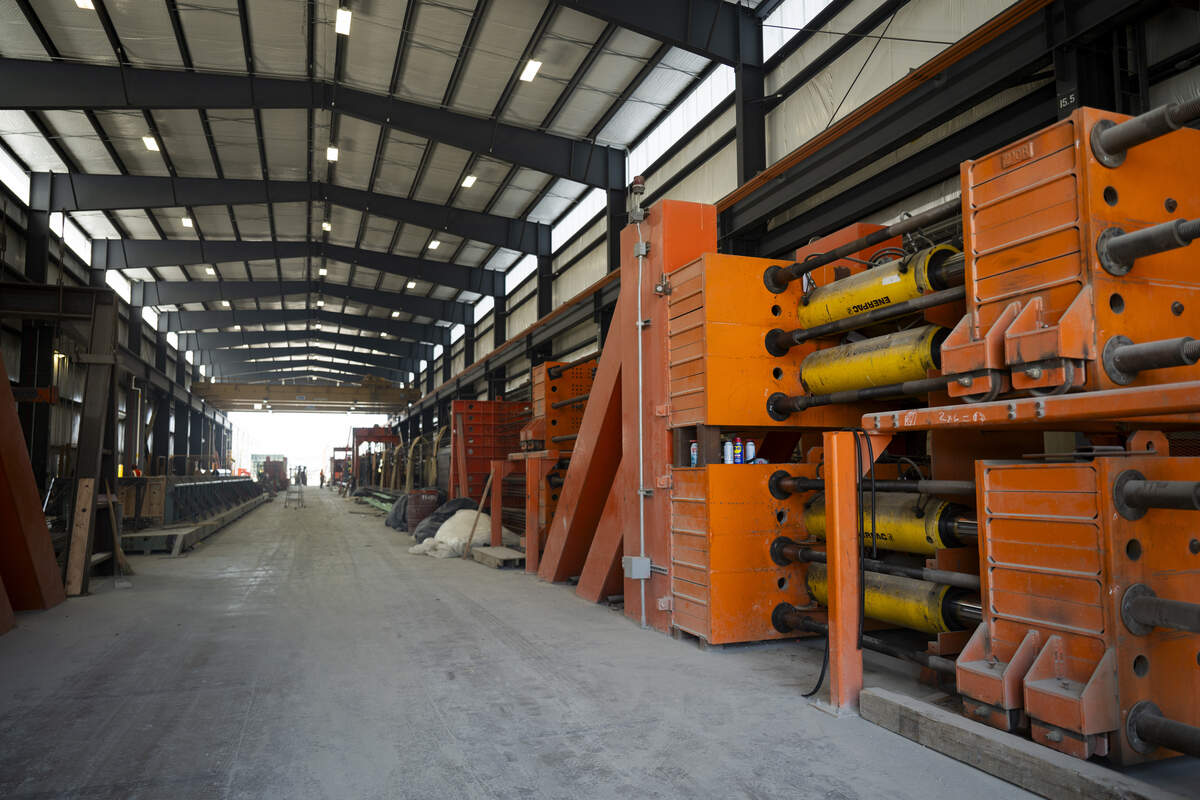
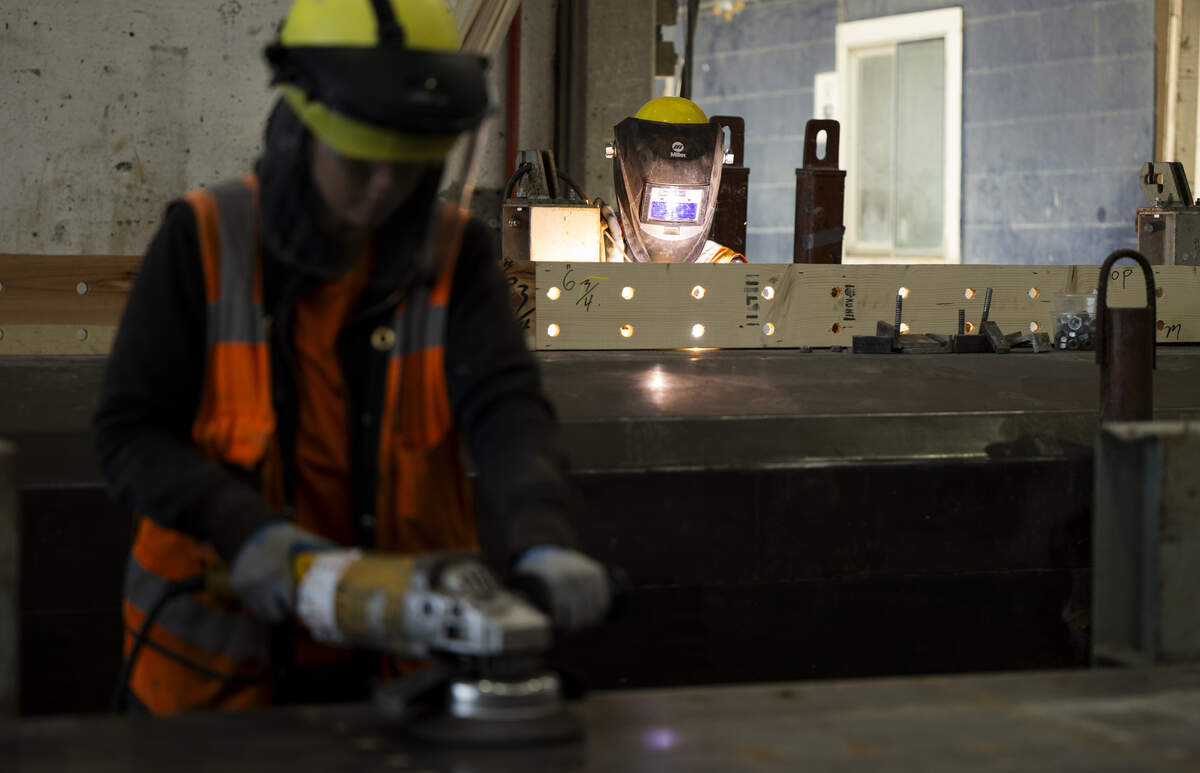
Seventy-five years later, CTC is busy. On Monday morning, a litany of sounds spilled outside from one of the factory buildings — the whir of the crane, the scream of the welding torch, the staccato shots of the tightening gun. Many of the components being built were headed for the Port of Alaska where they will be used to renovate the port’s terminals. Inside the factory, people in bright vests and hard hats were hard at work. They all looked small beneath the factory’s high ceiling, the stacks of concrete and the towering cranes.
Production starts early every day at 5 a.m. Then, they begin “Set-Up,” where workers build cages for each concrete component. Each cage is made up of an intricate pattern of steel rebar, or reinforcement bar, hand-woven to create the concrete block’s skeleton. Sitting in the midst of the factory’s work, the cage looked like a spindly Rubik’s cube.
“Your body is a bunch of skin and stuff held up by bones, right?” Fountain explained. “The rebar and reinforcing inside are the bones inside the concrete that’s helping give it shape and strength.”
The cage is placed into a stressing bed where steel wires are tensed by a pulley-like tensing machine that stretches 20 to 30 feet underground. After concrete is poured on the cage inside a form cast, the steel cables are promptly cut on either side, creating prestressed concrete. The concrete is cured for a number of hours, sometimes more than 12 hours before being transported to a storage yard across the street, where more slabs of concrete lay, for four weeks, to “gain strength.”
CTC’s location on the water is pivotal. Right next to the Blair Waterway, the company uses a graving dock to load concrete components and barges out of the Port of Tacoma. The graving dock was empty of water at the time of The News Tribune’s visit, the sheer size of the dock becoming more and more apparent, stretching over 150 wide and 500 feet long. Fountain said that the Tacoma location was ideal for Art and Tom Anderson. It had access to roads, rails, and, most importantly, water. From the port, CTC is able to easily transport the otherwise difficult concrete to various locations. Additionally, CTC is able to receive concrete aggregates, like sand and gravel, from the waterway, allowing the facility to make its own concrete mixes.
Today, CTC is a key partner in the Puget Sound Gateway Project. Having started in 2015 and estimated to finish in 2030, the Gateway Project will combine construction projects on State Routes 509 and 167 to open connections to the state’s ports, improve the movement of freight and decrease congestion on local roads and highways, according to WSDOT. Out of its seven phases, CTC has contributed girders to dozens of bridges, with over a hundred of them exceeding 200 feet.
According to CTC’s vice president Jim Parkins, the company is on track to beat its own national record for girder length, set in 2019 with a 223-foot girder on I-5, with a 225-foot girder. For the Port of Alaska, CTC is preparing 875 pieces of precast concrete and for Hawaii’s Honolulu Authority for Rapid Transportation, the company is planning to make 440 girders to complete a guide way route in Honolulu.
“Being on the water is a huge part of our story,” Parkins wrote over email.
Back from the factories, Fountain gestured toward a concrete Möbius strip that Art and Tom Anderson had made. Starting on one point, one would have to trace their finger around the loop twice before making it back to the same spot again.
“They wanted to show off what concrete could do, right? People didn’t think you could do that with concrete,” Fountain said. “Innovation is in our DNA, and it’s really been our employees over the last 75 years who have continued that innovative spirit.”