Goodbye lectern, hello laptop: Debaters take it virtual
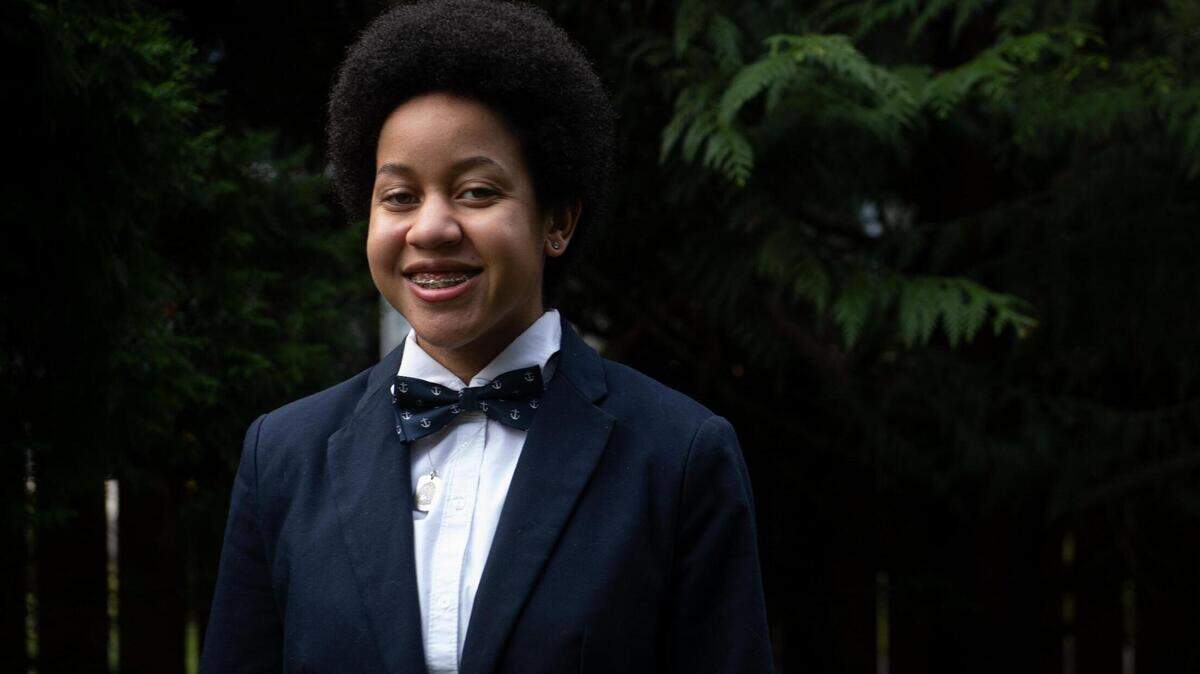
Gig Harbor High School debater Lauryn Boschulte was used to facing an audience . Now she’s learning to face her laptop.
Bolschute, co-president for her school’s program, said this year has been “super weird.”
In high school debate, classrooms have been replaced by Zoom calls, speeches have been replaced by recorded videos, and the whole game has become a virtual experience rather than an in-person one. While most other high school activities have been canceled this year, speech and debate teams have shifted to competing virtually.
“It was super weird filming myself just speaking on my laptop.,” said Boschulte, a senior. “Usually we’re taught to scan across the room and create connections with your audience, It’s really weird wondering where do you look, am I making big enough emotions in my speech?”
Debate, as practiced by high school teams, involves formal discussion of an assigned topic. Sometimes, debaters must prepare to argue either side. Logic, factual accuracy and oratorical skill are valued. Debaters compete individually or in teams, depending on the format.
In the midst of the COVID-19 pandemic, teams from Gig Harbor and Peninsula high schools are participating in a season unlike any before.
Gig Harbor coach Chris Coovert says “a lot of the kids are having a hard time just in general” and that participation is down from prior years, a decrease he partially credits to not having the in-person tournament experience.
“It’s not as exciting,” Coovert said. “For some of the kids, taking out the social aspect of speech and debate kind of makes it less interesting to them.”
Still, the Gig Harbor team has put together a strong group, he said.
“We’ve still got a lot of kids participating. We’ve had quite a few compete in the first few tournaments and we have a lot more that say they are going to participate,” Coovert said. “We have over forty kids who at least in theory are on the team but they haven’t all competed yet.”
Jumping through hoops
Amanda Swainston, the speech and debate coach at Peninsula High School, said the future for her team looks bright with a small but committed team of seven competitors, many of them freshmen.
“The team is about the same size as usual,” Swainston said. “They’re actually doing quite well.”
The first tournament required the team to adjust to using Microsoft Teams instead of Zoom, but that they made it work. Swainston said since many on the team are new, they don’t have an old debate experience to compare it to and are just excited to be there.
“They’re ready to jump through more hoops because they were so eager to come in. Usually it takes quite a while for a student to write their speeches,” Swainston said. “This group was ready to go right away.”
At Gig Harbor, Boschulte said it has “definitely been different” this year. In addition to Congressional debate, a team event, Boschulte also competes in the persuasive speech catagory
“My subject this year is the power of representation,” Boschulte said. “In the media, we should be pushing for equal representation of all races.”
The process for speech has been very different for competitors, as they have to record their speech rather than doing it live.
Boschulte said there’s a plus side: She can film the speech as many times as she wants in order to get it just right.
Even with all the adjustments, Boschulte has high hopes for this season.
“Being that this is my final year, I’m hoping that I get the chance to compete at the state competition in April. It got canceled last year and I’d love to make a return to that,” Boschulte said.
Dylan Rosenlind is also a senior at Gig Harbor and the Captain for Lincoln-Douglas Debate, in which two individuals face off.
The season has so far exceeded his expectations.
“It’s actually been pretty good, to be honest. I didn’t think it was going to run as well as it has been,” Rosenlind said. “Competition-wise, at least in LD, I feel like it’s being done really well. We’re still able to compete and technology really isn’t holding us back that much.”
Rosenlind said there is the added bonus of not having to run around to different rooms as he would normally have to do at an in-person tournament.
A state qualifier last year, Rosenlind hopes to make it to state one last time.
“It looks pretty good at least for state this year, I’m hoping to get some points for that soon,” Rosenlind said.
Preparation still counts
Sophia Olson is a junior and one of the Gig Harbor captains for Public Forum, a debate form with two competitors on each team.
“It’s been going interestingly. The whole online thing is definitely new and it’s something that we’re working on getting better at,” Olson said. “I’m just grateful that we have a format of debate to be competing in this year.”
Olson said the preparation has been unchanged, with the same research and case-building. The real challenge is competing itself.
“My partner and I have been doing okay. We’re hoping to do better in the next couple tournaments in December,” Olson said. “Last year, we would have gone to state but it was canceled. This year we hope to go to state.”
Olson also had a positive experience at the national debate tournament online last year and hopes to do so again.
“It was some of the best debating we’d done all year,” Olson said.
The season has seen its fair share of growing pains, as many veterans didn’t come back this year.
“I did lose a couple of students that competed last year just because they were juniors or seniors that had that in-person experience,” Swainston said. “They felt like they weren’t ready to join the team because it was going to be different and not what they wanted.”
Swainston said the academic course load also influenced some students to leave. The team now meets twice a week, once for general purposes and the other for tournament preparation.
“I think we have got a couple of kids that will do really well and go into state this year,” Swainston said.
One of those students is Peninsula’s William Hardaway, a junior and LD debater, who has taken the new debate style in stride. “It’s a lot more casual and a lot more open than it usually is. Usually it’s a lot more stressful and takes up an entire day,” Hardaway said. “It’s a lot more fun actually.”
Hardaway has made it to semifinals in the novice division for LD and now plans to compete in the higher open division.
Hardaway says he has been focusing on climate change in his arguments and argued there should be emphasis given to jobs that address environmental issues. His goals for the season are to make his first appearance at state.
“I hope that at least some of us go to state and I hope I’m one,” Hardaway said. “It would be amazing if one of us went to nationals, but right now we’re just looking at the state.
Sophomore Eliana Dietrich competes in the informative speech division for Peninsula and is doing so for the first time. She appreciated the new format, as it gave her flexibility.
“I actually appreciated it, it was actually a little more forgiving. It allowed me to record it multiple times and choose the video that works better for me,” Dietrich said.
Reach Chase Hutchinson at chase.hutchinson@thenewstribune.com
This story was originally published December 14, 2020 at 5:30 AM.