
Goodman kids’ ‘Digital Fridge’ idea wins them a slot in national science contest
How do you make a good idea come to life with technology?
That was the problem posed to a group of Goodman Middle School students. Their answer has won them a slot as semi-finalists in a national science competition.
The idea: Food banks need a way to deliver fresh, perishable food to needy families, in addition to the usual canned and boxed foods.
The answer, from members of the Goodman Tech Club: An app, called “Digital Fridge,” that families can use to build a wish list of perishable foods to be picked up at food banks or groceries.
Or maybe delivered. The kids haven’t quite worked that out yet.
“We’re still working on that part,” said 6th-grader Kaitlyn McAllister, who is leading the nine students involved in the project.
Unfinished or not, the idea was good enough to place the Goodman team among the top five Washington state finalists in a contest, called “Solve for Tomorrow,” sponsored by Samsung, the electronics manufacturer.
The contest challenges middle and high-school student to “solve real-world issues in their community” using classroom skills in science and technology.
The top two schools in each state will get a $15,000 grant to carry out their project. Five grand prize winners will get $100,000 grants and a trip to Washington, D.C. to present their projects to members of Congress
The other state finalists were schools in Toledo, Spokane, Lynden and Ocean Shores.
The Digital Fridge evolved during a brain-storming session among members of the Tech Club, which meets after school in Goodman’s computer lab. It’s advised by Jennifer DeGroot, a language teacher.
“It had to be something to benefit the community,” said Kaitlyn, 11. “We knew we already had canned food and stuff in the food banks, but that’s not as nutritious as fresh food, like meat and vegetables. We wondered if there was a way we could use tech to make fresh food available.”
Why a phone app?
“More accessible,” said 8th-grader Josh Pelczar, with the assurance of someone who’s grown up in the smartphone era. “Faster, too.”
In the action plan they wrote for the Samsung contest, the students described “an app and/or website that can be used by families to make a ‘wish list’ of fresh, healthy foods they would like to order. Their wishes will generate a list that can be used by local food banks, grocery stores and farms...”
The students were aware of programs like Backpacks 4 Kids, which provides non-perishable foods, like nutrition bars, cereals and boxed noodles to families in the Peninsula School District. What was needed, they agreed, was a way to add fresh foods to that mix.
As part of their research, the students reached out to Peninsula food banks and grocery stores, and got some encouragement. They also found a few hitches. Food banks generally don’t have refrigerators, they learned.
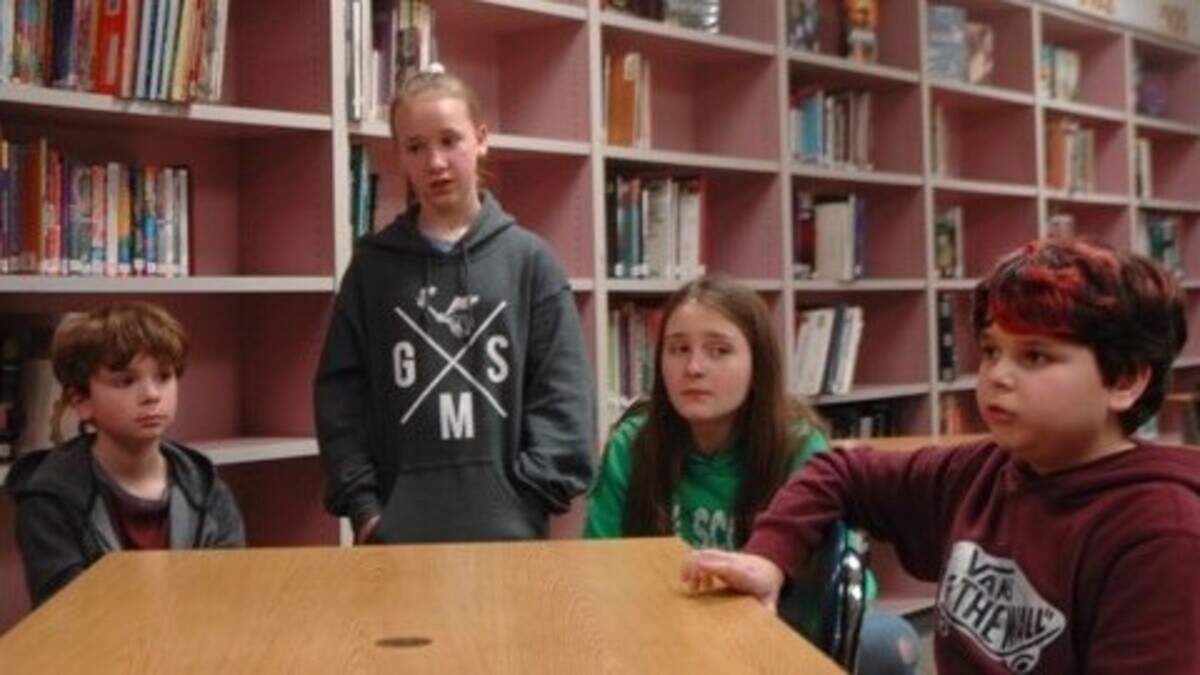
At a recent meeting of the club in the school library, half a dozen kids kicked around ideas: Maybe delivery by Uber drivers? How about lock-boxes, like Amazon uses, but refrigerated?
Kayson Starwalt, a 6th-grader, volunteered to make a logo. There was a discussion about Photoshop, JPEGs and PNGs.
Other students involved in the project are Andre Reyden, 13, Kim Bornt, 12, William Swanson, 12, Mickey Colombo, 13, Trevor Grayson, 13, and Manil Aghara, 12.
The team expects to learn by next week whether they are among the top two in the state. That would get them, not only a grant, but technical help in making their prototype app a reality.
“The kids are really excited by all of this, and it’s been a good learning experience for all of them,” said Ms. DeGroot. “Whether we advance farther in the contest or not, I think something will come out of this.”
One possibility the kids are already working on: A refrigerator for the Key Peninsula food bank.
This story was originally published December 18, 2019 at 12:00 AM.