
‘Lasagna lady’ moves to new kitchen after encounter with health department
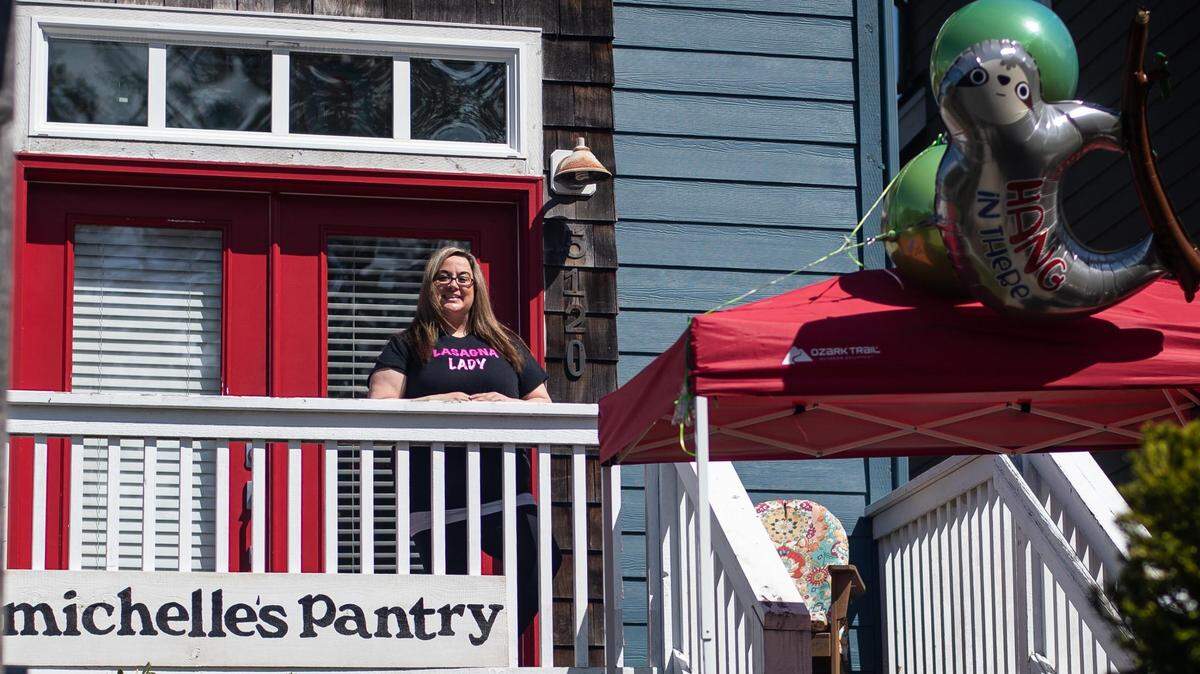
Gig Harbor’s lasagna lady has had to find a new kitchen.
While Michelle Brenner’s intentions were good, says the Tacoma-Pierce County Health Department, it’s unsafe — and illegal — to sell or give away food from an un-inspected home kitchen.
“Sadly, we had to let her know she will have to shut down,” said Edie Jeffers, spokesman for the health department.
After conferring with the health department, Brenner said Tuesday, she accepted an offer from the Gig Harbor Sportsmen’s Club to use their commercial kitchen.
Brenner, who describes herself as a “die-hard Italian,” began making lasagna for health-care workers, friends and neighbors shortly after she was laid off from her job as a clothing store manager. Soon she was making 30 to 50 pans of lasagna a day, leaving them for customers to pick up in a tent outside her home.
Brenner wasn’t charging for the lasagna, although she would accept donations.
“Unfortunately, even if you’re giving it away, you can’t make food in an un-permitted kitchen,” said Jeffers. “Especially during a health crisis like we’re having, when you could actually make people sick.”
Reached by The Gateway on Monday, Brenner expressed surprise and shock. She said she hadn’t heard from the health department, but intended to call them immediately. The next day, she was back on the line to say she was moving her lasagna line to the Sportsmen’s Club.
“The health department was very cooperative, and they were very eager to help me complete this journey,” she said. She denied adamantly that she had been shut down, although she agreed not to use her home kitchen any more.
She said the new kitchen will enable her to make five times as many pans of lasagna as she did before.
Good intentions
In a blog post Monday, county Environmental Health Supervisor Carolyn Bassett wrote that good intentions are wonderful, but not enough.
“We understand people want to help, and food is a love language for many, but preparing food in a home kitchen—to give away or to sell—is not permitted under state food safety laws. People must use a permitted commissary kitchen to prepare food safely and prevent people from getting sick.”
“Home kitchens are great for family meals,” Bassett added, “but they are not designed to support commercial food preparation, like large-scale food preparation for the public. They are typically small with not enough storage and prep space, and without the proper equipment and refrigeration space to cook and store food safely. This causes food to stay in dangerous temperatures for too long. Most restaurants operate with at least an 8x8 foot walk-in cooler.”
Even having a food-handler’s permit is not enough, Bassett wrote. It allows people to work in commercial kitchens, but it does not allow them to prepare food at home for the public.
Some options
Jeffers said the lasagna lady does have some options. She could find a restaurant willing to let her have space in an already-permitted kitchen, or a church or community center with a kitchen that meets commercial standards.
There is also a state “cottage food” law that allows people to make certain baked goods, like cookies and cupcakes, to be sold directly to the public — but lasagna wouldn’t fall in that category.
Lasagna, a dish that contains both pasta and meat, is particularly problematic because it must be cooked to high temperature and then cooled at a prescribed rate if it is kept.
“Food prepared in home kitchens are often sources of foodborne illness,” Bassett noted. “Especially during COVID-19, we don’t want people to get sick with foodborne illness, which can be hard on a healthy person’s immune system. And we don’t want to burden the medical system with cases of foodborne illness.”
This story was originally published May 12, 2020 at 12:00 AM.