
Gig Harbor church sues over pandemic rules, calling limits on worship unconstitutional
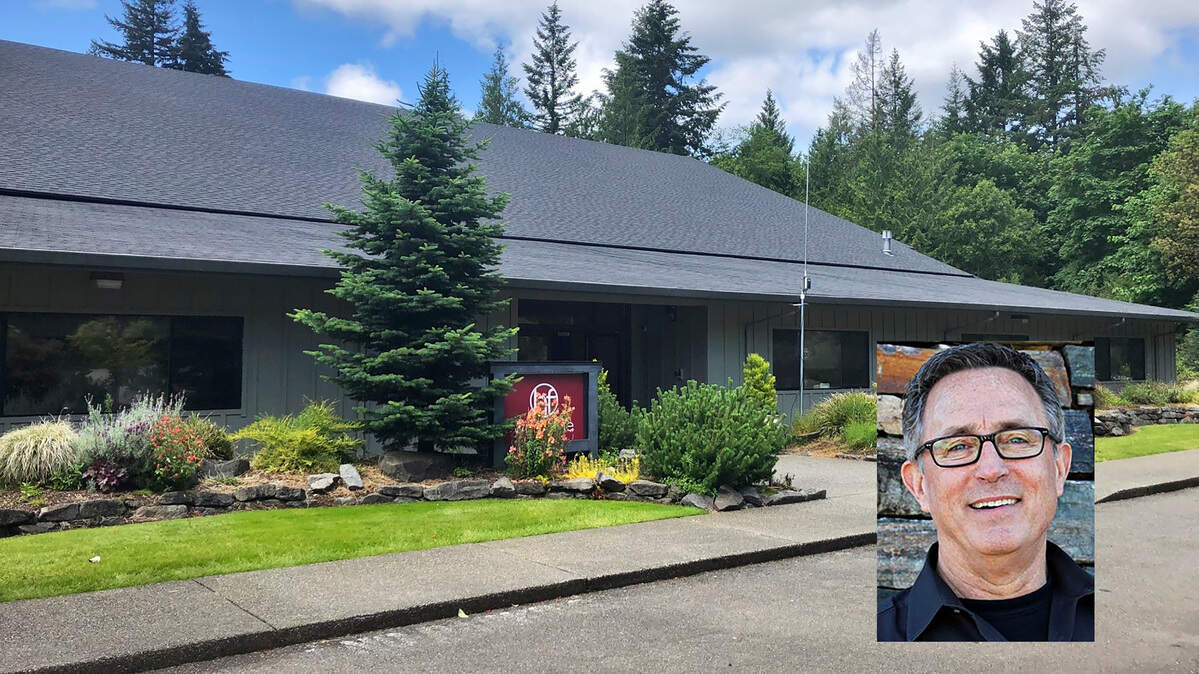
A Gig Harbor church has filed a lawsuit challenging Gov. Jay Inslee’s restrictions on religious worship during the coronavirus pandemic as unconstitutional.
Harborview Fellowship, a non-denominational evangelical church, filed the suit in U.S. District Court in Tacoma on Monday. The suit seeks an injunction to halt the governor’s order of May 27, which allows indoor church services to resume in some counties, but only at 25 percent of capacity.
“The spiritual needs of people of faith are no less important or urgent than the economic needs of businesses, manufacturers and restaurants,” said the church’s pastor, Mike Riches, in a press release. “The Governor’s current order trivializes the role of churches and other places of worship in providing for society’s well-being.”
For Pierce County and 10 others that remain in Phase 1 of the state’s phased approach to reopening and easing restrictions, Inslee’s order means in-person outdoor religious services can be held on an organization’s property or immediately next to it, with up to 100 people. Services can be held multiple times a day, Inslee said.
Attendees are required to follow physical distancing guidelines and wear face masks.
For the 24 counties that are in or have been approved to move into Phase 2, indoor religious services can be held at 25% capacity, or with up to 50 people, whichever is less. These services can happen multiple times a day, Inslee said.
“We know that people treasure religious gatherings, so this has been a difficult issue about how we simultaneously defeat this virus and maintain our congregations,” Inslee said.
Pierce County applied for Phase 2 status this week, but it has not yet been approved..
Church feels treated differently
Harborview Fellowship argues that the limitations are unconstitutional because they treat churches differently than other institutions the church argues are similar — bars and restaurants, for example, which are allowed to operate up to 50 percent capacity.
“We’re really not asking to be treated more favorably or less favorably, but equally,” Riches said in an interview with The Gateway on Tuesday.
Riches said people in his congregation, which has been live-streaming services since March, are hurting for lack of human contact.
“Whenever you travel,” he said, by way of illustration, “you start missing your family. The phone is better than nothing, but it doesn’t begin to compare with their physical presence. For us, the church is our family.”
“There are a lot of people we minister to that are coming out of a difficult lifestyle, and it’s started to take a toll on them,” he added.
Health experts have said churches are especially problematic, because worship often includes loud speech and singing, which can project virus-holding droplets large distances. They cite the case of the Skagit County church whose choir became a “super-cluster” of COVID-19 cases. Of 56 choir members, half were infected, and two died.
Riches said his congregation is aware of the dangers, and plans to use distancing, face masks and other method recommended by the Centers for Disease Control.
“It is a priority for use to meet safely,” he said. “All we are asking for is to be able to meet.”
Harborview Fellowship normally has a Sunday attendance of 250 to 300 people, Riches said. That’s too many, he argues, to split up into groups of 50.
“It would take six services every Sunday,” Riches said. “To do that on an ongoing basis would be pretty unsustainable.”
Riches said the congregation reached out to the governor though its law firm, but “has not received any specific response.” Nevertheless, he said, the church has been following the governor’s guidelines.
First Amendment argument
The church’s lawyers argue in the suit that the restrictions violate the First Amendment to the Constitution, which guarantees the free practice of religion.
When the constitutional argument was tested in a recent Supreme Court case, however, the complaining church lost.
In South Bay United Pentecostal Church v. Newsom, the Ninth Circuit Court of Appeals denied an injunction against a California restriction similar to Washington’s. The Supreme Court upheld the appeals court.
Chief Justice John Roberts, writing for the 5-4 majority, said California’s regulations were constitutional because they treated more favorably only “dissimilar activities, such as operating grocery stores, banks and laundromats, in which people neither congregate in large groups or remain in close proximity for extended periods of time.”
In the May 26 decision, Roberts noted “We’re dealing here with a highly contagious and often fatal disease for which there presently is no known cure.” He quoted an earlier justice, Robert Jackson, who famously said if a court “does not temper its doctrinaire logic with a little practical wisdom, it will convert the constitutional Bill of Rights into a suicide pact.”
But that decision should not be a precedent in Washington, the Gig Harbor church argued, because the activities treated more favorably in Inslee’s order were different than those in California. The church’s lawyers cited several lower court decisions, including one in North Carolina and another in Kentucky, that overturned restrictions on churches.
The new rules “discriminate against churches by restricting indoor worship services to 25 percent of capacity or 50 persons, whichever is less, regardless of the size or capacity of the church facilities,” wrote church spokesman Doug Christensen. “Yet the governor has lifted capacity restrictions altogether on manufacturing facilities, professional and business offices, and allows restaurants to operate at 50 percent capacity. Even in Phase 3, when restaurants can operate at 75 percent and movie theaters at 50 percent capacity, churches are still held to the 25 percent/50 limitation.”
Seeks injunction, damages
The church is asking for an injunction to stop the state order and unspecified monetary damages. Besides Inslee, the suit also names as a defendant John Wiesman, the state secretary of health. The governor’s press office did not immediately reply to a request for comment.
Harborview Fellowship, located at 4819 Hunt St., was formed in 2004, and has a membership of approximately 250 people and an average Sunday attendance of between 250 and 325 people, the lawsuit says.
It is the home congregation of state Rep. Jesse Young, R-Gig Harbor, an outspoken critic of Inslee, a Democrat.
The church is represented by a Seattle law firm, Ellis Li McKinstry, which often represents Republican organizations and conservative causes. Its press release was distributed by One Spark Marketing, a political marketing firm serving mostly Republican clients.
Politics, however, had nothing to do with the lawsuit, Riches said, and Young was not involved in its planning.
For the time being, the pastor said, Harborview Fellowship will follow the state guidelines and continue to live-stream its services to followers at home.
As for the future, he said, “Now it’s up to the lawyers.”
This story was originally published June 3, 2020 at 12:27 PM.