
Part of Minter Bay closed to shellfish harvesting due to pollution
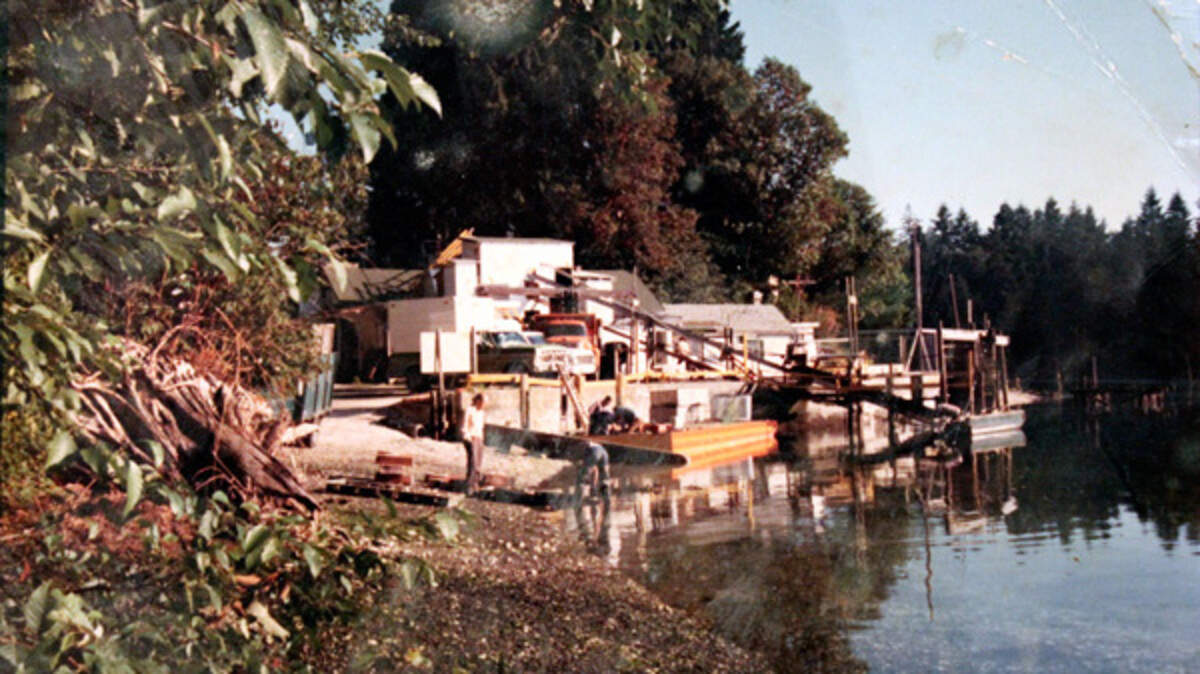
Bacterial pollution has led to the closure of a portion of Minter Bay to shellfish harvesting, the state Department of Health said last week.
The 18-acre restricted area lies at the outlet of Minter Creek and includes some acreage farmed by the Minterbrook Oyster Co.
“It’s an inconvenience, but it’s not a major disaster for us,” said Kent Kingman, manager of the family-owned oyster farm. “We will just adjust our farming practices. There is no danger to our oysters or our customers.”
The problem is fecal coliform bacteria from unknown sources, said Jean Frost, a supervisor in the DOH shellfish program. Fecal coliform bacteria grow in human or animal waste.
The restriction means that shellfish harvested in the area “no longer meet our standards for direct sales,” she said. That does not mean the Minterbrook crop is lost, she added. Affected oysters can be transplanted to a new area to cleanse themselves of bacteria before going to market.
Lower bay still open
Kingman said the closed area is the upper part of the bay, but the lower end is still open. He will move the affected oysters into the approved water.
“We’re building some special aluminum frames to move them with,” he said. “It’ll cost me more, but it’s what we have to do. It’s a matter of moving them about 800 feet.”
Oysters feed by processing water through their bodies. Placed in clean water, they rapidly cleanse themselves.
“The cleansing happens in about four hours,” Kingman said. “But the state requires 60 days, and we’re okay with that.”
The family-owned oyster farm has been a Key Peninsula mainstay since 1932. It was purchased in 2012 by the Kingman family. It is known for the Minter Sweet oyster, a sweet and mild oyster with a very full meat. The company has a second site on Rocky Bay, where it grows Kumomoto oysters.
Minter Bay Oyster Co. sells about 2.5 million oysters a year, mostly to oyster bars and restaurants around the world. Growing them from hatchery seedlings takes about two years, as they’re moved from cage to sand in stages. The mix of salt and fresh water in the bay gives the oysters a distinctive taste.
Routine testing
The pollution in Minter Bay was discovered during routine water-quality testing, Frost said. Three agencies, DOH, the Tacoma-Pierce County Health Department and the county Surface Water Management department, have begun an investigation to locate the sources of the pollution.
It does not appear to be a single-point source, like a sewage outfall or a storm drain, she said, but is most likely from a mixture of sources. Failing septic systems and drainage into creeks from cow or horse pastures are common sources.
Barbara Ann Smolko, a senior planner in the Pierce County Surface Water Management department, said her department is taking the lead for now because the county health department is “rather preoccupied” with the coronavirus pandemic.
County workers will begin taking water samples along the shoreline this week, she said.
“Minter Bay is challenging, because it is a very shallow, long bay,” she said. “You can’t rely on the saltwater to get in there and mix it all up.”
Septic and lifestock
Several small streams flow into Minter Creek, she noted, and “stream water picks up all sorts of things as it flows through agricultural land, pastures and so forth.”
The area was closed once before, in the 1980s, she said, and re-opened about 10 years ago.
“We knew it was an area we were going to have to keep an eye on, because the population is growing and land uses are changing,” she said.
The most likely sources of contamination are failing septic systems or livestock, Smolko said, but “there also could be something unique going on — there are plenty of other possible sources.”
As an example, she said, an outbreak in Felucy Bay was traced to live-aboard boaters who were anchoring offshore and dumping sewage overboard.
One possible source, said Kingman, is the large flock of diving ducks that winter in the bay.
In the long term, the outbreak will probably lead the county to join with Kitsap County — because it is upstream — to initiate a water-quality conservation district, which in turn may lead to some restrictions on local land use, Smolko said.