Navy will get funds to continue noise monitoring on Olympic Peninsula
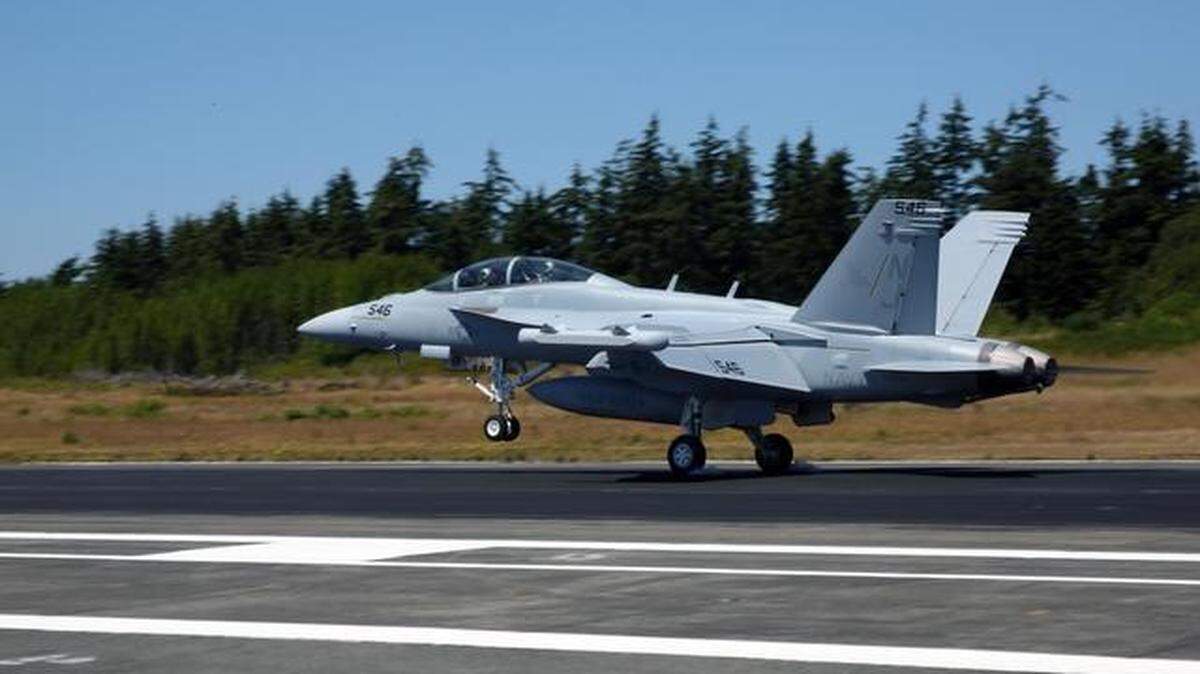
The Navy will continue to conduct a real-time noise monitoring study on the Olympic Peninsula, thanks to a provision in the National Defense Authorization Act.
Noise from EA-18G Growler jets, flown out of Naval Air Station Whidbey Island, has been a growing concern for the residents of the area. In 2019, the Navy added 36 new Growlers to it’s operations at Whidbey Island and increased landing practice at Outlying Field Coupeville.
A provision in the NDAA, introduced by Rep. Rick Larsen and Sen. Maria Cantwell, would extend real-time noise monitoring at Naval Air Station Whidbey Island and requires data from the study to be made public. The legislation was passed Dec. 11.
President Trump vetoed the bipartisan bill on Dec. 23, citing a list of reasons, including his objection to stipping the names of confederate leaders from bases. However, Congress overrode the veto this week.
“Noise from Growler training has caused much concern for local communities,” Cantwell said in a statement. “Publicly available, real-time monitoring of Whidbey Island and the Olympic National Park will provide transparency and a basis for an accurate discussion on the impacts of increased flight activity.”
A previous environmental study of noise impacts from the Growlers used computer models instead of actual sound level measurements, and Larsen said the people in the Whidbey Island community asked for real-world measurements to be used.
Anne Harvey, the board chair of the non-profit group Sound Defense Alliance, said the organization is pleased that the provision will allow for more open communication between the Navy and the community by making data publicly available.
She added that the Sound Defense Alliance would like to see other studies on how the noise from military exercises in the Pacific Northwest impacts everyday life for residents.
“The bottom line is we just don’t know what kind of health impacts the noise causes because there haven’t been any health studies,” Harvey said. “The base serves an important purpose beyond the Growler activity, so we try to separate our concerns from any notion of base closure.”
Larsen and Cantwell introduced a noise monitoring provision to the 2020 NDAA, but work on the study was delayed due to the pandemic.
This story was originally published January 4, 2021 at 5:30 AM.