
Clearing out piles of paper, but not the memories
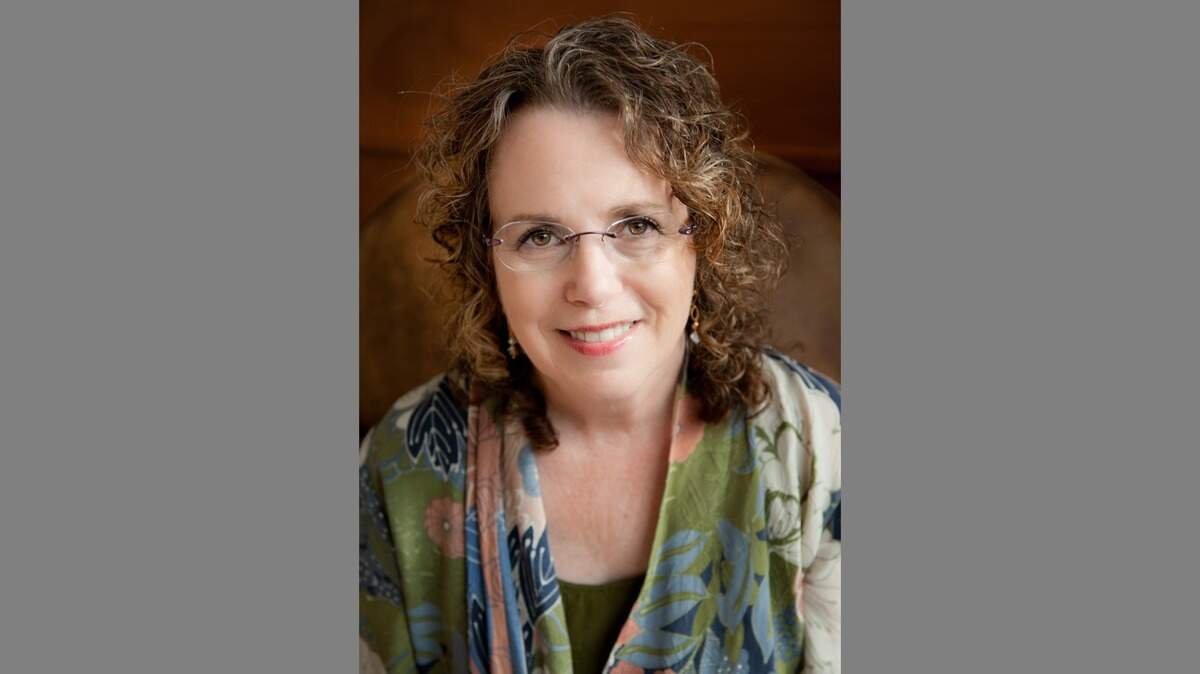
This week, we welcome a new On Faith columnist, Rabbi Sarah Newmark. Rabbi Newmark was ordained by the Reconstructionist Rabbinical College, the smallest of the non-Orthodox denominations. She is a Gig Harbor resident whose work is focused on life-cycle events, teaching and pastoral counseling.
Like my father before me, over the years, I have saved and filed many things that strike me as “keepers” in some way or other. It may be a note card I was sent expressing appreciation or gratitude, a birthday card which included a touching personal greeting, invitations to special events in the lives of family and close friends, and sadly, as the years have gone by, the funeral programs and obituaries of loved ones whose lives ended way too soon.
I didn’t realize just how many lovely such keepers had accumulated in my files until our recent downsize. My husband and I set a goal to downsize our belongings by about a third and our paperwork by about half! As we settle into our new home, I’ve learned that it is a lot easier to downsize one’s furnishings, household goods and other belongings than it is to let go of these small pieces of paper, each of which seem to ignite whole novels’ worth of memories.
Shabbat is living memory
Memory plays an important role in Judaism. Every Friday night, when we light the Shabbat candles (Hebrew for “Sabbath”; pronounced: ShahBOT), we chant a blessing which in part reminds us why we are lighting the candles even as we are in the act of performing the ritual. The sundown candle lighting ushers in Shabbat, which is considered to be the most important Jewish holiday (and which occurs 52 weeks a year!). It is a widely observed ritual among Jews of differing levels of observance. For example, while the vast majority of Israelis are completely secular, they nevertheless gather as families to light Shabbat candles and share a festive meal on Friday night, just as Orthodox Jews do.
When the grandparents and great-grandparents of American Jews crossed the Atlantic in the massive waves of migration of the late 19th and early 20th centuries, they tended to have little of value to bring along, but the one thing each family did bring was its handed-down-through-the-generations Shabbat candlesticks. The American Express cards of their day, the Jewish immigrant generation would never have thought to leave home (permanently!) without them.
The candle lighting blessing reminds us of the two reasons we observe Shabbat. The first reason is to heighten our awareness of the seven (metaphorical) days of creation, and the second is to remember the Exodus from Egypt. These are important memories which are deeply embedded in the Jewish people’s journey from being one of many desert tribes to becoming a people who were the first to look at the world through a monotheistic lens and whose history is one of establishing and learning to adhere to a covenantal relationship with God. The prayer reminds us to not lose sight of our very beginnings, of our yearnings to be free, and of our relationship to the Source of Holiness. It is this relationship which serves as inspiration for us to strive to become the best versions of ourselves.
A darker past
Of course, there are dark memories, too. Zachor is the Hebrew word for “Remember,” and it is often in the hearts of Jews—and of all people of good will— when we think of the Shoah, the most tragic part of Jewish history. (“SHOW-ah” is the Hebrew word for the systematic murder of six million Jews, the so-called “Final Solution.” It means “catastrophe.” “Holocaust,” the more familiar word for this unparalleled crime against humanity, is a Greek word which means “burnt offering,” and I am loathe to use it.) We all know the maxim that those who cannot remember the past are doomed to repeat it. Thus, I am disgusted by those whose sartorial attire extends to such things as T-shirts imprinted with the words Camp Auschwitz or 6MWE. (The latter abomination evidently stands for “six million weren’t enough.”) We clearly need to do more work to eradicate the kind of thinking that leads people to embrace fringe ideologies based on hatred rather than on our common humanity.
But this is a column about memory, not baseless hatred, though we should all be very cognizant of the vicious hate which led to the attempted take-over of the United States Capitol and work to prevent such a thing from ever happening again. We cannot do better as a society and as a world if we do not remember the past and vow not to repeat it. So, even as I am knee-deep in my Major Paper Purge, I will probably save a bit more paper of the variety which documents this quite upending occurrence. Because America’s beginnings and strivings to be free are important to me, too, and perhaps the memories from January 6, 2021 will inspire us to commit to the hard work ahead so that we can become the very best version of America as well.
The beautiful, inclusive inauguration that took place just eight days ago made me believe that we, the citizens of this too-fragmented country, can, indeed, once again become united.