
Of Serbs and salmon: How an immigrant’s heirs helped save a creek from development
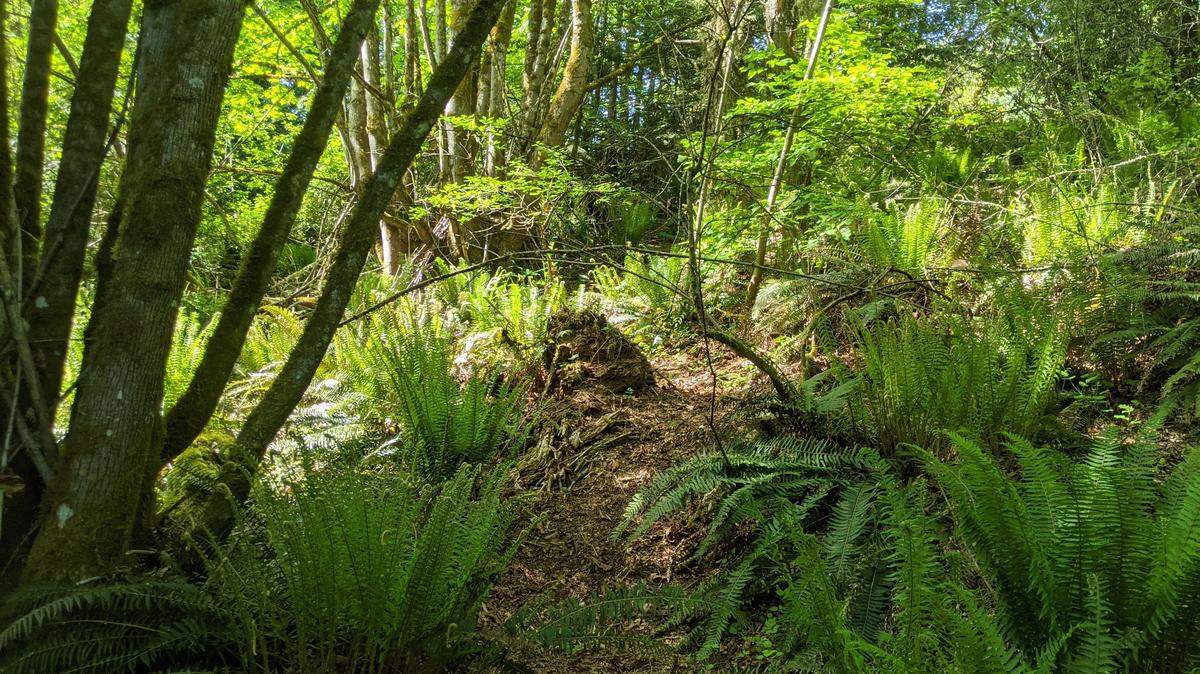
The city of Gig Harbor is about to snatch 11.5 acres of Native American history and prime salmon habitat out of the path of development, thanks in part to the heirs of a Serbian immigrant.
The land lies along North Creek in the rapidly developing north end of the city. If all goes well, it will become a nature preserve, and later, part of a trail system that will connect with the Cushman Trail, said Robyn Denson, a City Council member who has been working with the Puyallup Tribe of Indians to put the deal together.
“I am so excited about this,” said Denson last week. “There has been so much development in this area, and it’s right in our downtown corridor. Yet it is this beautiful, forested property with what turns out to be one of the best salmon streams in Gig Harbor.”
It’s the happy ending to a saga that includes indigenous peoples, a flower-loving Serbian immigrant, and an East Coast family that turned down lucrative development offers to sell to the city instead.
The project, which is being called the North Creek Salmon Heritage site, will protect a stream that a recent survey by the Wildfish Conservancy found contains “a surprisingly healthy habitat” for fish, including Coho salmon, coastal cutthroat trout, chum salmon and Puget Sound Steelhead, in spite of a constricting culvert under Harborview Drive.
“It’s perfect habitat for salmon,” Denson told The Gateway in an interview. “The creek gets lots of shade, there are deep pools, lots of gravel and all sorts of logs and places for the baby salmon to shelter.”
The acreage is just north of the city’s water treatment plant, and the creek that runs through it empties into the harbor at the Austin Estuary, where it’s known as Donkey Creek. The land is believed to have been part of the original home of the sx̌ʷəbabs or Swiftwater people, a branch of the Puyallup Tribe who lived in a village called txʷaalqəł.
‘A unicorn property’
“It’s like a unicorn property,” Denson said. “It’s got the natural beauty, the salmon, and it’s right where the original Native Americans used to live in the second-largest of all the Puyallup settlements. And if that isn’t enough, the city has wanted forever to do a walking trail from downtown to the Cushman Trail, and this property would fit perfectly into that plan.”
The city plans to pay $500,000 for the property, using a grant from Pierce County and $50,000 in matching funds from the Puyallup Tribe. The Pierce County Council voted to approve the grant on Tuesday. The money will come from the county’s Conservation Futures Fund.
“The tribe is very excited about this, because so much of their ancestral land has been developed,” Denson said. “When we went to the tribal council to ask for the matching funds, they didn’t even blink. They said, ‘Yes, let’s do it.’”
Because of its proximity to the village site, the parcel is considered an important potential archaeological site, and the agreement with the tribe includes a protocol for handling accidental discoveries.
The Puyallup tribe’s land planner and assistant historical preservation officer, Jennifer Keating, told The Gateway it’s the first time the tribe has partnered with another entity to recover and preserve historic tribal land.
“One of our main priorities is to recover lost tribal land, and this was part of a historical tribal village site,” she said. “Equally important, it’s home to salmon, which are a critical part of our past and present culture. We’re losing our tree canopy, and salmon-bearing streams like this are getting harder and harder to find.”
Besides, physically, “It’s beautiful. It’s a gem of a property,” said Keating, a lifetime Gig Harbor resident. “It’s such a rare find. There are huge trees and native plants that tribal people still harvest. Even more important, we’re protecting it from major development in a city that’s already expanding to the limit. One minute from the sidewalk, and you’re suddenly so far from the city, the traffic noise, everything.”
According to the grant proposal, The Puyallup Tribe of Indians will work with the city on designing trails that limit ground disturbance in order to minimize any impacts to cultural resources. The trails will be low-impact, water-pervious trails with signage that will encourage the public to learn about the sxwəbabš peoples without disturbing areas of archeological significance.
The acquisition will also mean that the city will own both sides of the constricted culvert under Harborview, which may make it easier to get funding to replace, Denson said. Culverts create obstacles for salmon by increasing the speed of the water and sweeping away sand, gravel and twigs which aid fingerlings.
Colorful history
The 11-acre plot was once owned by a Serbian immigrant named Milan Mikich, who came to Gig Harbor after serving in the U.S. Army during World War I and made his living as a barber, a railroad worker and a brush picker. He was active in the early Grange movement and helped found the first Gig Harbor Grange hall. He died at the age of 93, a well-known Gig Harbor character who wrote poetry, enjoyed folk dancing and brought wildflowers to local restaurants.
Mikich bought the North Creek property — it isn’t clear from whom — with a brother-in-law, Maurice Lyons, in the 1950s. Lyons, a New York-based chemical engineer who roamed the world for oil companies, never saw the property. When he died in 2016 at the age of 101, the land passed to his son Paul and daughter Phyllis. He lived in Virginia, she in Illinois.
“We are East Coast people,” said Paul Lyons, a retired IRS employee who lives in Williamsburg, Virginia, in a telephone interview. “And here we were with this property way out in the Pacific Northwest.”
Portions of the land were logged over the years, the last time in 1990, and there were occasional queries from developers.
Gurgling water
But Lyon’s youngest son, Mark, became interested and started poking around on the internet. “He said, ‘Dad, this is a special property,’” his father recalled. “He fell in love with it. He uncovered the connection to the Puyallup Tribe of Indians. He visited Gig Harbor, and he walked along Donkey Creek and he heard the gurgling water.”
Phyllis Lyons, a retired professor of Japanese literature who lives in Evanston, Illinois, said one of the pictures that turned up in the family’s research was a photograph taken in the early 1900s that shows a Native American longhouse at the head of the harbor.
“It’s a beautiful photograph that sticks in my memory,” she said.
Mark Lyon’s efforts “got us thinking,” the elder Lyons said. “Maybe there could be a better use for the property than cutting it all down and putting 100 houses on it.”
The area is already heavily developed. It’s bordered by two big residential areas, McCormick Park and North Creek Estates. The city planning department has estimated that 25 to 45 homes could have been built on the land, which is zoned for both single- and multi-family housing.
Denson learned about the property from the Lyon’s real-estate agent, she said, and moved quickly with Keating and the city’s planning chief, Katrina Knudson, to interest the City Council and the county.
“People are so concerned with the loss of our trees and beauty and natural habitat, that when we find properties like this, we have to act fast,” Denson said. “Because once it’s gone, it’s gone.”
The family originally wanted the land to go to the Puyallup Tribe, but it turns out state law restricts sovereign entities from using conservation grants in that way. But the tribe agreed to a 10 percent match with the city anyway, Keating said, because they thought it was important.
“It’s the first time the Tribal Council has ever agreed to put money toward land they would never own,” said Keating. “They really lived up to the tribe’s name, ‘the generous people.’”
This story was originally published September 1, 2021 at 5:00 AM.