
PenMet Parks to gain 116 acres for recreation; KP lighthouse site will shelter salmon
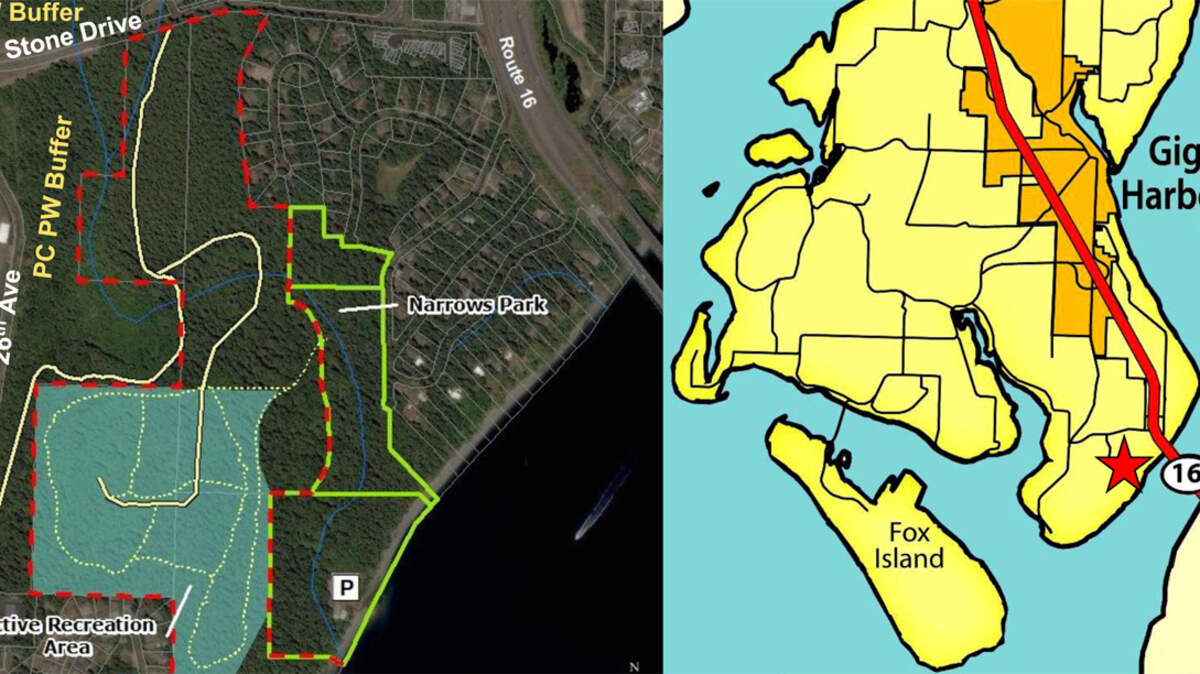
The Pierce County Council recently approved a $2.5 million grant that will allow PenMet Parks to acquire nearly 116 acres of land near the present Narrows Park. It also approved another nature conservancy on Filucy Bay.
Both grants were approved Aug. 31 by the Pierce County Council.
According to the grant application, the Peninsula Metropolitan Park District proposes to use the wooded parcel near Narrows Park mainly for “passive recreation,” such as hiking, horseback riding and mountain biking. The area is laced with old logging roads and trails. There is also the possibility for “active recreation,” such as zip-lining, the application said. Motorized use would not be allowed.
The property is between Narrows Park and the Tacoma Narrows Airport. It is described in the grant proposal as “high quality forest and wetland habitat” with “documented bald-eagle nests.” A narrow strip of land would remain as a buffer for the airport.
PenMet would provide $500,000 in matching funds.
“We are currently in discussions with the landowner regarding the potential acquisition of this property, and look forward to next steps,” PenMet Executive Director Ally Bujacich said in an email to The Gateway.
McDermott Point
The county council also approved a $990,000 grant for the Great Peninsula Conservancy to acquire 12 acres at McDermott Point on the Key Peninsula as a nature preserve that would be accessible only by water.
The property is at the end of Cliff Avenue Southwest at the tip of a promontory that sticks out into the south end of Filucy Bay.
“It’s a beautiful coastal spit that is undeveloped and has the potential to be restored back to its natural state,” said Erik Steffens, the organization’s conservation director.
The property was the former site of a summer home used by Frank McDermott, founder of the Bon Marché department store chain, and once boasted a private lighthouse, according to the Harbor History Museum. Steamboats brought people from Longbranch for annual summer parties. The lighthouse was destroyed in an arson fire in 1970.
The grant application describes it as “valuable shoreline habitat for juvenile salmon and forage fish,” and suggests that a preexisting barrier lagoon could be restored “through fill removal and natural recolonization of salt marsh vegetation.” A barrier lagoon is a body of quiet water that forms behind a sand bar.
The lagoon is “critical salmon habitat, especially for juvenile Chinook,” Steffens said. “They come from all over Filucy Bay to seek protection in the very shallow water there.”
The conservancy proposes to manage the property as a natural preserve accessible by water only, in association with the nonprofit Washington Water Trails.
“Preferably, it would be for non-motorized boat access, a day-use only rest stop” for kayakers and canoers, Steffens said.