
Record Alaska salmon catches buoy Gig Harbor fishing fleet with ‘best season’ in years
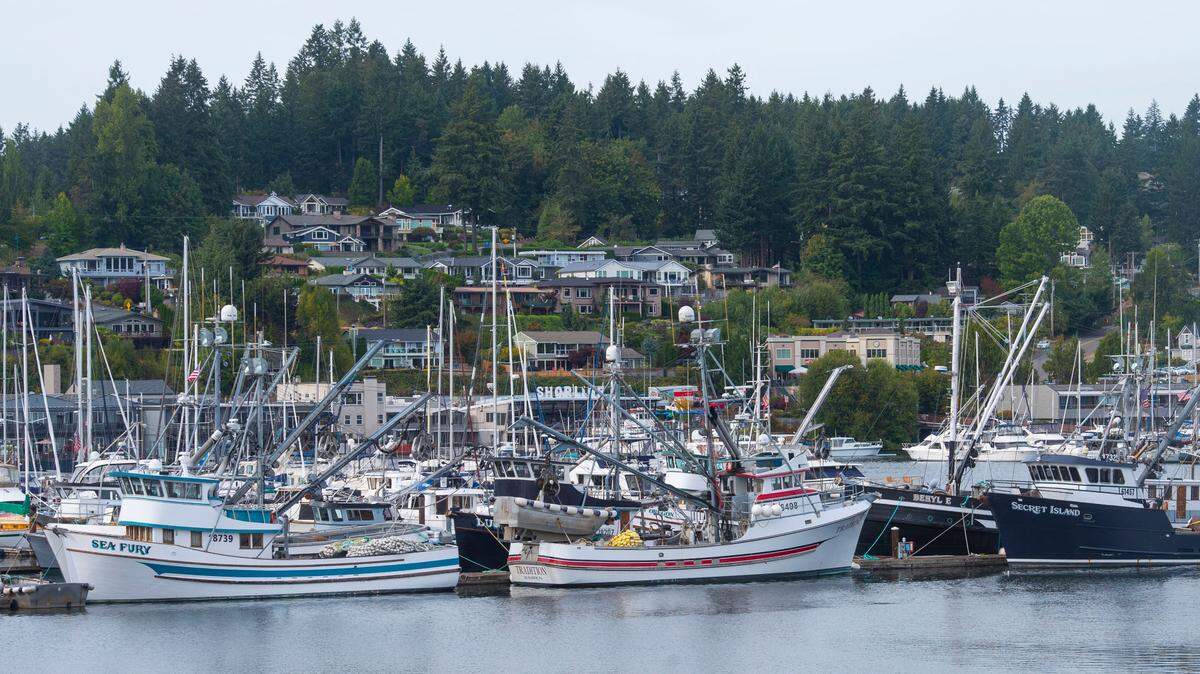
After scraping through two disappointing years, the Gig Harbor fishing fleet had a bonanza season in Alaska this year, returning fishermen say.
“This has been our best season in six years,” said Matt Munkres, 39, who skippers the Gig Harbor-based Julie Ann, a 54-foot purse seiner. “And we got good prices, so all in all, it was pretty good.”
Alaska’s salmon harvest “has blown past the forecast,” this year, reported the Anchorage Daily News, and by late August “topped 201 million fish, well above the 190 million projected at the start of the season.”
In the Southeast Alaska fishery, where most of the Gig Harbor purse seiners fish, the net of 42.8 million pink salmon was the 14th highest since statehood, according to the Alaska Department of Fish and Game. About 207 boats shared the catch.
Fishermen were glad to see it, because the previous two years had been disappointing.
“The last one was really poor, the worst in a long time,” said Munkres. “I think we’ve been dealing with a warm water ‘blob’ that came through the gulf of Alaska, and the temperatures in the water were just too high for good survival.”
The good with the bad
Gregg Lovrovich, president of the Gig Harbor Commercial Fishermen’s Club, says fishing “is like farming — you take the good and the not so good, and over the years, it kind of balances out.”
Lovrovich, who runs the 58-foot Sea Fury, says he was late leaving for Alaska because of a daughter’s wedding, so he was only able to fish for a month and a half.
“Still, it was one of the best months I’ve ever had,” he said.
“People say wild salmon are getting extinct, but that’s far from the truth,” he added. “They really take care of the runs up in Alaska — they make sure the fish survive and return to the creeks.”
The Daily News reported the “catch was bolstered by a surge of pink salmon to the three top-producing regions: Prince William Sound, Southeast and Kodiak, combined with strong landings of sockeyes.”
Total landings for pink salmon, the mainstay catch for Alaska salmon fishermen “were approaching 137 million, well above the 124 million projected for this season,” the Daily News reported.
Most of the pink salmon harvest was from southern Southeast with the Ketchikan management area having its estimated eighth highest cumulative pink salmon harvest since statehood, the state said.
Pink and chum salmon
That’s where Julie Ann and her crew of four spent most of their time, Munkres said, fishing for pink and chum salmon.
“We fish the panhandle from Ketchikan to Juneau, but we spent most of our summer around Ketchikan,” he said. “The weather was good, it was fair, we had a lot of good weather days” and no storms.
Every night or every other night, Munkres said, he’d put into a small bay to meet a tender — usually an off-season crab boat — whose crew would pump out his catch with a large vacuum and transport it back to Sitka for sale to packers or canneries.
Base prices for pink salmon averaged 35 cents a pound, according to the Anchorage Daily News, a nickle higher than last year.
“It was a good price, but the fish were smaller, and that made the payoff lower,” said Lovrovich. “Usually these pink salmon are 3.5 pounds. This year we were getting 2.6, 2.8, in that range.”
Boats are paid by the pound when they land their catch. Pink salmon average weight was 2.8 pounds this year, the state said.
Salmon in cans
Most of the salmon winds up in cans, Lovrovich said, but some may show up in restaurants and groceries.
“A lot of it used to go to Asia, but the tariffs made that less profitable,” he said. “This year the canned market were really strong. Most of the processors that had the ability were canning.” Large consignments of canned salmon are often bought by the military, he said.
Twelve to 15 boats from the Gig Harbor area make the trek to Alaska every year, starting out in late June and returning the first week of September. The names would be familiar to harbor watchers: Andy Babich’s Ocean Dream, Tim Lovrovich’s Harbor Gem, Nick Babich’s Lucia, Andy Blair’s New Oregon, Joe Puratich’s Maurader and Dave Sorenson’s Paige Marie, among others.
Most are purse seiners, which catch fish by enveloping them in a large net which is then closed, like a purse, by a dory, and hoisted aboard by a winch.
Ready for the next run
Now that they are back in harbor, most of the skippers and their crews will be working on boats and gear, Lovrovich said.
“When you have a boat, you have to know a jack of all trades,” Lovrovich said. “You gotta keep that boat running, you gotta keep the gear working, the nets in good shape.” On Sea Fury, there are four diesel engines to maintain — three in the boat itself and one in the dory.
Many skippers will be getting ready for the short Puget Sound salmon season, which begins in October. Then there is crabbing off the Washington coast, and some of the boats will head south to California for sardines and squid.
“It’s a year-long job,” Lovrovich said.
Lovrovich, 67 has been fishing since he was 12, when he crewed on Sea Gem with his dad, George.
“A lot of us in Gig Harbor, it’s what we grew up with,” he said. “Once you get it in your blood, you know, it’s hard to leave. And it’s still a good way to make a living.”
CORRECTION: A previous version of this story misspelled the name of the fishing vessel Julie Ann and the first name of Tim Lovrovich.
This story was originally published September 20, 2021 at 5:00 AM.