
Gig Harbor council candidates talk traffic, development, other issues. Ballots are here
The Gateway spoke recently with candidates running for Gig Harbor City Council in the Nov. 2 general election. Here are the interviews, distilled for length. Incumbents are listed first, others in alphabetical order.
Council Position 1
Jeni Woock
.jpg "Jeni Woock (1).jpg")
Jeni Woock, the incumbent, is running for her second term on the council. A retired Gig Harbor business owner, she was among four council members who ran in 2017 on a platform on slowing growth and reforming the development process.
“I want this job again because people have asked me, and told me I’m not done yet,” she said in an interview. “We have to decide: Do we want to become a resort town, or do we want to remain a town of neighborhoods where people live?”
Woock said she is proud of the work the council did in instituting a building moratorium in 2018 and using the time to rewrite the city’s housing rules, enlarging minimum lot size, reducing the number of houses that can be built per acre, and setting rules to protect trees.
“You can no longer go in and willy-nilly clearcut the entire area,” she said. “Now you have to preserve a minimum numbers of trees when you develop a property.”
In her view, “Neighborhoods are pretty well sacrosanct,” Woock said. “Neighborhoods should have more to say.”
Traffic calming, sidewalks and downtown parking are two more of her big issues, she said.
“I would like to see if there is anything that can be done to slow down traffic,” she said. “That’s a big complaint I hear from our citizens. It’s true that not a lot of people drive over the speed limit, but there are enough.”
Woock said she continues to be concerned about turnover among city employees.
“I believe our employees are just holding on until January,” when there will be a new mayor, she said. She hopes for a new city council that will “create a sense of employees feeling respected and honored.”
Woock is a graduate of Southern Illinois University. She has worked as a volunteer for an oncology clinic, the PAL Summer Arts Festival, the Gig Harbor Film Festival and is chair of the Gig Harbor Sustainability Coalition. On the council, she has served on several committees, including the Public Works and Finance committees.
She and her husband, Del, operated an arts-and-crafts studio in Gig Harbor for 33 years. He specialized in wood carving, she in glass. The have a grown child and one granddaughter.
Money: Woock has received about $4,862 in campaign contributions and $5,000 in loans, according to the Public Disclosure Commission. Several contributions came from unions, including Gig Harbor firefighters, the Teamsters, and the Pierce County Central Labor Council.
Primary: In the primary, Woock received 2,420 votes, or 71 percent.
Robert Wiles
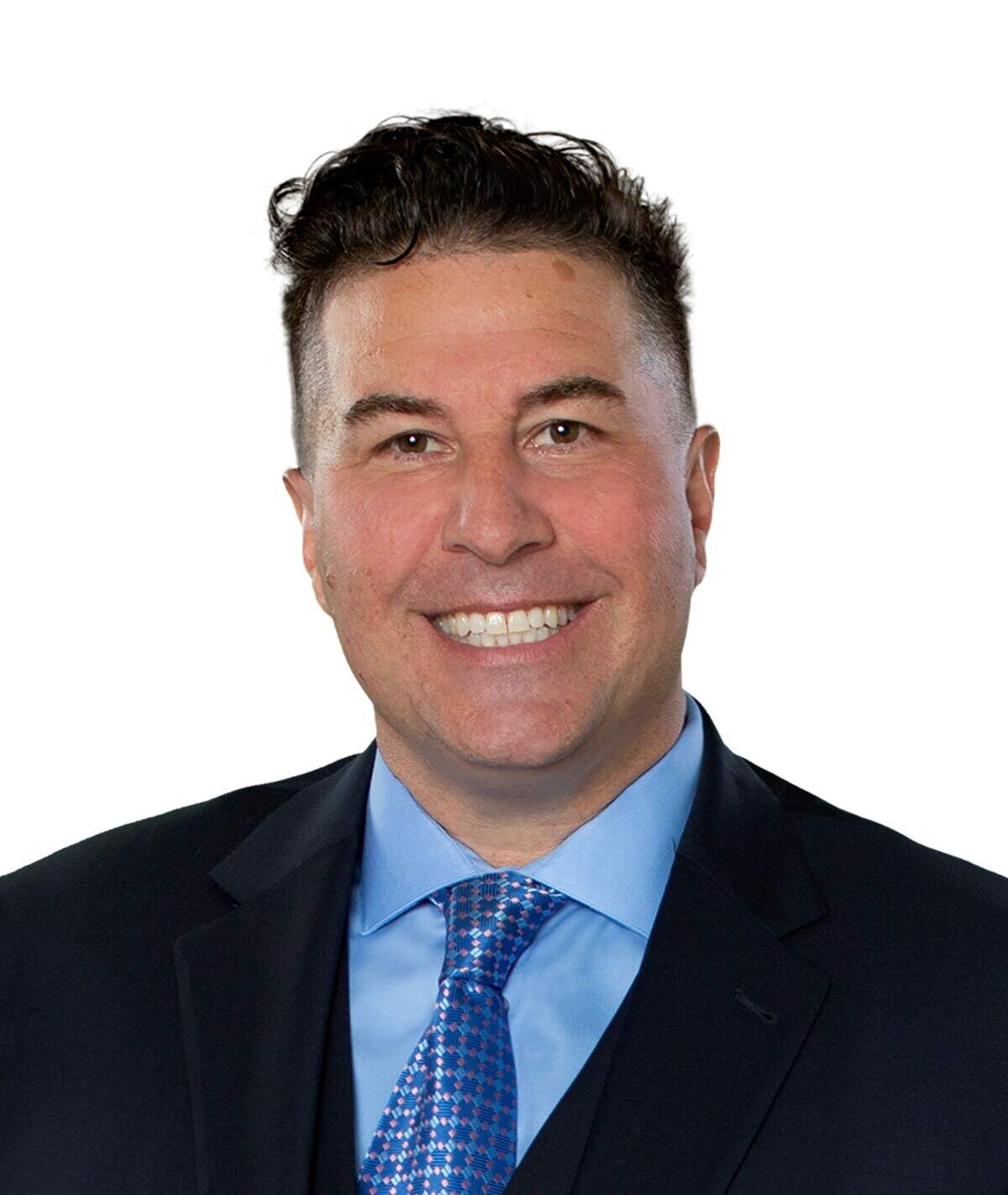
Robert Wiles is a Gig Harbor real estate agent who has also worked as a medical salesperson and a commercial fisherman. He is making his first run at political office.
He did not respond to a request for an interview.
His voters’ guide statement reads in part: “My goals as a representative of Gig Harbor are common sense fiscal budgeting, historical preservation, which encompasses less development in city limits and maintaining original sense of character and community. And most importantly, accountability, transparency and communication between the community and council members.”
Wiles is a graduate of Peninsula High School and was born and raised in Gig Harbor, growing up in a commercial fishing family.
He and his wife, Monae, have a one-year-old daughter, Parker.
“It is important for me to ensure that what happens in this city creates a positive and thriving environment for my daughter to grow up in,” he wrote.
Money: Wiles reported no campaign contributions above the minimum limit required for disclosure.
Primary: Wiles received 540 votes in the August primary.
Council Position 2
Roger Henderson

Roger Henderson, 69, is a transplant from California currently serving on the city Parks Commission. This is his first run for public office. (Councilmember Bob Himes, the incumbent, is not running for re-election.)
Henderson is a civil engineer retired from the U.S. Army Corps of Engineers, working mostly out of Sacramento, California, where his job involved cleaning up former defense installations, such as The Presidio and Fort Ord, both now parks.
He and his wife, Praveen, moved to the Northwest in 2018 and he “almost immediately fell in love with Gig Harbor,” he said in an interview. “I haven’t looked back since.”
He was appointed to the Parks Commission in 2019. Parks, trees and green spaces are high on his agenda, he said, but he actually decided to run after watching council meetings and seeing “a lot of decisions made with anecdotal evidence, without data or facts.” He also thought he saw “a little bit of disrespect for the staff.”
In canvassing neighborhoods, Henderson said he hears complaints about growth, traffic and speeding, in that order.
“Growth and traffic go hand in hand,” he said. “It’s time we started looking at a sustainable growth model. We can’t say, ‘No, we’re not going to grow.’ But if we are going to grow, let’s grow smart. I would like to see developments where we allow commercial and residential together. Let’s get people out of their cars and get them walking to the store.”
He’d also like to see an “urban forest management” plan, like the one in Bremerton, Tacoma and other cities, to help restore the forest canopy lost to development. Trails and sidewalks are important, too, he said, especially on heavily traveled streets like Burnham Drive and Peacock Hill Road.
Henderson said he doesn’t see himself as ideological, but as a mediator.
“I’m an engineer,” he said. “I just want to get the job done. I already know a lot of the council members, and they are all honorable people. I think we can disagree about some things, have an open discussion and meet in the middle.”
Money: Henderson has raised $10,523 in contributions and $3,500 in loans, according to the Public Disclosure Commission. Other than $700 from the 26th District Democrats, all contributions were from individuals, including fellow council candidate Brenda Lykins and school board candidate Juanita Beard.
Primary: In the August primary election, Henderson received 1,838 votes, or 54 percent.
John Skansi

John Skansi, 61, is a fifth-generation native of the Peninsula, a descendant of a Croatian immigrant who established a commercial shipyard in Gig Harbor. He was a commercial fisherman for 23 years and now works as a substitute teacher and coach.
Skansi declined to be interviewed by The Gateway and asked instead for a list of written questions. Those were provided, but then he declined to answer them.
The Gateway reported in May that Skansi has been barred from substitute teaching in four Seattle schools because of difficulties dealing with students. However, he is still eligible to teach in all other schools in the Seattle system, and continues to do so, according to a Seattle Public Schools spokesman.
The Gateway also reported in July that Skansi stood with Rep. Jesse Young and a group of armed men opposite young people expressing support for Black Lives Matter. He was not armed.
On his campaign website, Skansi explained his action this way:
“I take my conviction to serve my community so seriously, that last year after watching riots and looting occur in cities all across America, I came out as a concerned citizen to stand up and protect our town when protesters came to our streets. I’m against all forms of violence, and fortunately, these groups were peaceful. I believe that compassion and love drive out hate. Hate certainly is not a Gig Harbor Community value.”
Skansi said he wants to promote a “business-friendly environment.”
“I have spent many hours visiting and listening to all types of folks and businesses from small to large in the Gig Harbor Community,” he writes on his website. “... They tell me they want government that is more efficient, accountable, and more in-touch with the Gig Harbor Community and that better serves all of us, rather than catering to the special interests groups.”
He has served as a volunteer coach at Peninsula High School and is on the board of the netshed foundation
Money: Skansi has raised $13,741 in contributions and $3,000 in loans, according to the Public Disclosure Commission. Among the contributors was $500 from the Gig Harbor Republican Club and $1,000 each from Nick Skansi, Ron Roark and Scott Cummins.
Primary: Skansi received 1,067 votes in the primary, or 31.5 percent.
Council Position No. 3
Jim Franich

Jim Franich, 60, is the longest-serving current City Council member, having served a total of 14 years in three different terms.
Franich is a former commercial fisherman who ran a Gig Harbor car dealership, Bay City Motors, for many years. He served two terms between 2000 and 2010 and returned to the council in 2018.
Because of a computer breakdown, Franich missed the deadline to get his statement into the voters’ guide “by four minutes,” he explained in an interview.
“I’ve been living with that nightmare since May,” he said. Because his space in the voters’ guide is blank, many people assume he’s not running. He’s trying to make up the difference with yard signs and mailers.
“It’s lucky I’m the incumbent,” he said. “If I was coming in cold, I’d be dead in the water.”
Franich was part of the slate of candidates who promised to slow down development and concentrate on infrastructure, and he feels the council has kept that promise.
“The fruit of all that hard work is yet to come,” he said in an interview, because much of the development people are seeing now was already in the pipeline. But, he noted, “We eliminated planned residential developments, or PRDs; we put in place a maximum density of six dwelling units per acre, and we increased the minimum lot size.”
Those changes, he said, will make a difference as the city builds out in the future.
The big challenge to come, he predicts, is road infrastructure. He would like to see the city “put as much money as we can into transportation.”
“We can’t expect to keep waiting for the state or federal government,” he said. “We need to break out our pocketbooks and do some of these projects on our own.”
Franich said he’d like to see more right-hand turn lanes off state Route 16 onto Wollochet Drive, another east-west connection into the city from SR 16 in the area of 96th Street, and an east-west connector to the Crescent Valley.
Another looming issue, Franich warns, is a statewide effort to find another site for a big passenger airport. A state commission has its eye on the Tacoma Narrows Airport, just outside the Gig Harbor City limits, he said, and while the city has received assurances it’s not on the short list, it’s worth keeping an eye on.
Franich laughed when reminded that’s he’s the council member who often asks, “Wait a minute, what’s this going to cost?”
“I do look to spend the taxpayers’ money in a wise, responsible manner,” he said. “The two things that are very important to me are responsible spending and local control.”
Franich said he is uneasy about what he sees as a push by the state Legislature to improve equality by doing away with single-family zoning. “That’s going to destroy the quality of R1 neighborhoods,” he said, using the zoning code designation. “They’ve boiled it down to a racial equity issue, but I don’t think the way to reach those goals is through zoning.”
Money: Franich has raised about $4,290 in contributions, according to the Public Disclosure Commission. The largest were two contributions of $500 each from Nancy Jerkovich. Others in the same amount came from Ron Rourk, Jeff Katke, Nick Markovich, Wade Perrow and George Pollitt.
Primary: Because there was not third candidate, neither Franich nor Lykins were on the primary ballot.
Brenda Lykins

Brenda Lykins, 57, is a nurse practitioner who lives in Gig Harbor North. She’s running for office for the first time.
Lykins said she got interested in city politics because of her dismay over the council’s handling of a shopping center she and her neighbors were looking forward to having nearby. The city had imposed large traffic impact fees, and the developer sued and eventually won a settlement, but the project was delayed two years.
“We really wanted the traffic impact fees to be reasonable because we really wanted the Village at Harbor Hill to be built,” she said in an interview. Also, the increased costs imposed by the city left small businesses squeezed out, she maintained. “The only people going to be able to afford it are large chain and big-box stores,” she said.
Speaking before the council on that issue and another — limiting Fourth of July fireworks — gave her a taste of how the council deals with citizens, Lykins said.
“I takes a lot of courage for people to stand up and speak, and I think they should be listened to respectfully,” she said.
Lykins said she shares her neighbor’s concerns about development and traffic.
“We have gained nearly 5,000 people in 10 years,” she said, and “downtown is feeling the pressure, going from a destination to being a commuter route to avoid Highway 16.”
Still, she said, “We can’t go back in time. We just need to accept where we are and decide how we can positively move forward.”
“I honestly think Gig Harbor’s best days can be ahead of us,” she added. “We’re kind of at a turning point, and I think it’s possible to maintain the charm we have now and still maintain responsible growth and put money into things people want, like the paddler’s dock and our great parks.”
Lykins said she was encouraged to run by another neighbor, Councilmember Robyn Denson.
If elected, Lykins said she would focus on working with her colleagues on the council to “get things done,” rather than get into ideological disputes. “I like working with people and I approach issues with a sense of curiosity, rather than judgment. I think the citizens want people to get along, to take care of things in a professional way and also with compassion.”
Lykins has bachelor’s and master’s degrees in nursing from the University of Washington. She worked for 14 years as a neonatal and pediatric nurse practitioner at Mary Bridge Children’s Health Center, and still teaches and practices part-time at the University of Washington Medical Center. Her husband, Jim, works in biomedical sales. They have two grown children.
Money: Lykins has raised about $8,663 in contributions, according to the Public Disclosure Commission, most of them $100 or less. The Gig Harbor firefighters union local gave $250 and the 26th District Democrats gave $200.
Primary: Because there was no third candidate, neither Franich nor Lykins were on the primary ballot
Council Position 7
Spencer Abersold
Spencer Abersold, 48, manager of the local community radio station KGHP-FM, is seeking his second term on the council.
He was also one of the 2017 candidates who ran on a promise to better manage growth.
“I would give ourselves a good, solid B on that issue,” he said in an interview. “We got right in there and took the steps we needed to. We decreased the number of housing units allowed per acre, we increased the minimum lot size, we created more buffer zones. I haven’t heard many complaints since we did that, so I think that went over well.”
But restricting residential density is going to have a downside, he said.
“We’re running out of land inside Gig Harbor. We’re not going to be able to depend on new construction to support our economy. We’re going to have to become a service economy. We’re going to have to find out what people who come here want, and we have to be able to meet those demands.”
And the pandemic has more ramifications than may be immediately evident, he said.
“We’re already seeing supply chain disruptions across the country, and those things are going to trickle down to Gig Harbor,” he said. ”When we start a street or a sewer project, are we going to find there’s a piece of equipment we need that’s sitting on a dock in Singapore?”
Abersold is best known on the council for saying little until asked. That’s deliberate, he explained.
“I don’t like to speak off the cuff,” he said. “I’m not a grandstander. Sometimes someone else can make a point better than I can. When it’s important, I’ll speak out. If I don’t have something smart and eloquent to say, I’ll keep my mouth shut.”
Abersold was one of the firmest supporters of Mayor Kit Kuhn when he was facing criticism for his treatment of employees.
“Maybe some of the criticism was earned, but I feel that basically he was a good man,” Abersold said. “He took the steps that were needed to protect our city when we were being overwhelmed by development. I’ve witnessed him in tense situations, and he’s always remained calm and professional. I’ve never seen him do anything to embarrass himself, the city or the council.”
A graduate of Peninsula High School, he was born and raised in Gig Harbor. He attended The Evergreen State College and Central Washington University. He has managed the community radio station since 2004, and before that managed the Tides Tavern and worked as a real estate agent. He’s volunteered as logistics coordinator for the American Cancer Society Relay for Life.
Money: Abersold reported no contributions above the minimum reporting limit.
Primary: Because there was no third candidate, neither Abersold nor Storset were on the primary ballot.
Seth Storset
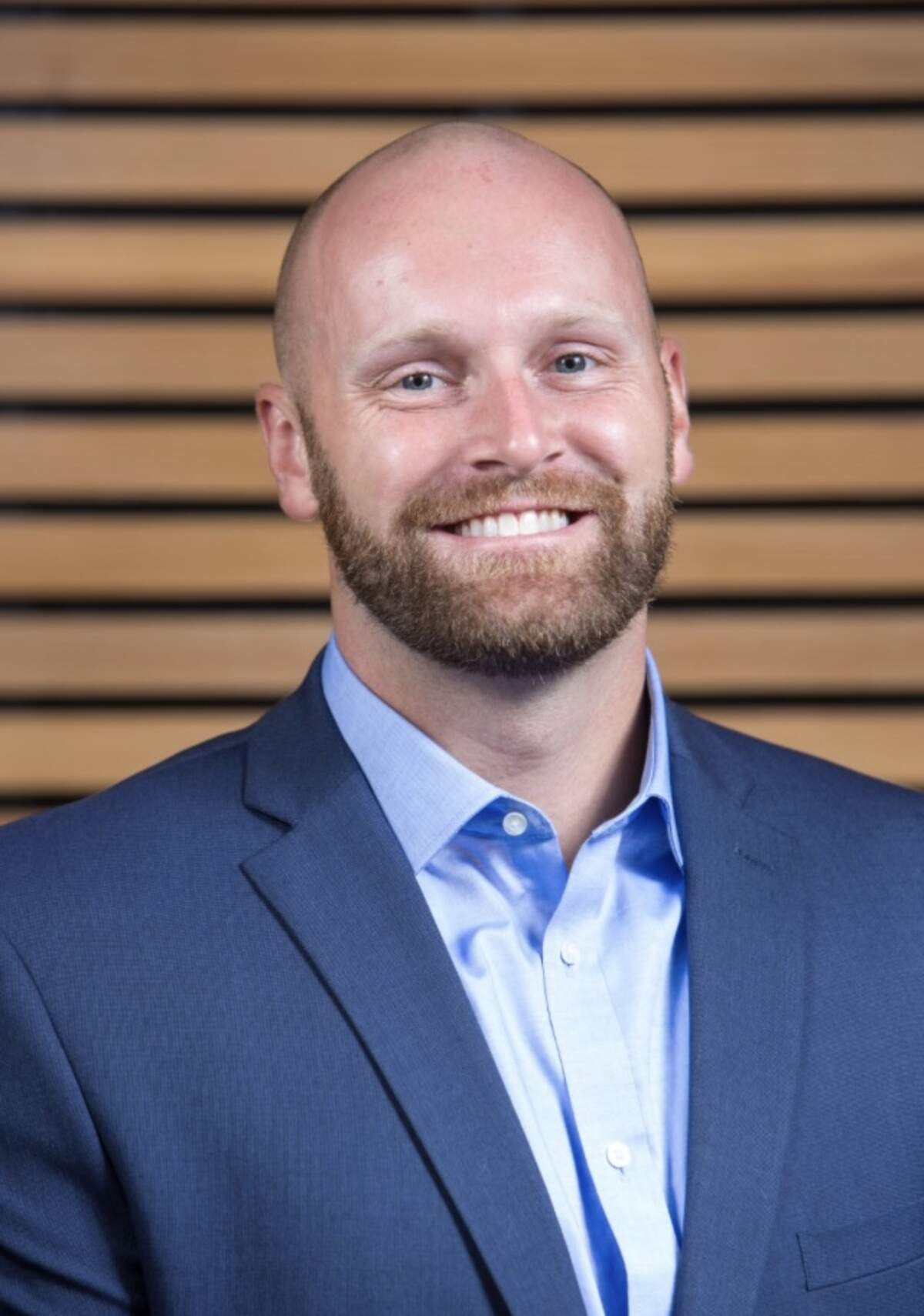
Seth Storset, 39, is the youngest candidate running for City Council. He says that’s an asset.
“I feel like that’s something that has been missing — the perspective of a younger family,” he said in an interview.
Storset is the safety director for TOTE Maritime, the shipper that operates roll-on, roll-off freighters between Tacoma and Alaska. He holds a master’s degree in Business Administration from the University of Washington.
He and his wife, Kelsey, live in the Finholm district. The have two children, Winifred, 6, and Wade, 9, who attend Life Christian School.
“I love the area and I just kind of felt an itch to get involved,” he explained. “I had just finished my masters, I had some bandwidth, I have some knowledge and experience, so here we go.”
Storset moved to Fox Island with his family at the age of 13 from University Place and graduated from Gig Harbor High School in 2001. Back then, he remembers, “Gig Harbor was kind of a retirement community, the kind of place where young people go off to college and never come back.”
At a recent reunion, though, “I met so many of my old classmates who have decided to come back and raise their families here.”
Storset said he is alarmed at how expensive it is becoming to live in Gig Harbor, especially for single-income families and low-wage workers. And he hears a lot about traffic problems.
“I wish the council would show some leadership about solving all the problems with traffic on Highway 16,” he said. “If we can’t fix that, how are we going to fix anything else?”
He thinks the City Council sometimes makes snap decisions without involving the public, the most recent example being the moratorium on short-term rentals, passed as an emergency measure without a public hearing.
“It seems that is putting a lot on owners,” he said. “I don’t know if doing something in such an abrupt way is the best way to go about it. It just seems some work could have been done to prepare people for this. I think it was a missed opportunity to allow the community to speak out.”
Storset supports the city’s decision to allow at least one homeless shelter and possibly several transitional homes for families, even though he knows it’s probably going to be unpopular.
“People think we’re going to have tent cities pop up, and that’s not the case,” he said. “We have homeless people in Gig Harbor, although a lot of people don’t know it.”
He said he fell into conversation with a young convenience store attendant while buying a Gateway with the homeless shelter story on the front page.
“The guy pointed to the headline and said, ‘I’m glad to see that. I was homeless in Gig Harbor for three years, bouncing around on people’s couches.’”
Other priorities for Storset: Sewers, roads, parks, the planned sports complex. He said he’s worried when he hears the council talking about cutting or reducing infrastructure projects. “Is that really responsible growth?” he asked.
Storset has volunteered as an assistant junior varsity soccer and baseball coach at Gig Harbor High School, and serves on the board of directors of the Foss Waterway Seaport and the Gig Harbor-based Permission to Start Dreaming Foundation.
Money: Storset has raised about $3,276 in contributions, according to the Public Disclosure Commission. The largest were $964 each from Kyle and Leah Rohrbaugh. Former council member Michael Perrow gave $500 and Sue Braaten $482.
Primary: Because there was no third candidate, neither Abersold nor Storset were on the primary ballot.
This story was originally published October 24, 2021 at 5:00 AM.