
A Pierce County oyster farm wants to raise geoducks. Neighbors are raising the alarm
It’s an ugly bivalve with a funny name, but the geoduck clam can stir passions — and not only at the table.
A new draft Environmental Impact Statement has reignited a long-simmering dispute between the Taylor Shellfish Company and its neighbors over a proposal for geoduck farming in Burley Lagoon.
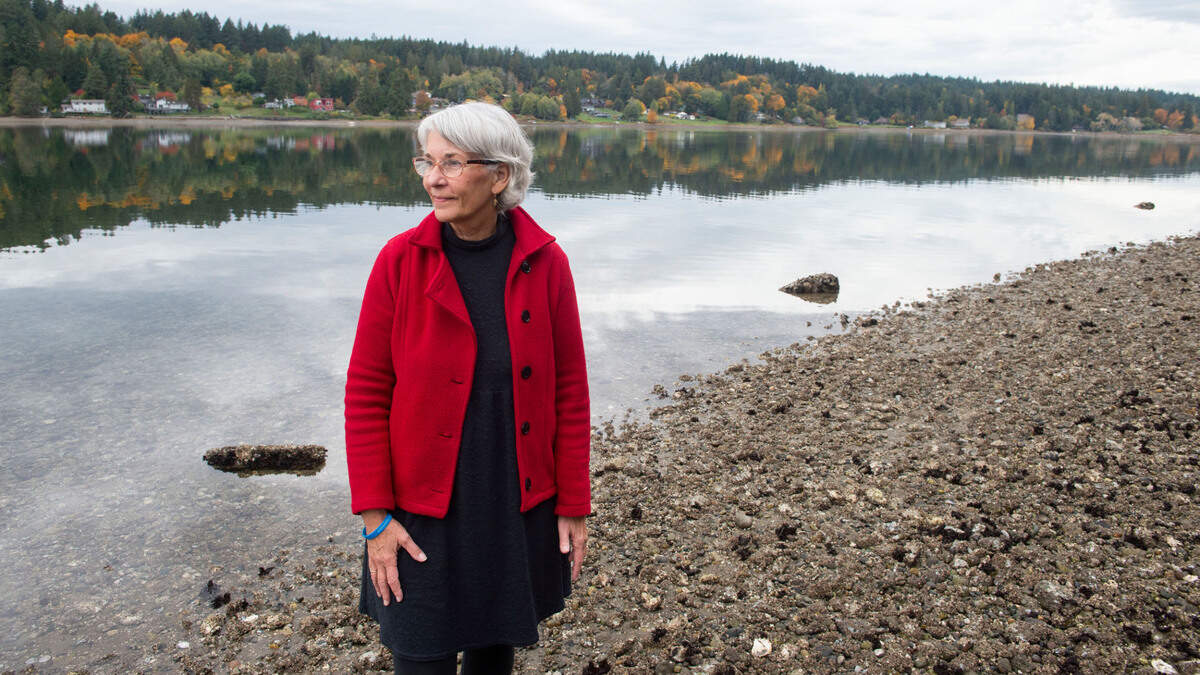
The dispute has gone on so long — since 2016 — that some of the neighbors, like Karen McDonell, have made virtual second careers of fighting Taylor Shellfish and the very idea of farming geoducks.
“We’ve seen these geoduck farms spread like a cancer all over Puget Sound,” McDonell said in an interview recently. “Case Inlet, Totten Inlet, Eld Inlet, Zangle Cove — they’re everywhere, and they’re a menace to the environment.”
Geoduck farming is ugly, it spoils the view, fouls the water, and reduces biodiversity, its critics say. In the early stages of geoduck growth, farms use hundreds of PVC pipes, which are visible at low tide. They may also use netting to keep birds from feeding on the young clams, and critics say the nets clog with seaweed, which rots and smells.
But the 248-page draft EIS notes, among other things, that the geoduck operation would occupy only about 8.5 percent of the 300-acre site, and the PVC “nursery tubes” would be planted on only a small portion of that.
It basically says the proposed geoduck farm is compatible with current farming practices in the lagoon, does not seriously threaten the environment and should go ahead, provided the company follows best practices.
The neighbors disagree.
“This beautiful, wonderful, pristine bay is going to be filled with plastic pipes and nets,” said McDonnell. “Our lagoon is at a tipping point.”
They’re trying to rally opposition during the 45-day comment period, which ends Nov. 17. The project needs both a conditional use permit from the county and approval from the state Department of Ecology, which will make the final decision.
“We want to block the application from being granted,” said McDonell, 66, a retired legal secretary who lives on Sherman Drive overlooking the lagoon.
“I’ve lived on the lagoon for 42 years, and I have watched it go from a mom-and-pop shellfish farm to a huge industrial operation, with noise and lights all day and night,” she said.
‘Strong demand’ for geoducks
Taylor Shellfish, which is headquartered in Shelton, owns or leases about 14,000 acres of tidelands in Puget Sound and on the Washington coast, farming mostly oysters, but also Manila clams, mussels and other shellfish. Recently, it has been expanding into geoducks, looking toward the booming market in Asia, where they are considered a delicacy.
“There is strong demand for that product, both locally and in Asia,” said Bill Dewey, Taylor’s director of public affairs. “We started experimenting with geoducks in the 1990s, and we’ve pretty much figured out how to do it successfully.”
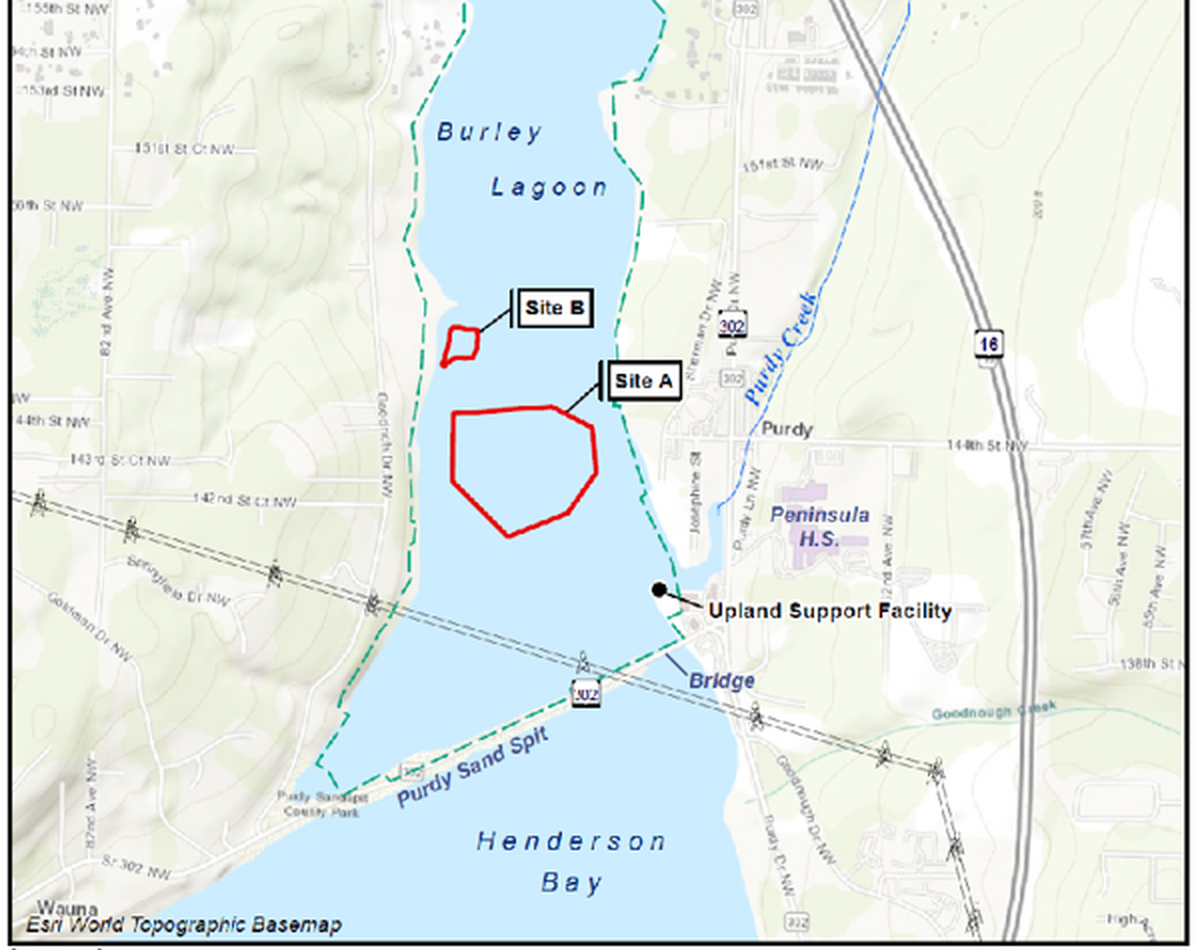
The company’s oyster farming operation in Burley Lagoon is an area landmark, its boats, barges and piles of oyster shells a familiar sight north of the Purdy Bridge. Now the company wants to expand its current 300-acre operation to include up to 25 acres of geoducks.
A delicacy in Asia
Geoducks — pronounced “gooeyducks” — are meat-heavy mollusks that can reach 2 1/2 pounds when harvested at five to six years. The name comes from a Lutshootseed word meaning “dig deep,” and that’s just what they do, burrowing 3 to 5 feet into the sand on tidal beaches.
Blanched and sliced thin, geoduck is used in sushi and hot pots, and high-quality geoduck meat fetches a high price in places like China, Japan and South Korea. Taylor Shellfish sold about half of its 900,000 pounds of geoduck last year to China, according to Dewey.
Why farm geoducks? There isn’t enough wild harvest to keep up with demand, Dewey said.
The commercial fishery for wild geoduck in Washington is co-managed by the state and Native American tribes. To protect the sports fishery on the beaches, shellfish are harvested by divers in deep water. Dewey says about 4 million pounds a year are harvested in that way. Geoduck farming adds about 2 million pounds, and there is market demand for more, he said.
A Goldilocks lagoon
Burley Lagoon has all the right characteristics for growing geoducks, Dewey said.
“It’s a lower intertidal area with a deep, sandy substrate, good water circulation and an abundant supply of plankton, which is what the geoducks feed on,” he said. “That lagoon has a long history of raising some really high-quality shellfish.”
Shellfish have been cultivated in Burley Lagoon for almost a century, according to the draft EIS. The Tyee Oyster Company had a large-scale operation in the 1930s. Jerry Yamashita, owner of Western Oyster Properties, farmed the lagoon from 1952. Taylor Shellfish took over management of the 300-acre farm in 2012. Yamashita, now in his 90s, lives in Seattle.
How can a private company own tidelands? In Washington, as in most coastal states, tidelands are considered public property. But in 1890, the state Legislature passed two bills, known collectively as Bush-Callow, allowing tidelands to be sold or leased for aquaculture. Oyster, clam and even salmon farming quickly followed.
‘Not a significant change’
In 2016, Taylor Shellfish agreed to join the county in commissioning an Environmental Impact Study on the proposed geoduck project. The draft version was released Oct. 4.
The draft EIS is long and technical, but the bottom line is on the second page.
A technical study by biologists found “conversion of the type of shellfish culture on the 25.5-acre site from clam and oyster to geoduck would not represent a significant change in terms of effects on biological resources or ecological functions compared to existing aquaculture operations,” the introduction states.
The report acknowledges that neighbors may experience “nighttime noise, light and glare during planting, maintenance, and harvest activities; and potential recreational conflicts with nursery tubes and predator exclusion netting,” but it suggests that there are adequate mitigation measures for these problems.
As for the PVC tubes, they’re necessary to protect the fledgling geoducks from birds and other predators, Dewey explained.
Geoducks have a five- to six-year growing cycle, Dewey said, and the nursery tubes are used only for the first two years, then removed and re-used. Over any six years, the tubes would occupy only about 1.5 to 2 acres of the 25-acre plot, the EIS notes.
The nursery tubes are about 2 feet long and are placed vertically every 12 to 18 inches. Seedlings grown at Taylor’s Hood Canal nursery are placed inside when they are 7 to 10 millimeters long and allowed to grow for two years.
The tubes are only visible at low tide, Dewey added, “and, of course, in the winter, both daily low tides occur at night.”
Farming ‘changed the lagoon’
That’s still a lot of PVC pipes in the water, says McDonell, the neighborhood critic.
“If you do the math, that’s 43,000 pipes per acre,” she said. “And sometimes they break loose, and you find them all over the place.”
The oyster operation has changed the lagoon since Taylor took over and intensified it, she said.
“They have scraped the sea floor, removing the mussels and crabs and sand dollars, flattened the tidal pools and covered the beaches with nets,” she said. The nets gather seaweed, and during hot weather “the smell is terrible,” she said.
The predator nets also prevent birds from feeding, she maintains.
“Burley Lagoon is in a flight pattern for migrating birds,” she said. “The number of birds have really dropped significantly because there is so much noise. And the shellfish operators have put nets over the beaches. A ‘predator,’ in their eyes would be a diving bird, like a heron or a cormorant, and these are natural in a lagoon.”
She also notes that the lagoon is fed by two salmon-bearing streams, Burley Creek and Purdy Creek, and she worries about the effect on them, although the EIS found none.
Comments on the draft EIS are due by Nov. 17, and McDonnell and other Burley Lagoon residents are campaigning to get negative reviews. They’re circulating photos they say show visual pollution at other geoduck farms, and they’re conferring with like-minded residents at other coves and inlets with similar operations.
McDonnell is trying to round up negative comments to the draft EIS, but she says she almost despairs at getting it changed.
“I have been trying to read it to the last page, but it is so far over the head of the average citizen that you can’t really respond to it,” she said. “You really have lost before you started. You can’t hire as many scientists and experts as they have. We’re really at their mercy.”
The Pierce County Planning and Public Works department has a webpage aggregating much of the information available on the proposed geoduck farm, including a link to the entire draft EIS. The webpage is www.piercecountywa.gov/7418/Proposed-Burley-Lagoon-Geoduck-Farm.
People who wish to comment may do so:
- By email to the assigned county planner, Ty Booth: ty.booth@piercecountywa.gov
- In letter form to Pierce County Planning and Public Works Department, attention Ty Booth, 2401 S. 35th St., Suite 2, Tacoma, WA 98409
- In the “Submit a comment” link on the webpage above.