New Gig Harbor food bank to cost $7.5 million. Here’s what’s needed, when it opens
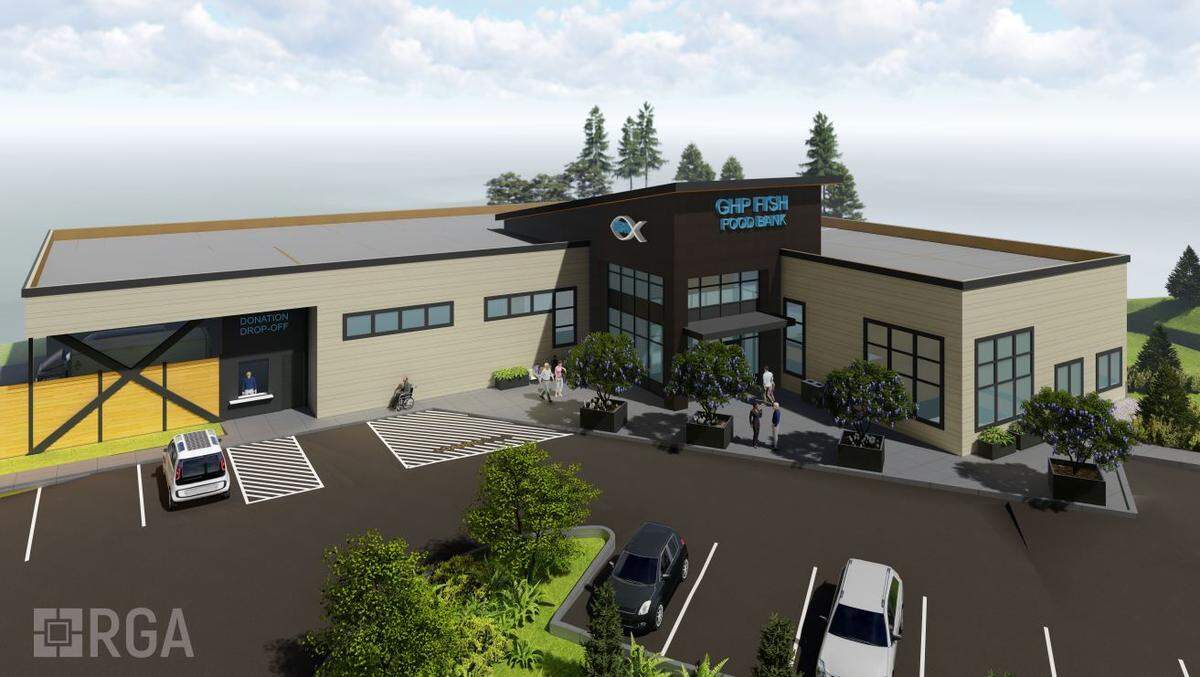
The walls are going up on a new $7.5 million food bank in Gig Harbor that’s expected to open next year.
Gig Harbor Peninsula FISH Food Bank and Community Services started fundraising about a year ago for the new building and has raised $6.7 million so far. Meanwhile, the foundation is in and roof beams are in place.
“Construction will continue without interruption, unless it’s weather related, and we hope all things being equal and according to plan ... to occupy sometime in late spring or early summer of 2022,” said Pam Leazer, who’s managing the capital campaign. “Probably early summer.”
The new facility is a few hundred feet from the space the nonprofit, which has been around since 1976, currently rents at 4425 Burnham Dr.

Leazer said they’re trying to raise $8 million in order to have $500,000 to establish an endowment to help with operating expenses.
“If what we’ve seen so far is any evidence of how people want to support this organization and have supported it for the past 45 years, we feel that the goal is very attainable and reachable, and within our time frame.”
Asked where they’re at with fundraising and construction, Leazer said: “We’re started, it’s full-court press right now, and it will continue. But yes, we do need to raise the last $1.3 million. That’s very important.”

The Gig Harbor City Council recently contributed $500,000 toward the project, using funds from the American Rescue Plan Act. It unanimously passed a measure allocating those funds at its Nov. 9 meeting.
“The City Council investigated and found that it could be used for this,” Leazer said. “They want to see us have this facility. ... They’re just very interested in helping us get this facility up and running and completed.”
Asked how the pandemic has impacted fundraising, she said that was a big unknown for everyone in the nonprofit sector, but that the organization decided to go ahead with the project following a feasibility study it had done.
“When they told us how much it was going to cost, I think most of the volunteers were overwhelmed and thinking: ‘How are we going to do this?’” food bank coordinator and founder Jan Coen said. “... It’s gone amazingly well.”
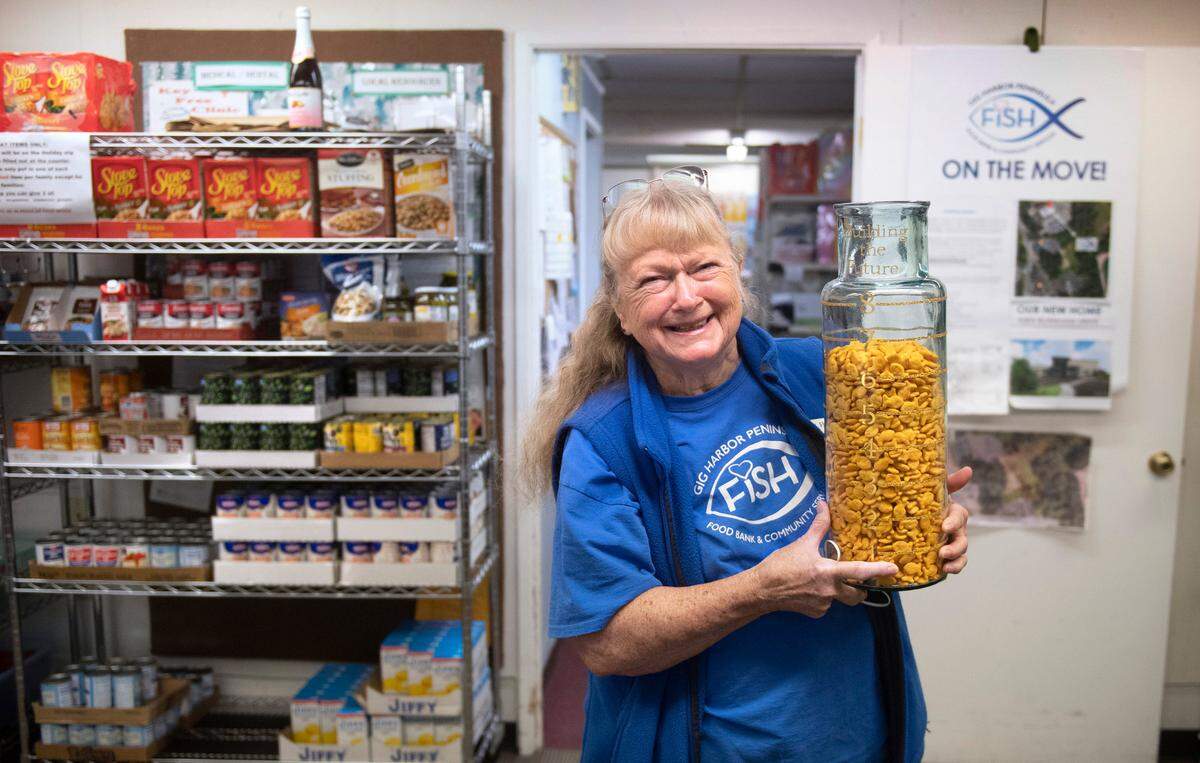
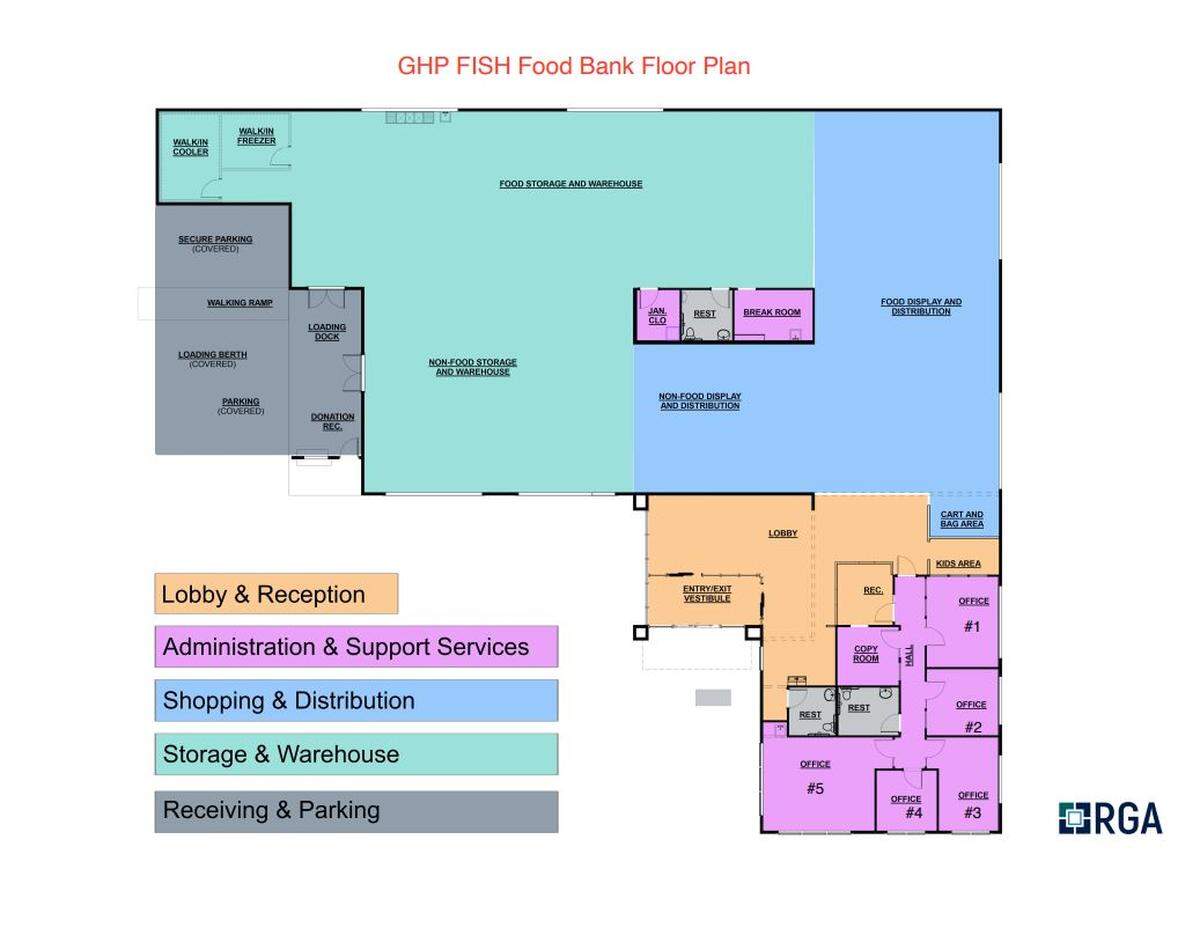
Asked about the new building, Coen noted that they won’t have to use pails to catch leaks when it rains, like they do at the current one. And there will be private space for people to sit down with financial aid experts to do check-in interviews and have conversations about different resources that are available. Right now, visitors end up explaining their circumstances in the open, in a cubby off the main entrance, she said.
“It’s just tremendously exciting to have the opportunity to serve people in a beautiful building and with space to really do a good job for it,” she said.
The new building will have more storage and refrigerated space as well.

The organization gets excess food from grocery stores, but at the current facility doesn’t have space for it all.
“Right now, we’re having to send at least half of the goods that we pick up from the stores over to other food banks,” Coen said.
The rented space, which is really multiple adjacent spaces that house different parts of the facility, was never intended to be a food bank, Leazer said. Rented shipping containers out back help with some storage.
“FISH has just outgrown the facility that they’re in right now,” Leazer said. “... It’s all a little bit here and a little bit there.”
She emphasized that the organization provides services beyond food for those in need. They have a clothing bank and help with emergency financial aid for rent and medical needs, among other things.
The nonprofit served more than 10,000 people and provided nearly 212,000 meals and $312,000 in financial aid in fiscal year 2020, according to its website.
“We are more than a food bank, because people who experience food insecurity also have other needs that cause it,” Leazer said. “Imagine suddenly losing your job or becoming ill, and then having to choose between going to the grocery store or paying the heating bill. That really does happen to people and it can be daunting.”
They help in times of crisis, she said, and also “help people get back on their feet.”
To learn more about FISH services, how to access them, or how to donate, visit https://www.ghpfish.org/.