
Lax policies make big-box stores ‘bug lights’ for shoplifters, police chief says
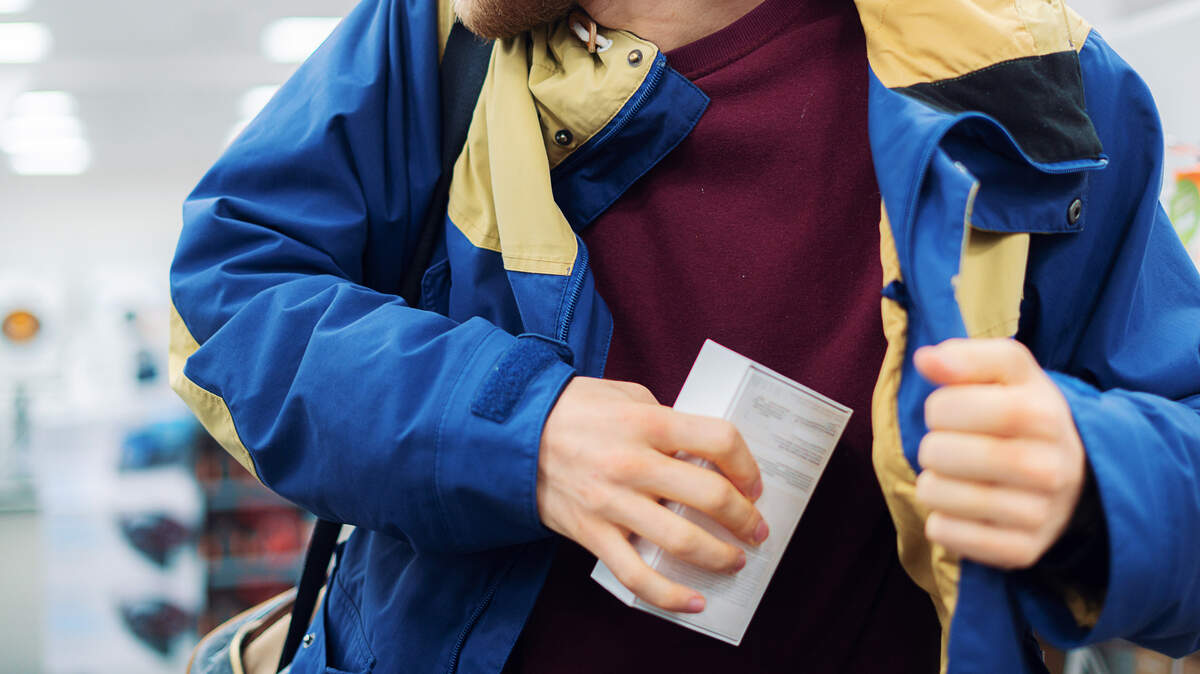
Shoplifting in Gig Harbor is getting out of hand and big retail stores are chiefly to blame, the city’s police chief says.
Poor security and hands-off policies make some big-box stores “bug lights for thieves,” Chief Kelly Busey told The Gateway recently, and he wants the City Council to do something about it.
Busey went to the City Council safety committee last week to ask for an ordinance that requires big-box stores to tighten up their security. One idea: make good security a condition of a business license.
“We’d like to see them do a better job of monitoring inside the store,” Busey said. “We’d like to see them lock up their high-value items. We’d like to see them change their policies to allow prompt reporting, put uniformed loss-prevention people at the doors, maybe change some store layouts so shoplifting isn’t so easy.”
He’d also like to see eye-level video cameras.
“In some stores, all you have to do is wear a baseball cap, because the cameras are all overhead,” he said.
Gig Harbor Councilmember Le Rodenberg, who is chairman of the council’s Finance and Safety committee, said in an email the council is anxious to work with the chief to solve the problem, but they couldn’t immediately come up with an ordinance that had teeth to it.
Busey said it’s not a problem limited to Gig Harbor.
Throughout the region, shoplifters have grown so bold, “they just pull out a garbage bag, fill it up and smile at the cashier as they walk out the door,” Busey said. “They know nothing will happen to them.”
In one recent incident, a man wheeling a cart full of DeWalt power tools out of Home Depot was asked by employees if he intended to pay. “I’ll think about it,” the man replied, according to the police report. Then he loaded the tools into his car and drove away.
In another case, a shoplifter said: “Don’t touch me,” as he carried three boxes of shoes out of Famous Footwear.
Busey said Gig Harbor is becoming a “destination city” for teams of shoplifters working up and down the Interstate 5 corridor.
“We’ve arrested people from Kent, from Everett, from Portland,” Busey said. “They come over the bridge from Tacoma, from Puyallup, from all over.”
Police respond to 15 to 20 shoplifting incidents a week, Busey said, mainly at the city’s five big retail stores.
“And that’s just the ones that are reported,” Busey said. “For every shoplift that’s reported, there are probably two more that aren’t.”
“It just keeps getting worse and worse,” he said. “We’re very frustrated.”
Gig Harbor had 423 reported “larceny-theft offenses” in 2019 and 385 in 2020, down 9 percent, according to the Washington Association of Sheriffs and Police Chiefs annual Crime in Washington report. Figures aren’t yet available for 2021.
Store policies hamper cops
Several factors are in play, including drug use, changes in state law and pandemic restrictions on jail booking, Busey said, but “the primary driver is the policy most stores have against intervening in theft.”
“Store employees can’t detain suspected shoplifters, they can’t call in suspicious people, and some stores don’t even allow employees to call the police even if they see theft happening right under their noses,” the chief said.
Thieves sometimes work in teams of two or three, using smartphone texts, walkie-talkies and lookouts. They go for small, high-value items, like perfumes, liquor, smartphones, cameras, fancy sneakers and designer clothes. Fences are no longer necessary — shoplifters can sell the stuff online.
Police reports show some of the Gig Harbor stores hit frequently by shoplifters are: Home Depot, Ross Dress for Less, Kohl’s Department Store, Fred Meyer and Famous Footwear. The shoe store alone is hit by shoplifters several times a week, records show.
Managers at the stores said they were not allowed to talk to the media. Calls and emails to corporate offices were not returned.
“Shoplifting? Oh, boy,” said one assistant manager who asked not to be named. “I don’t think I’m supposed to talk about that.”
She directed an inquiry to her district manager, who did not return the call.
Liability, bad publicity
Stores are wary of stopping shoplifting suspects because of liability and the danger of bad publicity, Busey said.
“The bad guy sues the store and wins — it happens all the time,” Busey said. “And there’s the issue of accusing the wrong person.”
An Alabama woman recently won $2.1 million in damages from Walmart after she said she was falsely accused of shoplifting groceries, according to ABC News. A woman in West Virginia won $16.9 million when she was injured by a shoplifter fleeing Walmart employees who were chasing him, according to the New York Daily News. In Nebraska, an injured shoplifter successfully sued a store after he was convicted, collecting $750,000, according to the Omaha World-Herald. He suffered skull fractures and a brain injury when a loss-prevention officer threw him to the ground, the World-Herald reported.
The average shoplifting loss is about $270, according to the National Retail Federation, and that’s small enough that many corporate stores accept it as a cost of doing business.
Changes in state law
Recent changes in state law also hamper police, Busey argues. One new law forbids police to forcibly detain a suspect unless there is “probable cause” a crime has occurred. That’s a stricter standard than the old one, which was “reasonable suspicion.”
“Even if you see someone staggering out of a store with an armload of clothes, to establish probable cause, you have to go into the store and find an employee willing to say those clothes have been stolen,” Busey said. “Meanwhile, the shoplifter is getting away.”
Sometimes the police officer tries to get to the store and back before the suspect can load the goods into their car. And if the car gets away, another new state law may prohibit a pursuit.
Much shoplifting activity is driven by drug addiction, Busey said. In many arrests, reports show, drug paraphernalia, methamphetamine or heroin are found in the suspect cars.
The state Supreme Court ruled earlier this year that Washington’s simple drug possession law was unconstitutional. Lawmakers passed a new law, SB 5476, for the time being.
“In brief, it recriminalizes drug possession, although makes it a misdemeanor instead of a felony,” the ACLU said on its website about the change. “Additionally, before someone can be charged with a crime, they must be diverted to services at least twice. These changes to the law will only be in effect until July 1, 2023 unless the Legislature or voters change the law again.”
The law also included funding for services and diversion, the ACLU said.
Busey said offenders are now given a referral to a drug treatment program and released on their first two offenses.
“Because there’s no statewide recording system for drug referrals, there’s no way to know if the suspect is on the second, third or fifteenth offense, so everybody walks free,” Busey said.
Law misinterpreted, advocates say
Advocates of the new laws — HB 1310 and HB 1054 — say they are designed to reduce mass incarceration, false arrest and physical confrontations with police officers.
Enoka Herat, a lawyer who follows police practices for the ACLU of Washington, says police are misinterpreting the new laws.
“There is nothing in the new law that prevents officers from detaining people based on reasonable suspicion, and this kind of misinformation is really unfortunate,” she said in an interview. The key difference, she said, is that officers cannot use force to stop someone they merely suspect.
“‘Reasonable suspicion’ is a pretty low bar,” Herat said. “When they have enough evidence to make an arrest, then they can use physical force.”
Even under the old rules, she said, officers could not use force unless someone was fleeing or there was a high probability that the suspect had a weapon.
The new laws were written deliberately to limit police use of force, she said, and they have been successful. There were 62 percent fewer police killings in Washington state during 2021 than in previous years, she said the ACLU has found.
COVID often means no jail time
COVID-19 is also a factor, Busey said, because jails are limiting the number of suspects they can book. Usually, shoplifting suspects don’t qualify, so police end up writing them what amounts to a ticket and setting them loose.
“Of course, the criminals know this,” Busey said. “They know that even if they’re caught, they’re not going to jail. So they just go on to the next job.”
Police sometimes bargain with shoplifting suspects, according to incident reports. Officers will offer not to cite a suspect if they’ll agree to put stolen items back. They can use the threat of a trip to jail — even though booking may be refused — because the shoplifter will not want to lose time, and their car may be towed.
In one recent incident, a man with 21 cases of imported beer in the back of his pickup was persuaded to restore them to the store, in return for not being cited. In another, a man found prowling cars in a Gig Harbor apartment parking lot was released after agreeing to return tools he’d taken from a nearby store.
Store managers can ask police to issue a suspect a trespass warning, basically a threat of arrest if the person returns to the store. In cop jargon, this is called “trespassing” a suspect. If the person then returns to the store and shoplifts, the crime could potentially be charged as a burglary, with a stiff jail sentence. That’s rarely done, Busey said, and mainly for the most frequent offenders, but it is a tool prosecutors can use.
But prosecutors, too, have their hands full because of COVID-19. With hundreds of cited shoplifters, prosecutors are facing a backlog.
“They’re going to have to do triage and only take the most serious cases, so many of these people may never be charged,” Busey said.