Gig Harbor is deciding on rules for Airbnb-style rentals. Here’s what owners want
Paul Kadzik never saw himself as a hotelier.
But the retired dentist said he has enjoyed renting the apartment above his garage at his Gig Harbor home on Airbnb for the past four years.
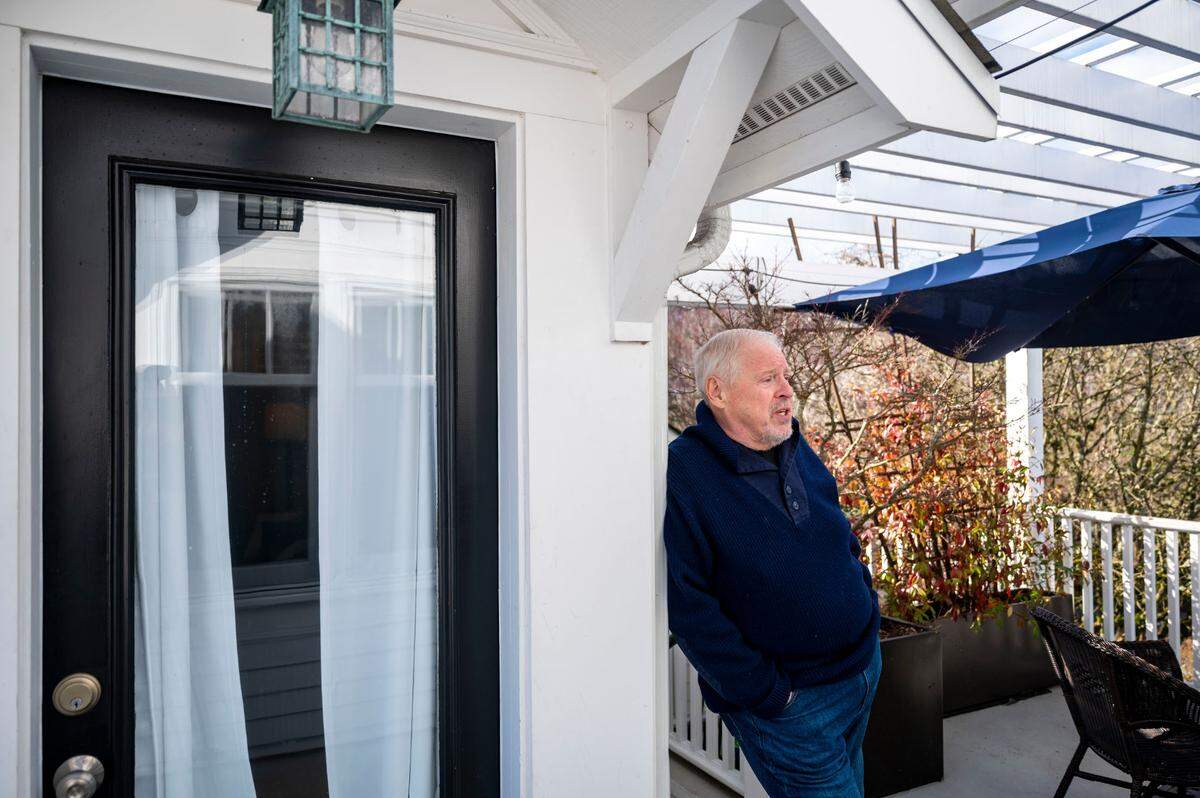
“Before that time, we did it for friends and family,” he said. “We decided we’d give it a try, and it has worked out nicely.”
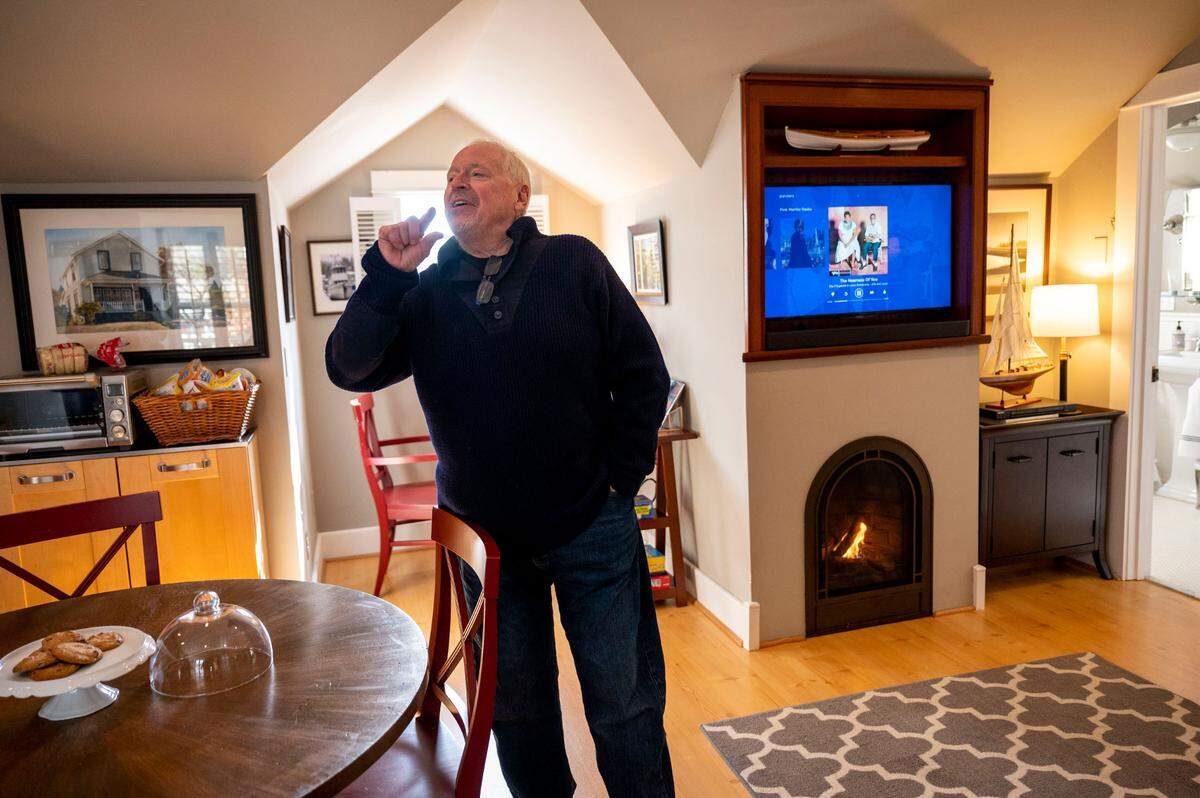
He and his wife Jan put out cookies for their guests. The Pink Martini Pandora station plays in the background on the TV in the unit. They like to enjoy a glass of wine with their visitors and hear their stories. They meet people from across the country. A police chief stayed with them once. Another time they hosted a helicopter pilot.
Kadzik moved into the home on Harborview Drive in 1983. Locals might know it as the white house downtown that goes all out with Christmas decorations.
Now, he and other short-term rental owners in Gig Harbor are watching closely as the city discusses how to regulate the properties.
The City Council passed a six-month moratorium on new Airbnb-style rentals last year while they decide what the rules should be. The Planning Commission will make recommendations to the council following its March 2 meeting.
Kadzik is part of a group calling itself the Gig Harbor Short-term Rental Alliance and helped draft proposed regulations that the group submitted during the Planning Commission’s public comment period. Kadzik was on the Planning Commission for 11 years, then on the City Council from 2006 to 2018.
The city, like others across the country, “had no experience with this type of short-term rental,” Kadzik said.
Rules and regulations in place now are designed for inns and bed and breakfasts, he said.
In parts of the city with single-family zoning, those type of properties require a conditional-use permit.
He said that’s time-consuming and expensive. It means going before the hearing examiner and getting a traffic study. A few short-term rental owners did go through that process, he said.
Carolyn Allen has several long-term rental properties in the city and is among those who has taken an interest in the process. She’d like the option to operate a short-term rental in the future.
She met with Kadzik and others last year when there was discussion about the moratorium, and they formed the alliance, which now has about 120 members on Facebook. That includes owners, prospective owners and real estate agents, among others, she said.
The alliance studied what regulations look like in other cities and put together the proposal they submitted to the Planning Commission.
Their proposal would create three classifications of short-term rentals: those that are owner-occupied, those that are not owner-occupied, and those that are on the water. It would require contact information, quiet hours, minimum stays, safety inspections and create a maximum occupancy, among other things.
“I think the regulations are going to be wonderful and the permitting process a lot easier than getting a conditional use permit,” Allen said. “… I really want to stress that the regulations that the city will put in effect will be an extra layer of protection for individuals that have concerns that short-term rentals that may come into their neighborhood are going to in any way affect them negatively. It’s just going to be one more layer of protection.”
Their proposal also would ban loud parties and other disruptions, they said.
“The idea that this could be a place of wild parties — we don’t have a town of places to have that type of activity,” Allen said. “Our restaurants close early. Our places that serve alcohol close early. We have a tight-knit community that I think communicates very well with their neighbors.”
‘What’s the fear?’
Kadzik said he wasn’t aware of an organized resistance to allowing short-term rentals in areas with single-family zoning, but he knows there’s opposition.
“They’ll be a lot of people for the very reason that they don’t want to be the only house on the street that’s not a short-term rental,” he said.
Some of the public comments submitted to the Planning Commission were supportive of short-term rentals, and some expressed concerns about how they might change the city and how they might affect the real estate market. Some of the commenters worried the rentals could lead to fewer homes being available for those who want to buy and live in Gig Harbor, making it harder for first-time buyers. Some asked the city to ban short-term rentals or only allow owner-occupied rentals.
Kadzik said he understands why residents might be concerned. Taken to the extreme, he said, the worry is that someone could end up the only resident in an area surrounded by Airbnbs.
“The question is, what’s the fear?” he said. “That’s the fear. But how likely is that to happen?”
Not likely, he thinks.
“We’re not a Chelan or a Walla Walla, where people go just to recreate,” he said.
The math doesn’t pencil out in his neighborhood, he argues, for someone to buy a home just to use it as a short-term rental.
“If you were going to buy a house in this area, you would most likely be paying $1.5 million-plus,” he said.
With that sort of mortgage, he argues, the owner would have to rent it out every night of the year at something like $233.
His own rental goes for an average of about $250 a night.
“We’re nowhere near 365 days a year,” he said.
Kadzik estimates he and his wife have about 80 guests a summer, maybe 160 or 170 a year.
The most common length of stay at his rental is two nights, he said, maybe three.
“Sometimes we get someone for a week,” he said. “… We discourage anyone that wants to rent more than a week.”
Once, parents of a student at Pacific Lutheran University traveled from Germany to stay at the rental when their son graduated.
“We get a lot of people who are here looking to relocate to Gig Harbor,” he said.
They tend to stay for four days or so while they work with a real estate agent, he said.
Others visit and take day trips around the region, such as to Port Townsend.
Another Airbnb property close by is owned by family that lives in Silicon Valley and plans to retire in Gig Harbor, he said. Further down the street is another owner-occupied Airbnb.
Getting clear rules would be a good thing, he said.
“I’m not comfortable being in a gray area,” he said. “Everyone would be much more comfortable if we had good, logical regulations. That’s what this is all about.”
However, he said he’d oppose certain parking regulations and requiring a traffic study for short-term rentals.
“We never get anyone with two cars,” he said. “Never.”
The hours guests hit the road to explore are different than peak traffic hours for the city, he argues. Many walk downtown to restaurants and shops, and he believes short-term rentals are important for the local economy.
He also noted that Airbnb collects lodging tax for the city.
‘We had wonderful guests’
Heather Imig, a real estate agent in Gig Harbor, sold a short-term rental she owned in Steilacoom.
The property had been a bed and breakfast. She purchased it and ran it as an Airbnb for three and a half years.
“We had wonderful guests,” she said. “We had military people. We had people relocating to the area. We had people that had sold their house and stayed with us.”
Then a law took effect in Steilacoom Jan. 1, she said, that requires owners to live on the property. That wasn’t going to work for Imig’s family, so they sold.
“I worked so hard to get it to where it was,” she said. “They took a massive amount of our income from that.”
“I was there multiple times a week, doing landscaping or cleaning,” she said. “It’s not like I was an absentee owner. … I think that short-term rental owners actually maintain their properties better, because they get reviewed on all these platforms.”
Now, she’s following what happens in Gig Harbor.
“Since I’m a Realtor here, it benefits me for my clients to know what the laws and rules are,” she said. “I’m going to want to know what they can do and cannot do with the property before they buy it.”
She said a lot of people selling their homes stay in local Airbnbs when they list.
As for how she sees short-term rentals impacting Gig Harbor going forward, she said: “I don’t think this is an area where you’re going to see a bunch of investors move in (and purchase homes to use as short-term rentals). Investors like that are going to be investing in big cities.”
She said she doesn’t think there should be a cap on short-term rentals in the city.
“They pay their mortgage. They pay the same taxes everybody else pays,” she said. “… There should just be a permitting process if they want to control it somehow. That’s going to be the only way to make it fair for people.”
How many short-term rentals does the city have?
Kadzik estimates there’s 30 to 45 short-term rental properties in the city, depending on how you count.
With regulations, he said, the city would have that information available.
City spokesperson Laura Pettitt said the number of short-term rentals operating in the city at any given time is fluid, but that as of Feb. 16 she identified 53. (Allen argues that’s high).
“We need some kind of clear direction,” Pettitt said, to make “this a fair and equitable process, and right now we just don’t have that within the current code.”
Clear regulations also protect the owners, she said.
“It protects them, knowing that they’re operating within a structure that’s been approved,” she said.
There will be another opportunity for public comment at the meeting when the City Council considers the Planning Commission’s recommendations, Pettitt said. The date of that meeting is still to be determined.
She said short-term rentals are a “growing part of our tourism economy.”
“We’re looking forward to having a very clear strategy and plan that’s reflective of what our residents want, whatever that may be,” she said.