What’s that ‘brown scuzz’ piling up on Puget Sound? Here’s what bacteria levels show
At the Oct. 10 Gig Harbor City Council meeting, Public Works Director Jeff Langhelm addressed concerns from the public about an unknown brown substance recently seen in the bay.
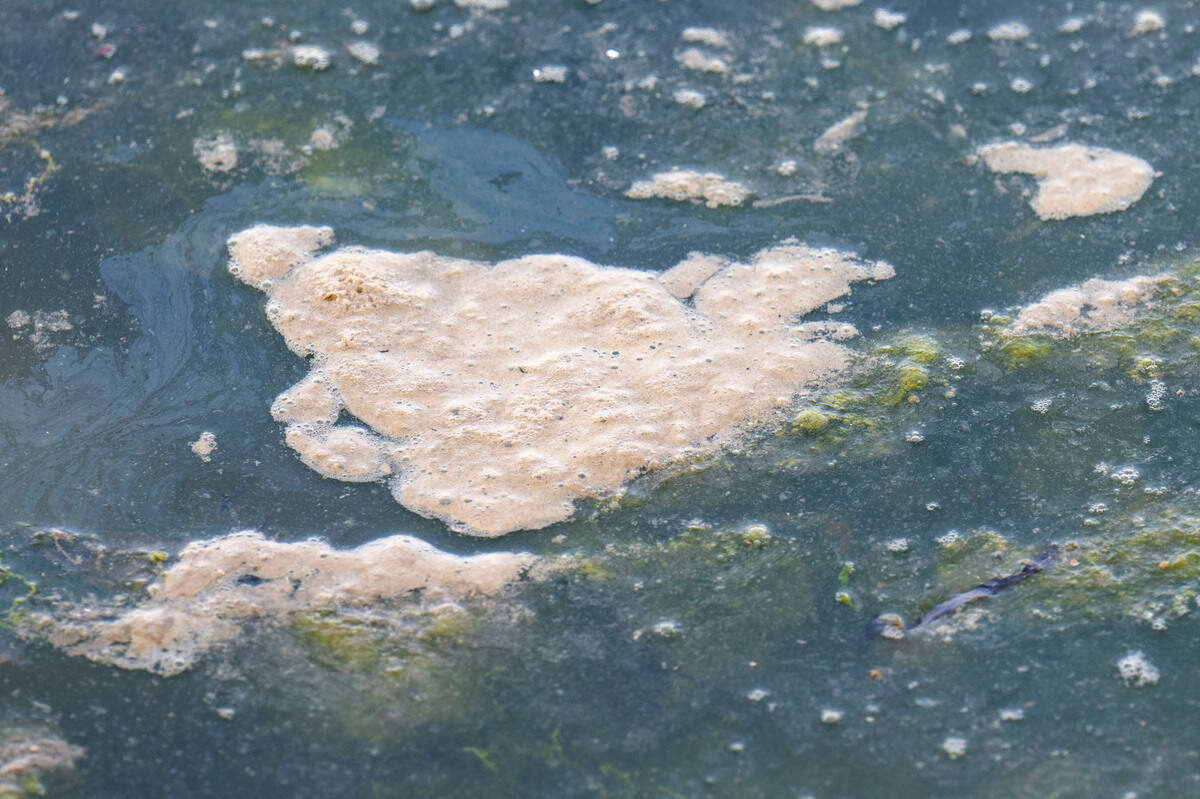
He described it as brownish-greenish colored foam.
Residents noticed the foam in the bay at Skansie Park and around the shore of Anderson Island. Langhelm showed images of the foam at each of those locations during the meeting.
The city received a couple calls and emails from residents concerned it was sewage.
“The city has neither intentionally nor unintentionally discharged raw sewer to the bay,” Langhelm said at the meeting.
This is not the first time foam like this has been seen in the bay, Langhelm said.
Based on conversations with Harbor WildWatch, the city believes piles of this foam are a result of decaying organic material, often identified as bacteria or algal blooms (algae), he said.
What is causing the foam in Puget Sound?
The bacteria or algae could be present because of changes in seasons, Langhelm said. The organic material that comes down through the stormwater runoff into the bay may be causing it.
Rachel Easton, educational director at Harbor WildWatch, agrees with this theory.
The organic material could be a mixture of “detritus,” Easton told the Gateway, such as leaves, oils and proteins, among other things.
“Some of the brown scuzz is totally natural and normal for this time of year because the phytoplankton begins to die off as the day length shortens due to not enough day light,” Easton said.
Phytoplankton are tiny cells that can do photosynthesis, she said.
“Phytoplankton form the base of the marine food web and make the majority of the oxygen we breathe,” Easton said. “They thrive in our nutrient-rich waters.”
Easton said Puget Sound is sometimes called the emerald sea, due to all the phytoplankton. It gets so much phytoplankton that the visibility in the sound is terrible in the summer months and divers prefer the winter when it’s clearer, she said.
The waves could be responsible for the foam consistency.
“If the waves are really active it can whip into a foam pretty easily,” Easton said.
Harbor WildWatch has not performed formal testing to identify the foam, nor have they looked at it under a microscope at this time.
But, Harbor WildWatch did confirm they do not believe it to be sewage from the city, Easton said.
An independent third party tested bacteria levels around Puget Sound. Some samples were taken Oct. 4, identifying medium bacteria levels, which falls within the state Department of Ecology’s water quality standards, Langhelm said.