Why were bears wandering two Pierce County suburbs this week? Experts have some ideas
If you’re out exploring parks in Pierce County, keep your eyes peeled for bears.
Sightings were reported near parks in Gig Harbor and Puyallup this week. Wildlife officials say that’s actually pretty normal, and they have some ideas what the bears might be doing in the suburbs.
The Gig Harbor Police Department received an anonymous report from a citizen Monday morning at 6 a.m, Police Chief Kelly Busey told the Gateway.
The report included a picture of a black bear near Grandview Forest Park, he said.
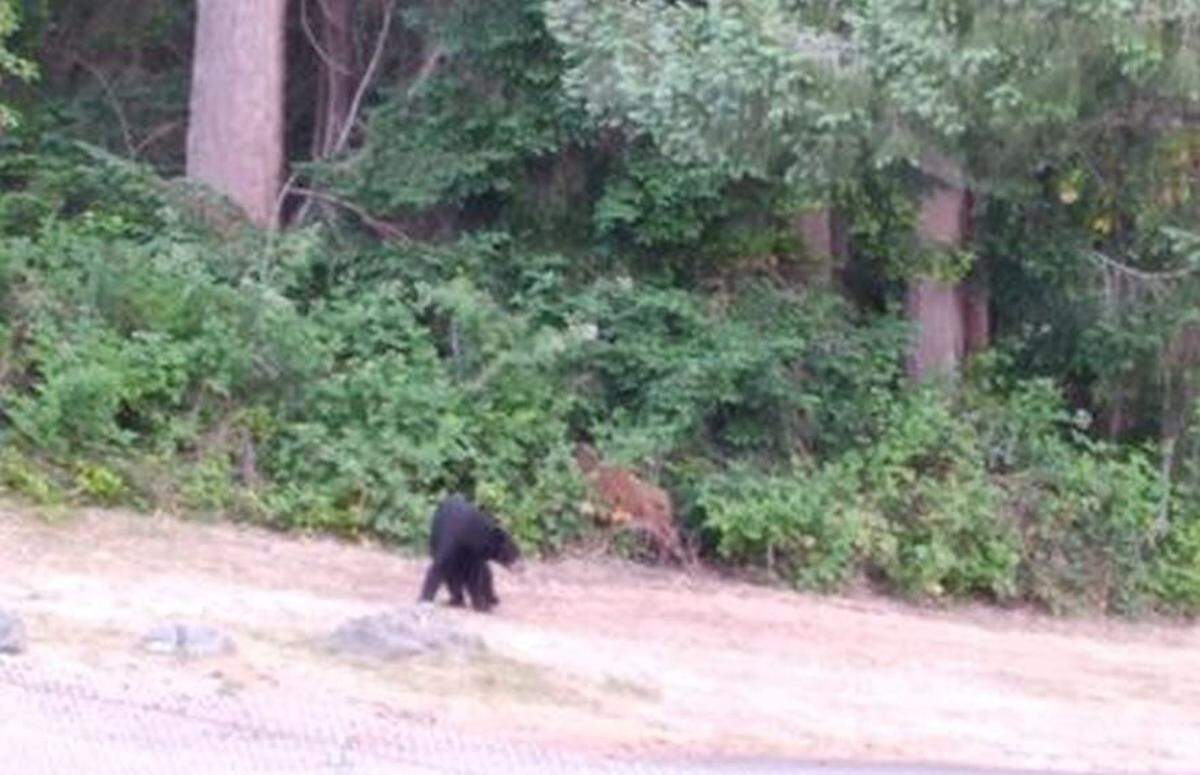
“We have not had any additional sightings since,” GHPD posted on twitter. “The bear has likely moved to another area.”
On Monday afternoon the Puyallup Police Department also received a tip about a black bear walking near where the Puyallup Loop trail meets Clark’s Creek.
Black bears are more common throughout Washington than one may think, according to Jennifer Becar, Communications Manager for Washington Department of Fish and Wildlife.
“It is not unusual to see a black bear in our state, even in suburban areas or in greenbelts around cities and towns,” Becar said.
Becar added that biologists estimate that there are approximately 20,000 black bears in Washington.
Some may wonder why bears are making their way into neighborhoods.
Bears usually find themselves in the suburbs by following their noses, Becar said.
“Most suburban confrontations between people and bears are the result of attractants like garbage cans, pet food, and bird feeders,” she said. “All things that smell like tasty food to a hungry bear.”
The weather also may have something to do with these sightings.
“These encounters can be more frequent in the spring as bears become more active and are eagerly searching for high-calorie food after the winter,” Becar said. “WDFW responds to a variety of situations involving black bears every year, and most are due to human-provided attractants leading to preventable encounters. By securing backyard bear attractants, people can help reduce the likelihood of this kind of encounter.”
Bear safety tips
WDFW has resources and tips for bear encounters on their website and YouTube channel.
“Bears tend to avoid humans,” the WDFW website said. “However, human-habituated bears are bears that, because of prolonged exposure to people, have lost their natural fear or wariness around people.”
WDFW suggests the following on their website if someone comes in contact with a bear:
- Stop, remain calm, and assess the situation. If the bear seems unaware of you, move away quietly when it’s not looking in your direction. Continue to observe the animal as you retreat, watching for changes in its behavior.
- If a bear walks toward you, identify yourself as a human by standing up, waving your hands above your head, and talking to the bear in a low voice.
- Don’t throw anything at the bear, which the bear could interpret as a threat or a challenge.
- If you cannot safely move away from the bear or the bear continues toward you, scare it away by clapping your hands, stomping your feet, yelling, and staring the animal in the eyes. If you are in a group, stand shoulder-to shoulder and raise and wave your arms to appear intimidating. The more it persists the more aggressive your response should be. If you have bear spray, use it.
- Do not run from the bear. Bears can run up to 35 mph and running may trigger an attack. Climbing a tree is generally not recommended as an escape from an aggressive black bear, as black bears are adept climbers and may follow you up a tree.
Any urgent reports of bears or other potentially dangerous wildlife that present public safety concerns can be submitted to WDFW by calling 360-902-2936, emailing WILDCOMM@dfw.wa.gov, submitting an online report, or by calling 911.
This story was originally published June 15, 2023 at 5:00 AM.