
The salmon were no-shows for Gig Harbor’s Chum Festival. Why are they late this year?
Salmon are an integral part of Washington’s ecosystem and cultural heritage. From stream to sea, many species rely on them to bring nutrients from the ocean back to creeks.
Small bugs feed on their decaying carcasses, they are a rich protein source for birds and scavengers, and even trees take up nutrients as they decompose in streambeds. Notably, they’re a critical and primary source of food for our resident orcas.
Salmon are so important and beloved in the Pacific Northwest that festivals celebrating their annual return are commonplace; Gig Harbor’s annual Chum Festival is a local favorite. But this year, the star of the show seems to be running (no pun intended) a little late. While the festival Nov. 18 saw hundreds of salmon fans, the salmon themselves weren’t present in Donkey Creek.
Annual variation in salmon return is normal, said Stena Troyer, science specialist with the environmental education nonprofit Harbor WildWatch. A recent paper shows that south Puget Sound chum returns are affected by regional water temperature, rainfall (which affects stream flows), and the population sizes of seals and sea lions. Their return is always a timeframe rather than a single date. In fact, the entire salmon life cycle is riddled with risk, beginning from the moment they hatch in the creek.
Donkey Creek is primarily the start and end of life for chum salmon, though the Washington Department of Fish and Wildlife reports that the stream is also traversed by coho salmon, as well as cutthroat and steelhead trout.
Salmon spawn in Donkey Creek
Salmon return to the creek year after year to spawn, dying shortly afterward. They lay an average of 3,000 pea-sized eggs in redds, shallow depressions in streambed gravel. After hatching, baby salmon bury their heads into the gravel to prevent being washed out. Over time, they absorb their nutritious yolk sac and begin their life cycle in open water as a swimming fish.
After maturing, they leave their home creek and head into Puget Sound, beginning their acclimation to salt water. Often they will continue their journey even further into the Pacific Ocean before, years later, returning back to that same home creek to spawn and end their life cycle.
Rachel Easton, education director at Harbor WildWatch, notes that salmon survival can be affected by many factors: “Everything from strong winter storms that easily wash eggs out of redds or smother them with sediment, to higher water temperatures in the Pacific Ocean, to not enough food … .”
And those are just the natural barriers. Culverts remain an issue statewide, as do stream contaminants.
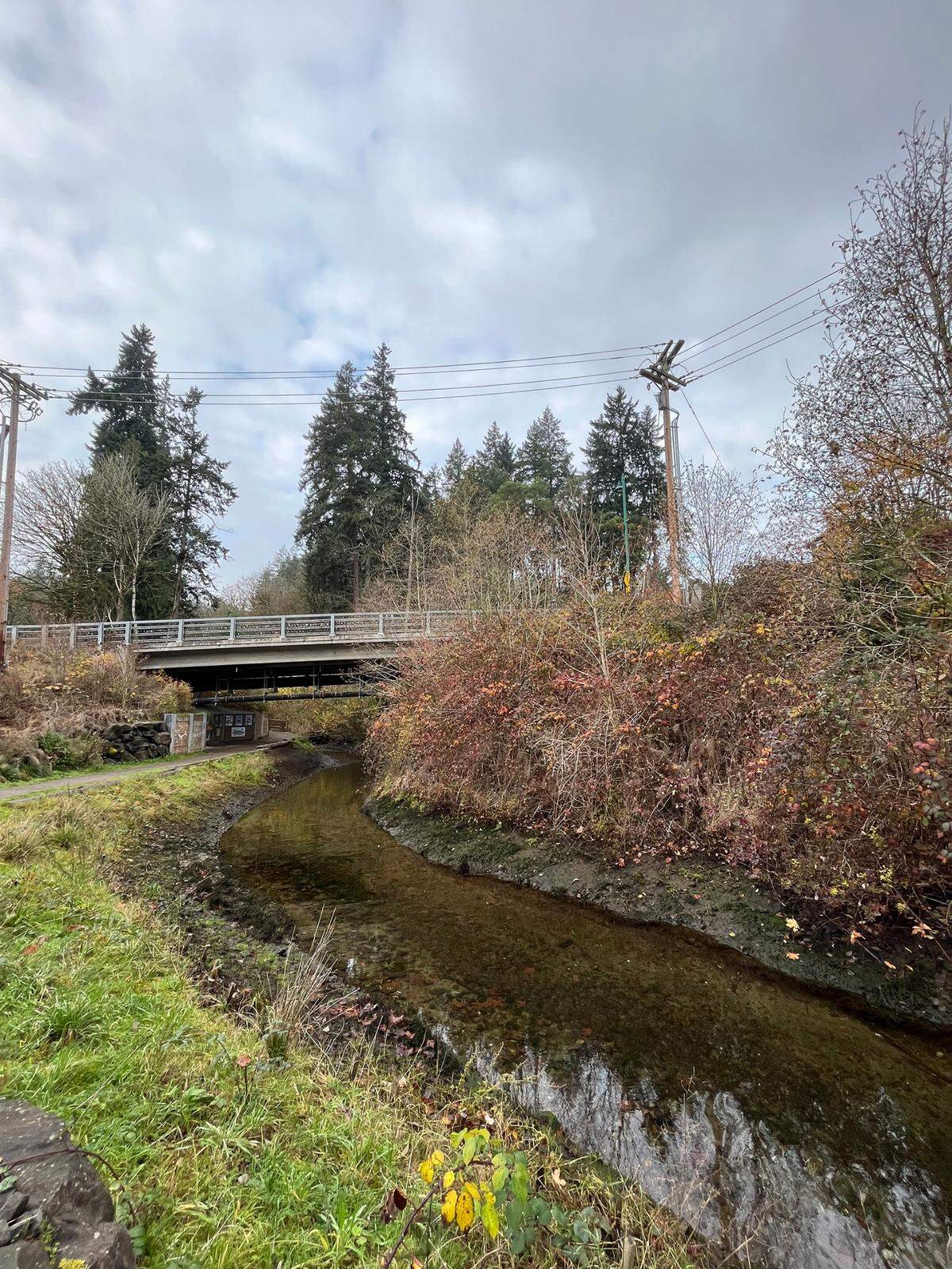
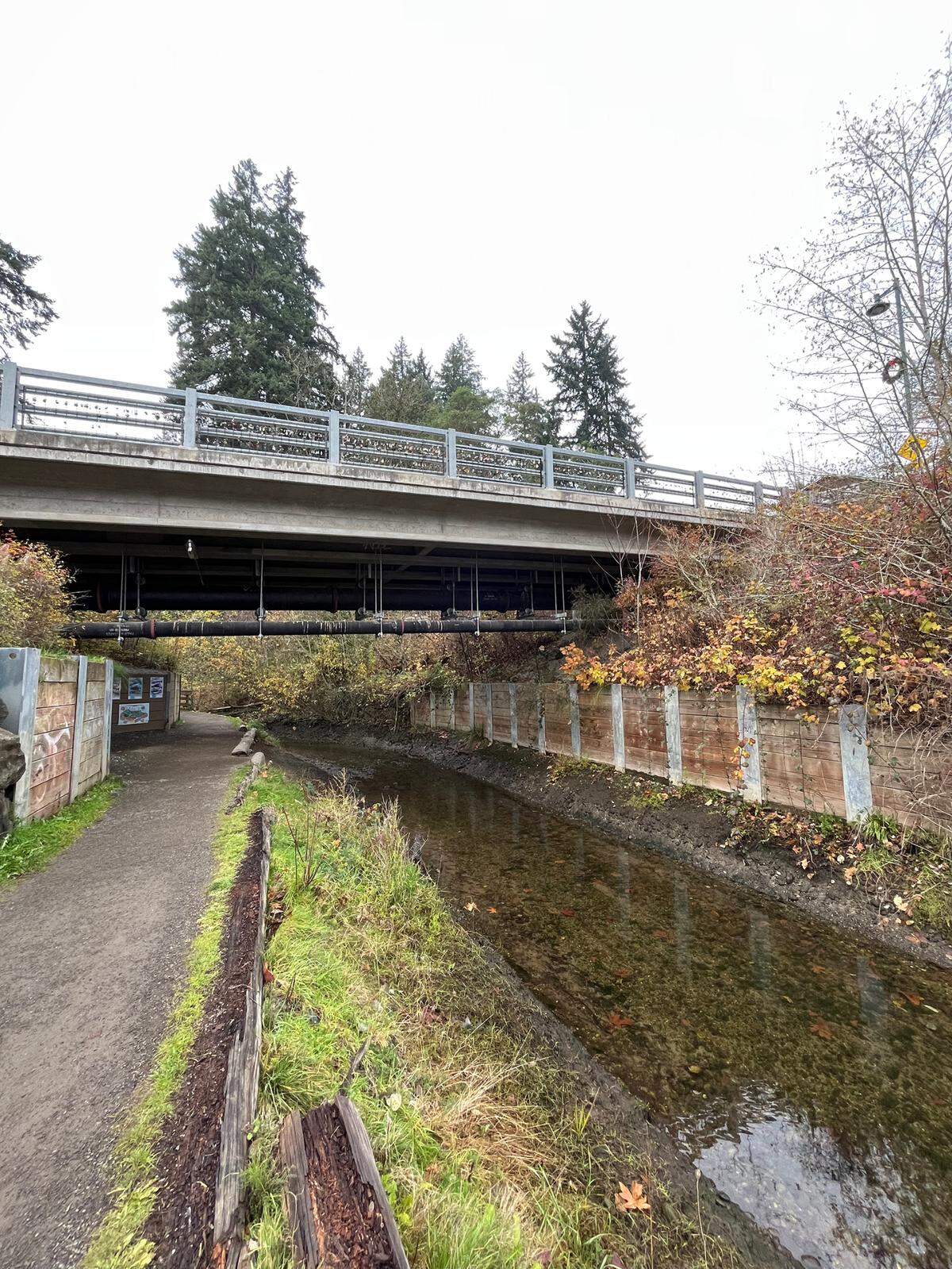
Donkey Creek still has a culvert in place that is considered a fully blocking barrier, meaning no wild fish are expected to survive beyond the culvert. The culvert is located underneath Harborview Drive, at the upper section of Donkey Creek. Culverts are often put in place after road construction alters or eliminates a stream and are meant to allow the passage of water from one side of the road to the other. The rerouting of water seems like a good solution, except culverts change the dynamic of a creek’s water flow and often pose a barrier for fish.
Donkey Creek culvert is a barrier to salmon
Donkey Creek salmon need to strenuously jump up and into the culvert (spoiler alert: it’s not a little leap), then swim the entire length of the culvert with no place to rest. The process can be exhausting. Many salmon expend so much energy making attempts to get into the culvert that they are washed out by the fast-moving water.
Sometimes they give up entirely and instead spawn in the lower portion of Donkey Creek where the streambed gravel isn’t as suitable for redds. Their eggs generally have a lower survival rate and are at a higher risk of disturbance from water turbulence and predation.
Added to the difficulties are recent findings of lead contamination within Donkey Creek, runoff from surrounding roads, and the tires built into the creek to support the remote site incubator (RSI). Recent research has confirmed that tires contain a chemical (6PPD-quinone) that’s toxic to salmon.
The RSI itself is a unique factor for Donkey Creek salmon. The Gig Harbor Commercial Fisherman’s Civic Club began raising chum salmon eggs in this incubator in 1974.
In recent years, the eggs were sourced from Minter Creek Hatchery. However, the RSI has not been stocked for several years now, creating an unintentional — and uncontrolled — experiment in the creek.
“Undoubtedly, that will lead to smaller returns, but separating that from regional declines and interannual variation is impossible,” said Mike Behrens, Harbor WildWatch’s science advisor. “It’s also important to note that, for all the things wrong in Puget Sound streams, the majority of salmon die in the open ocean from ‘natural causes’ and fishing.”
While we can’t pinpoint exactly why salmon are delayed in Donkey Creek, we do know that habitat improvements continue to support wild fish.
Our actions, big or small, will benefit salmon for generations to come. This includes big projects, like culvert removal, but also focusing on how we can better support the health of our ecosystem from stream to sea.
For those interested in keeping an eye out for returning salmon, Harbor WildWatch hosts free salmon tours through txʷaalqəł Estuary and along Donkey Creek Park to observe and learn about different species of salmon.
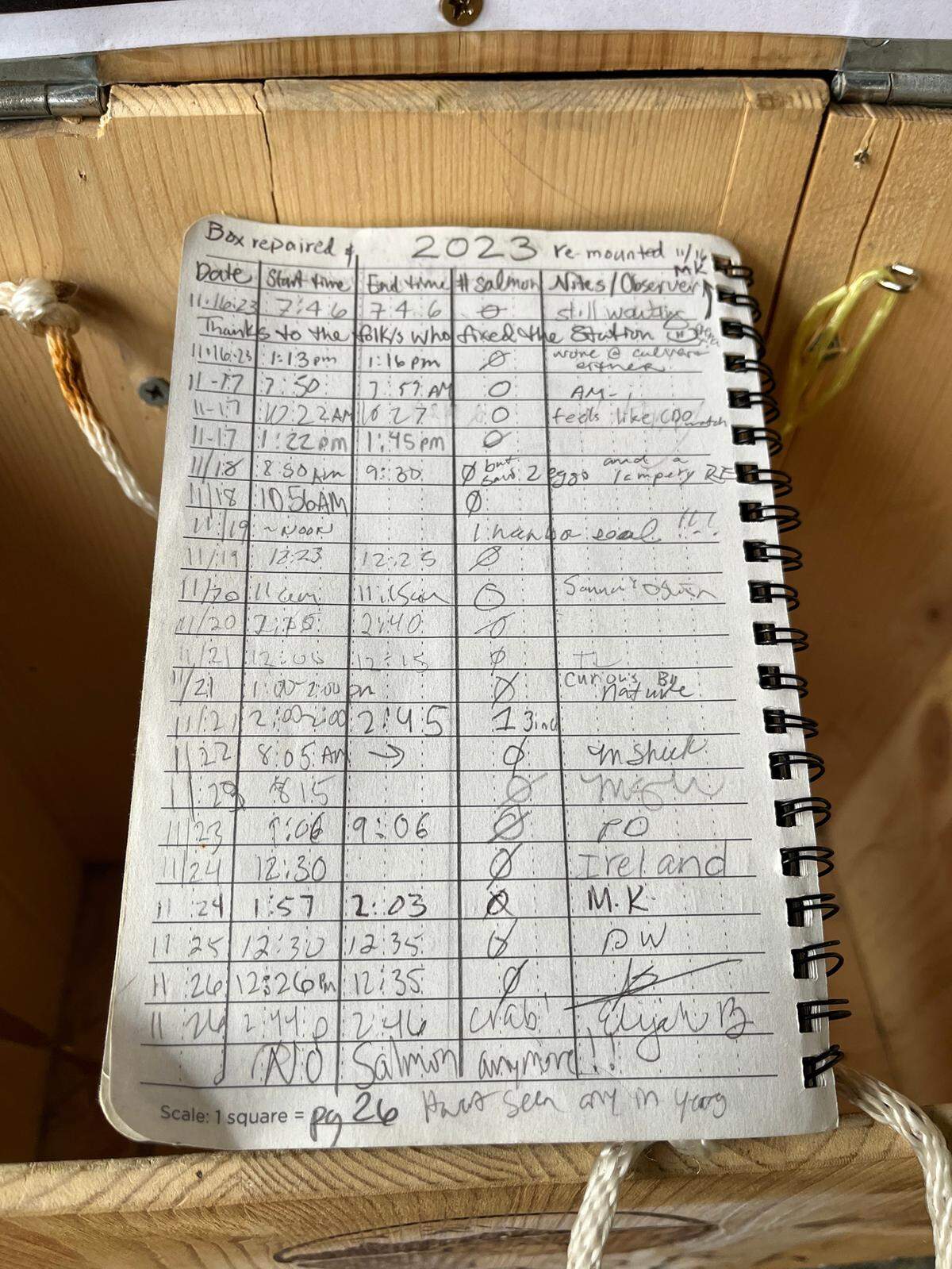
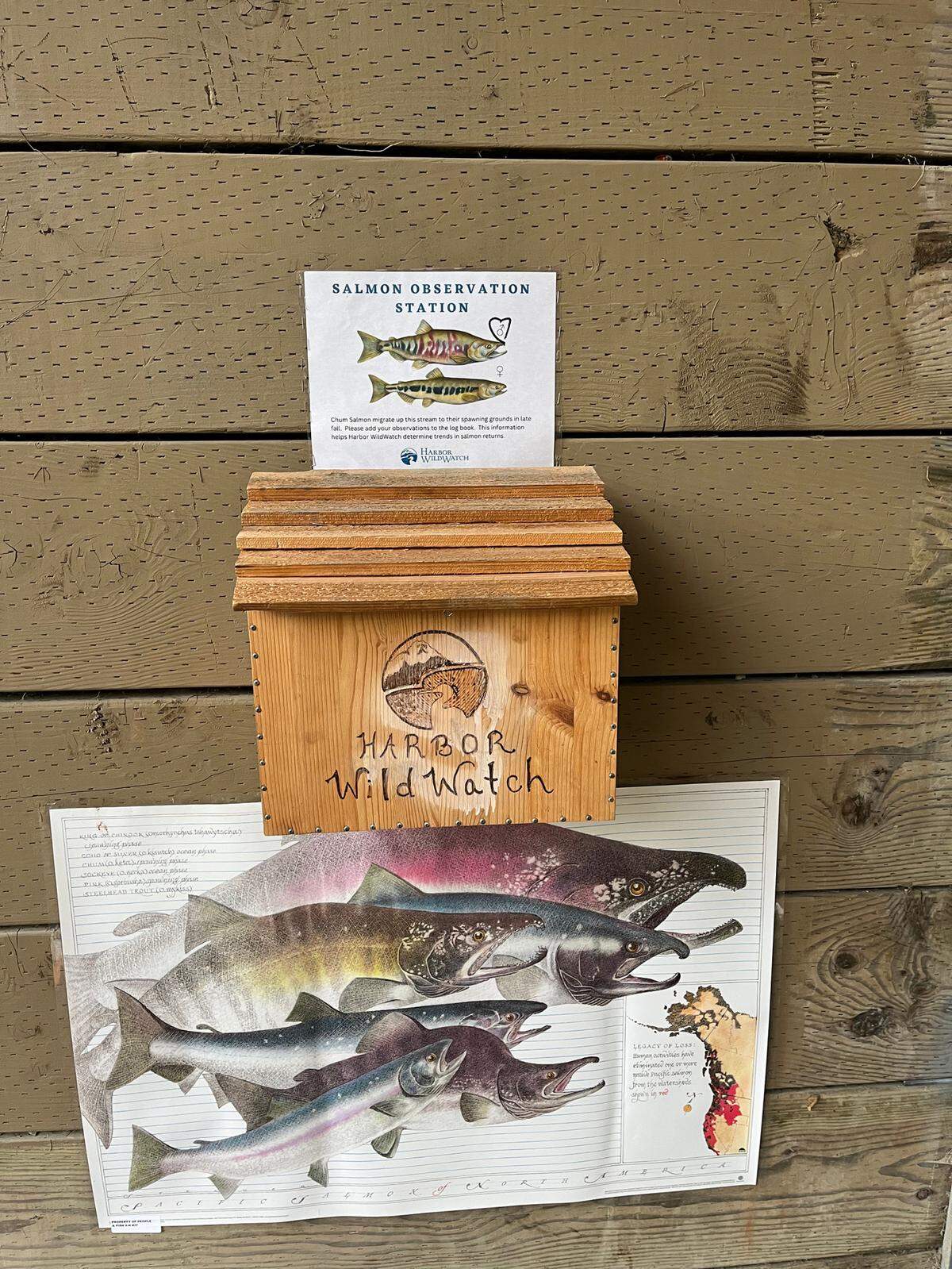
Individuals can also contribute to community science at their salmon observation station on the Donkey Creek Park trail. If creek visitors see salmon, noting it in the logbook is a helpful way to contribute to data on returning salmon.

Carly Vester has been writing an environmental column for The Peninsula Gateway since 2019. Her storytelling focuses on the intersection of people and the outdoors — from adventures across the west, to our environment and the rich history surrounding it. Her documentary films have screened internationally and her writing has been published locally and regionally.