Gig Harbor has ties to ‘The Boys in the Boat.’ Here’s the story behind the city’s name
The tale of how Gig Harbor got its name has a connection to George Clooney’s new movie, ‘The Boys in the Boat.’
“In 1838, six U.S. Navy vessels set out on a great voyage of exploration,” according to the Smithsonian’s Time and Navigation website. “Aboard were several hundred seamen and scientists under the command of Lt. Charles Wilkes. Authorized by Congress, the U.S. Exploring Expedition (also known as the Ex. Ex. or the Wilkes Expedition) would explore and map the Pacific, Antarctica, and the northwest coast of the United States.”
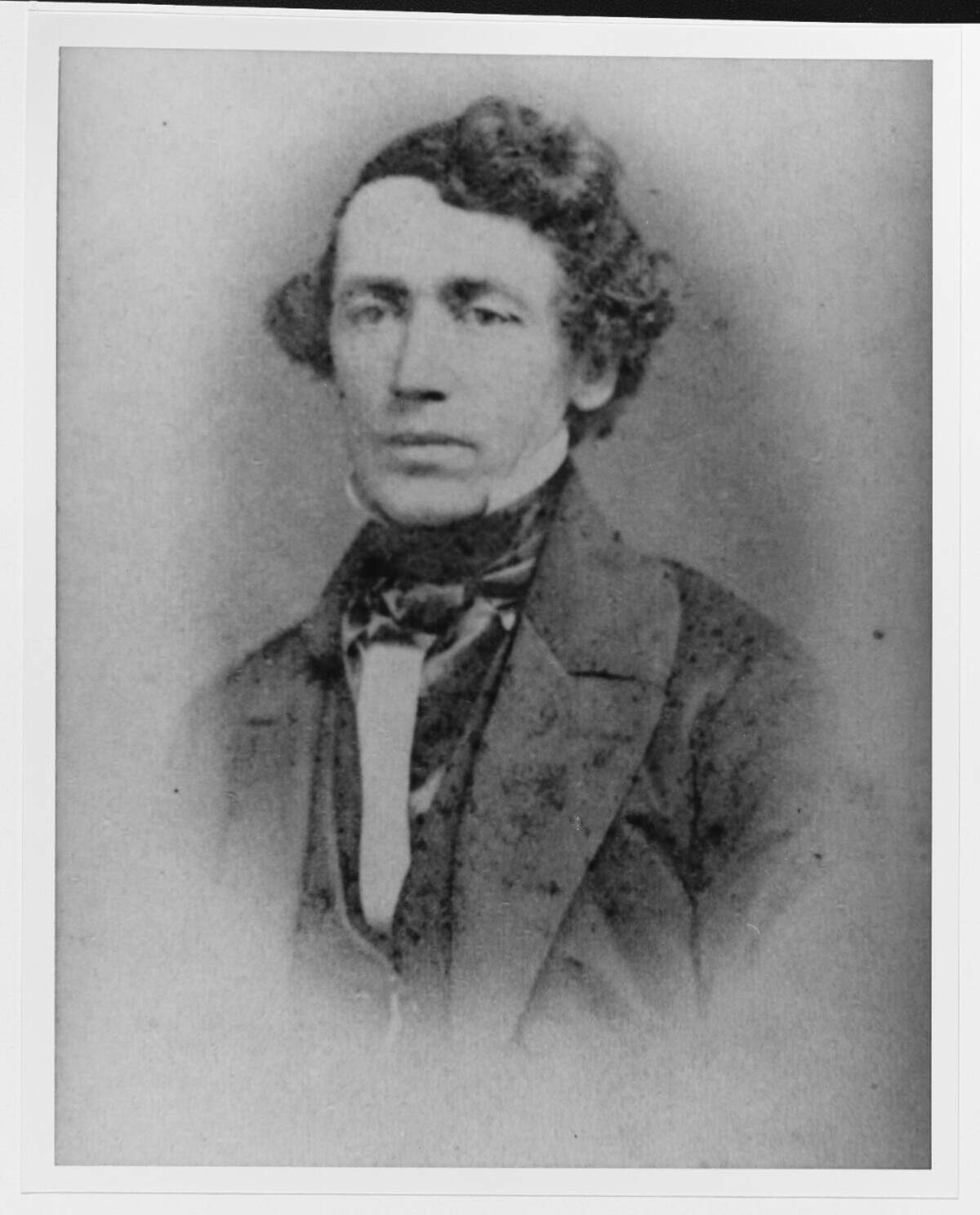
The Wilkes Expedition consisted “of six sailing vessels and 346 men,” according to the Smithsonian website.
The tail end of the journey explored what is now the Salish Sea, territories in the Pacific Ocean of Canada and Washington. The expedition gave us names we’re familiar with today, including Commencement Bay, Point Defiance, Colvos Passage, Hales Passage, Gig Harbor, Point Fosdick, and Fox Island, according to David Nicandri, the former director of the Washington State Historical Society (WSHS).
They entered the sound in early spring of 1841. They were tasked to chart and name everything that George Vancouver and Peter Puget hadn’t done about 49 years prior during the Vancouver Expedition.
A smaller boat, the USS Porpoise was assigned to the South Sound. They came down and anchored just below what’s now Stadium High School for the entire summer of 1841, according to Doug McDonnell, the former historian of the Landmarks Preservation Commission in Tacoma and volunteer at the Gig Harbor BoatShop.
When Peter Puget came to the South Sound with two long boats he missed the entrance to the harbor, McDonnell said. The Wilkes Expedition arrived May 15, 1841, when a survey crew led by Midshipman Joseph Sanford found it in the captain’s survey gig, The Porpoise.
A “gig” is a narrow longboat powered by wind or paddles and a crew. The Porpoise was considered a survey gig, because it was a longboat sent out to survey territories.
McDonnell pointed to passages from “An Excellent Little Bay: A History of the Gig Harbor Peninsula” written by J.A. Eckrom.
“The moment of discovery came on May 15, 1841 when the Shipman Joseph Sanford noted in his journal, ‘a pretty little bay that is concealed from the south.’ He ventured over in a long boat, not a captain’s gig,” Eckrom wrote. “He rounded the long stance a bit and found the passage is about 10 or 15 yards wide, and it gradually widens until it forms a circular base. And then what happened was later in the day when he was finished, he went back to The Porpoise and reported what he found. And the first officer whose name was Lieutenant Sinclair, then came over for a second look.”
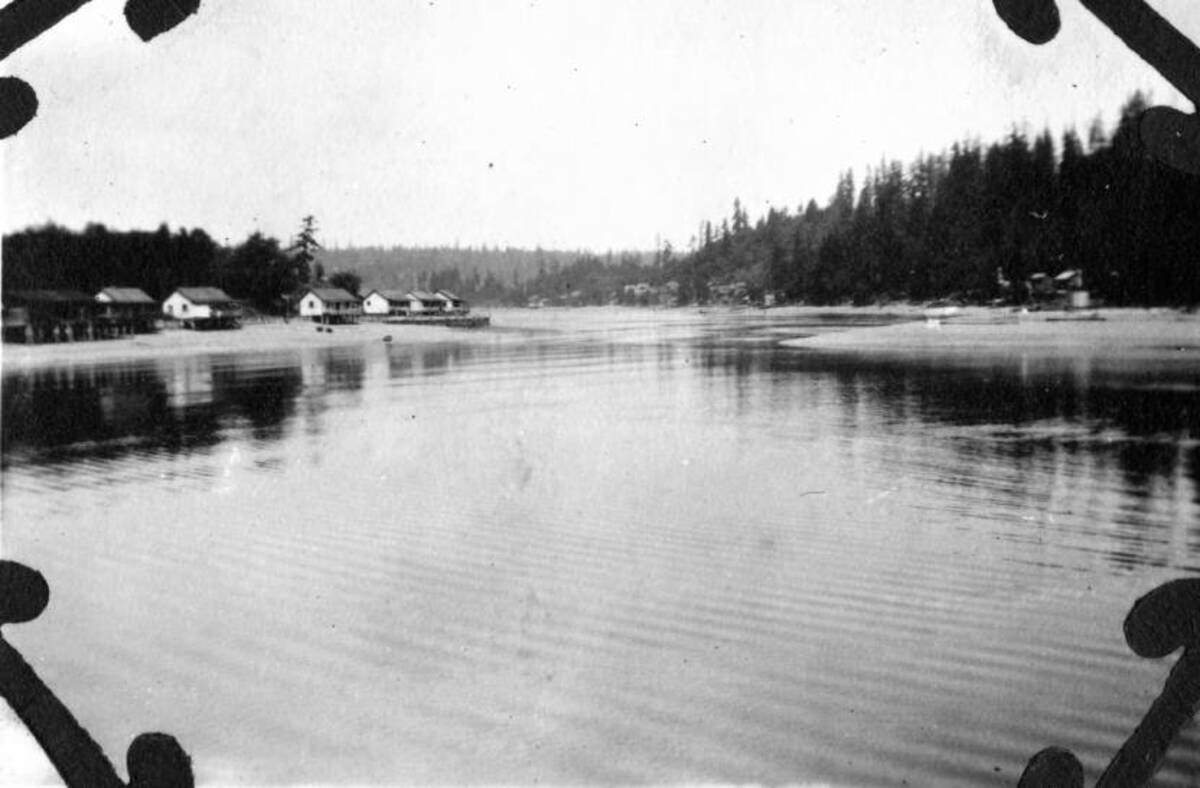
Eckrom wrote that someone: “perhaps out of a bit of whimsy decided to name the harbor for the boat that crossed its water ... Sinclair went on to say that the entrance was too small for a ship but just right for a gig.”
A gig is another word for longboat, McDonnell said. The city’s name technically means “longboat” harbor.
The Wilkes Expedition finished in 1842, according to the Smithsonian website.
Smithsonian exhibit comes to Tacoma
Nicandri took over as director of the WSHS in 1987 and started while the WSHS was still in its old building on Stadium Way in Tacoma. He remained in the position until 2011.
He said, “my predecessor, much to his credit, managed to get a price slot on the national touring schedule of a major Smithsonian traveling institution exhibit known as Magnificent Voyagers.”
Magnificant Voyagers was a traveling exhibit from the Smithsonian with pieces from the Wilkes Expedition. It traveled around the country, and was inside the WSHS from Oct. 3, 1987 until Dec. 27, 1987.
“The 1,400 objects on view make this the largest special exhibition ever organized by MNH (the Museum of Natural History),” according to the Smithsonian. “Included are fossils, minerals, plants, maps, masks, carved wooden figures, baskets, paintings, drawings, and vividly colored scientific illustrations.”
Tacoma was the show’s last stop, Nicandri said. Afterward the pieces returned to the Smithsonian.
“The exhibit was a big deal to get at the historical society,” Nicandri said. “We were just a staff of only about 10 people. It was quite newsworthy and caught a lot of attention.”
Nicandri said it got coverage by both The Peninsula Gateway and The News Tribune.
“I was inundated by people who wanted to organize premiere viewing events, and I even got an offer for a fireworks show, which happened the week the exhibit opened,” he said.
Before the exhibit arrived, the WSHS had a low profile, only getting about 20,000 to 30,000 visitors a year. The Magnificent Voyagers exhibit attracted 100,000 people if not more, Nicandri said, and it was “a sensation in the city of Tacoma.”
Nicandri attributes the exhibit to raising expectations within the Washington State Historical Society about what might be possible in terms of a high-quality history museum in the city of Tacoma.
“I think the community began to see if an organization with as little to work with as WSHS had, we could pull off something like the new history museum downtown,” Nicandri said.
The Washington State History Museum opened in 1996 in downtown Tacoma, at 1911 Pacific Ave.
In retirement, Nicandri became an author. He’s written two books: “River of Promise: Lewis and Clark on the Columbia,” and “Captain Cook Rediscovered: Voyaging to the Icy Latitudes.”
He’s currently working on a third book, “Discovering Nothing: In Pursuit of an Elusive Northwest Passage” and a fourth book about exploration of the Sound, including the Wilkes Expedition. He said a title has not been determined yet.
The Porpoise replica connection to the Husky Clipper
Just before the Magnificent Voyagers exhibit came to Tacoma, Nicandri was approached by McDonnell who had the idea to have a replica of The Porpoise built. Nicandri, who loved the idea, told McDonnell the project could be built inside the WSHS’s main display hall.
McDonnell described himself as a project organizer for the build of the replica.
McDonnell said Nicandri was gracious enough to let him spend many hours in his office, where he’d have lengthy conversations with the naval historian from the Smithsonian Institution. They exchanged details and advice to help with the project design.
Greg Foster, a Canadian shipwright, is who built the boat in 1989 as the Gig Harbor Centennial Project.
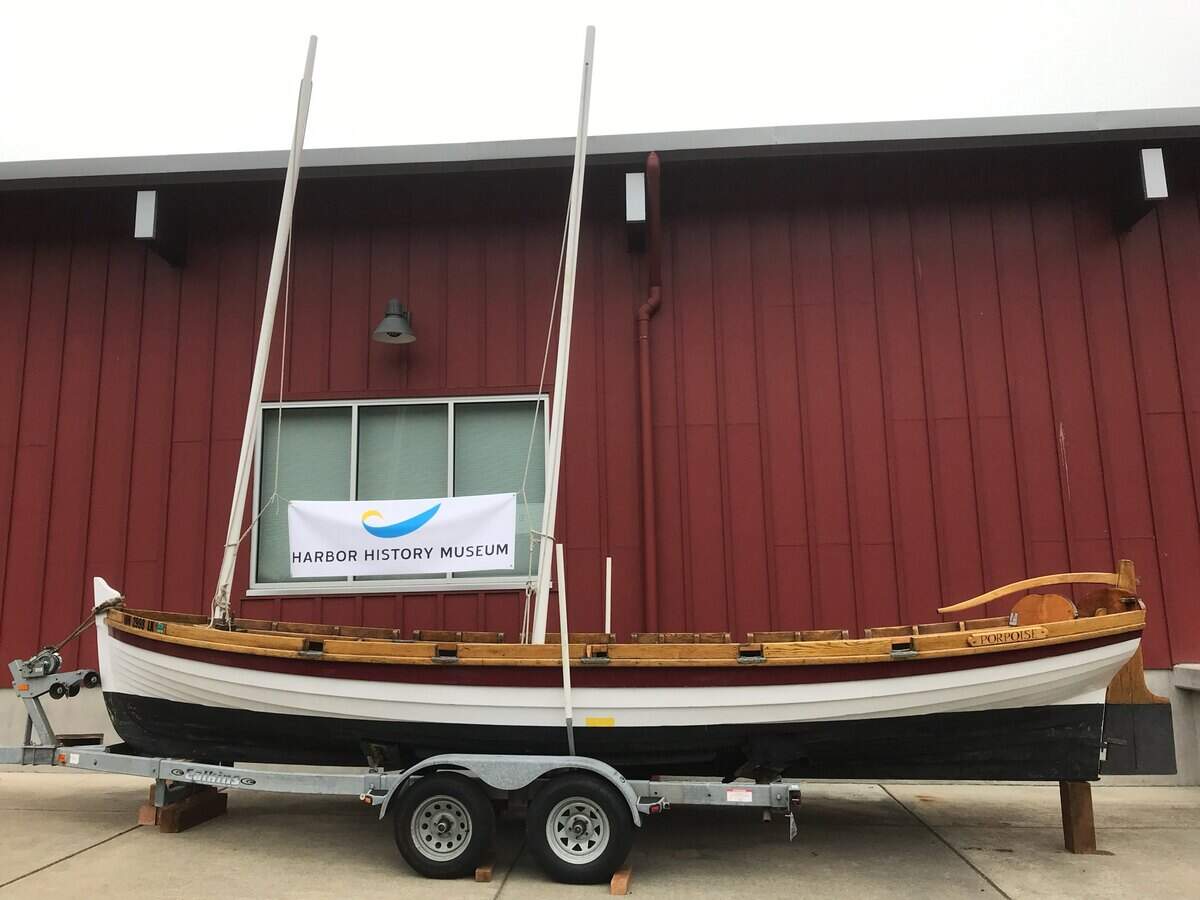
“The 24-foot, two-masted gig is powered by 10 oars and constructed with red cedar planking over a yellow cedar frame,” according to an introduction Harbor History Museum Executive Director Stephanie Lile wrote for The Porpoise for an event in 2022. “Every detail from the cedar ribs to the copper rivets to the hand-tooled construction was accurate to the original Wilkes’ boat.”
“She’s painted white with a crimson accent along the gunnels,” McDonnell said. “Foster delivered a stunning replica.”
The planking is what’s connected to the Husky Clipper, McDonnell said.
The team approached George Pocock, who built the Husky Clipper, and told him about the project to build a replica of The Porpoise. The Husky Clipper was the boat that the University of Washington rowing team competed in at the 1936 Olympics. The movie, “The Boys in the Boat,” tells their story.
The Pocock family sold the team enough cedar planks to plank the replica of The Porpoise. The Pocock family had an inventory of cedar planks from when the transition was made from wooden to fiberglass hulls, McDonnell said.
The cedar wood used to build The Porpoise replica is from the same source that was used to build the Husky Clipper, McDonnell said.
It was old-growth red oak timber, he said.
Although historians know it’s the same source of wood, McDonnell is not sure specifically what region the wood came from. An old UW Magazine article said it was “Western red cedar.”
“We were thrilled, of course, to acquire it,” he said.
After it was built, The Porpoise was transferred to Gig Harbor and was used for educational purposes within the Peninsula School District and at maritime events.
It also spent time in Anacortes at the nonprofit Outward Bound for educational purposes, among other places, but eventually returned to the harbor, McDonnell said.
For the 175th anniversary of the Wilkes Expedition’s arrival in Gig Harbor, The Porpoise participated in a reenactment ceremony in 2016. A crew dressed in white replica naval uniforms rowed into the harbor. McDonnell was on the boat.
It’s not the first time the trip has been reenacted. A similar event happened in 1989, the Gateway previously reported.
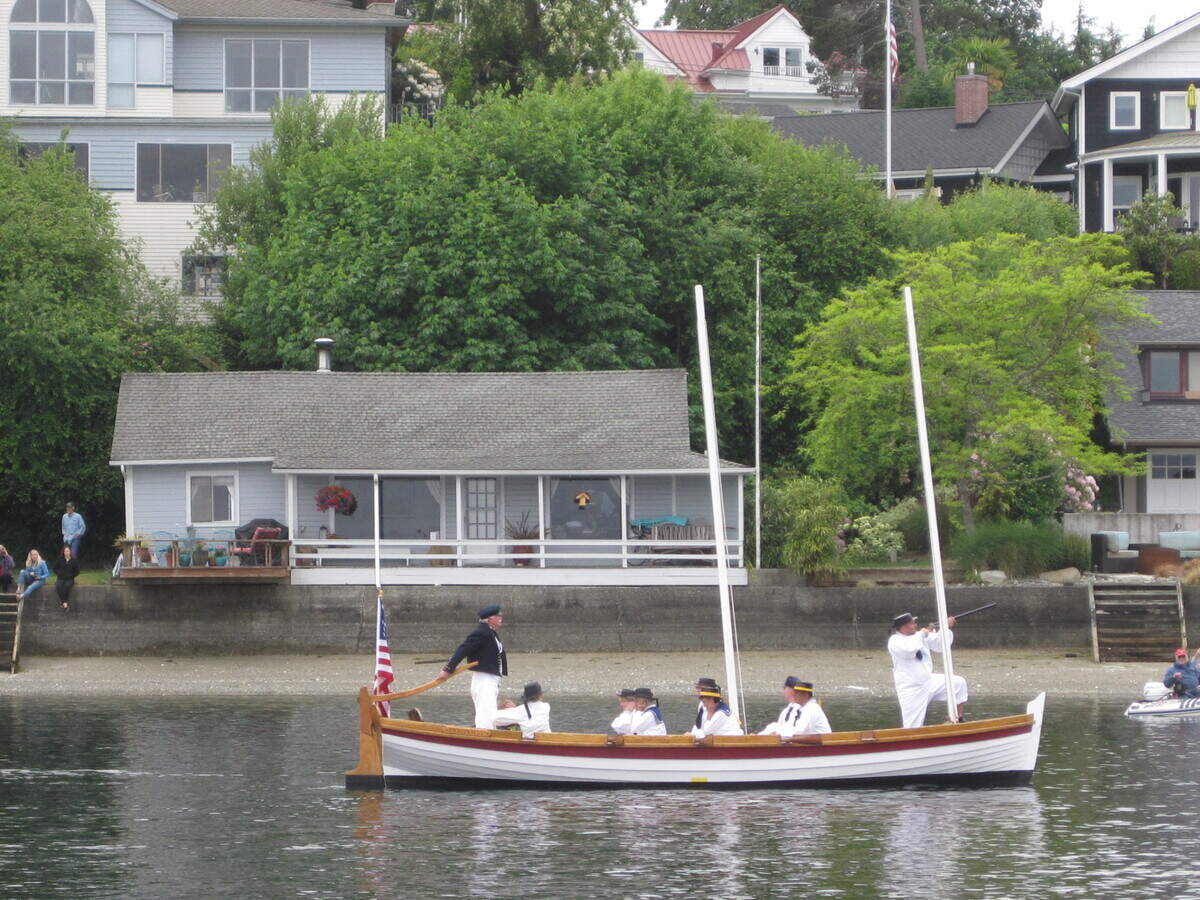
Today, The Porpoise is a static display at the Harbor History Museum, McDonnell said. It’s managed by both the museum and the Gig Harbor BoatShop.
This story was originally published January 14, 2024 at 5:00 AM.