
Ever met an octopus named pancake? You can now at Gig Harbor’s new marine life center
After months of preparation, the freshly painted blue door of the historic Skansie Brothers house opened again Feb. 28.
While the charm and quirks of this 1910 building at 3211 Harborview Dr. are still found inside, the reopening is the exciting start of a new chapter for Harbor WildWatch’s new Marine Life Center.
The team invited me for a sneak peek of their refreshed space and to meet the newest team member, Pancake the red octopus.
The transformation is phenomenal. From the fresh Harbor WildWatch-blue paint and custom cabinetry made for the dimensions of the house, to the main attraction of four new saltwater tanks housing local marine life; their mission of “Learn, Have Fun,” was evident from the moment I stepped inside.
Each room has a focal point, starting with the traveling bull kelp exhibit in the entry.
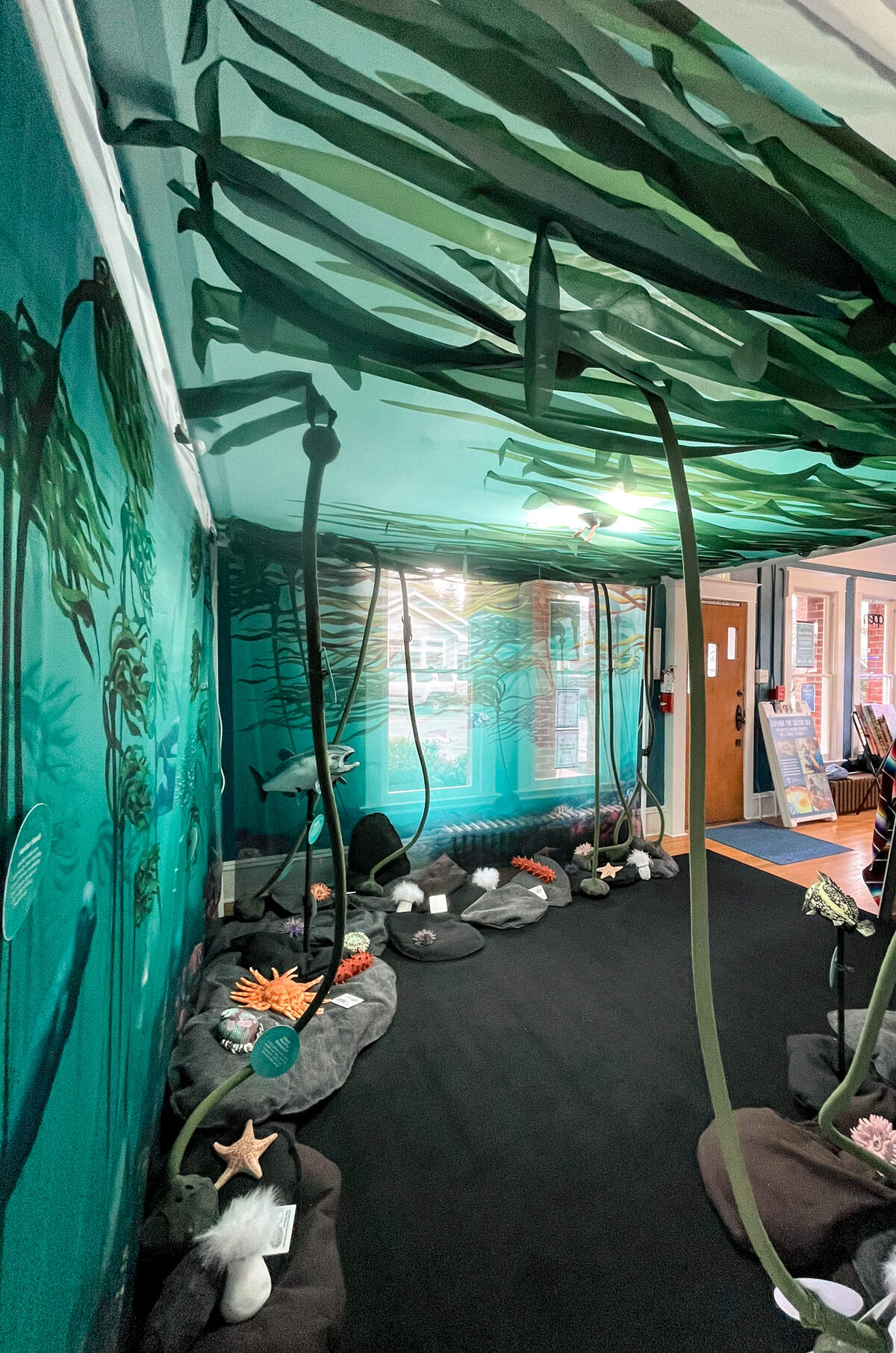
Visitors walk underneath a stunning canopy of handmade fabric bull kelp while taking in the marine creatures around them that thrive in this environment. There are signs about rockfish and orcas at eye level. Plushies of California sea cucumbers, plumose anemones, endangered abalone, and purple urchins showcase the smaller critters that call bull kelp forests home. The exhibit was created by the Port Townsend Marine Science Center and will be on display through April.
“This is the first exhibit we’ve had that’s been truly immersive,” said Education Director Rachel Easton. “It highlights kelp in a way that makes the average person want to learn more about it.”
New aquarium in downtown Gig Harbor
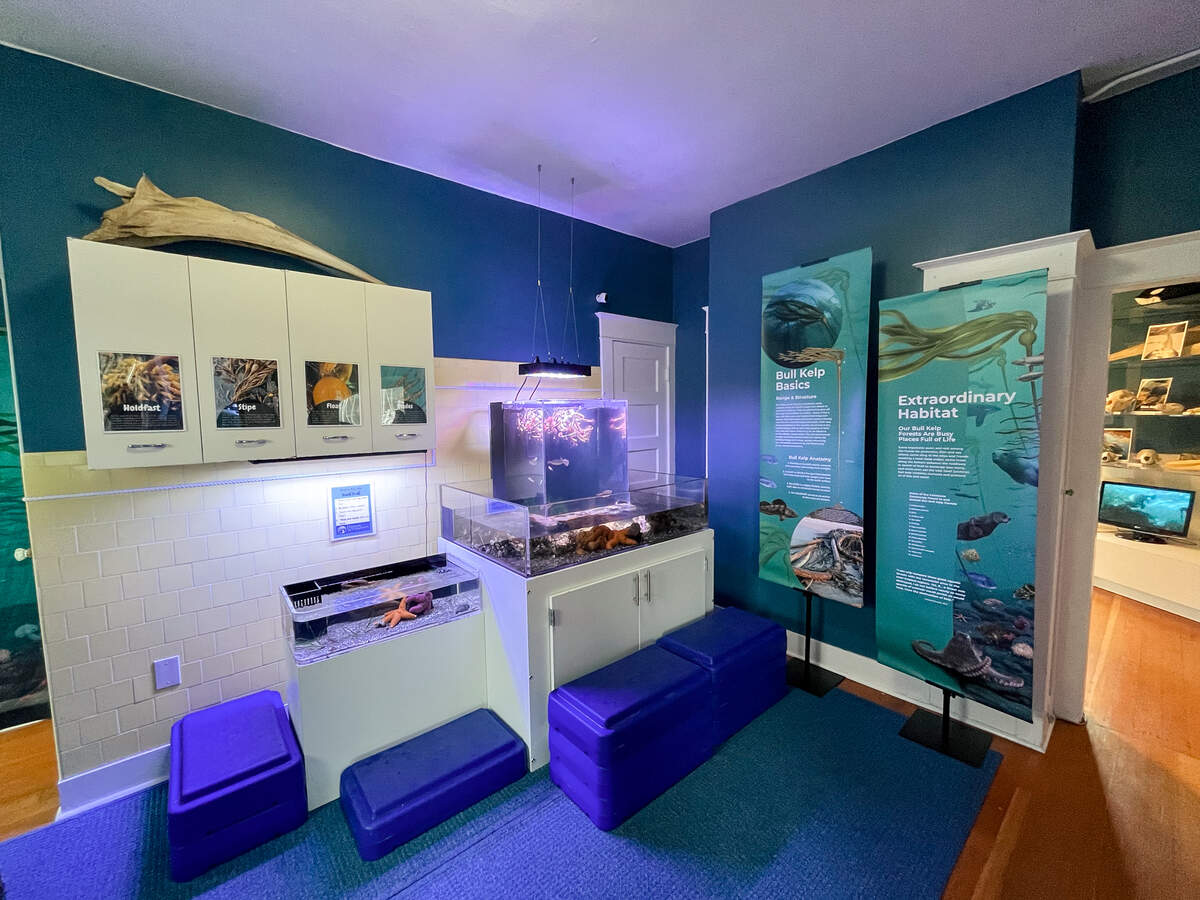
After exiting this interactive display, a 300-gallon aquarium lights up the back room. It shares the space with two touch tanks, one of which is brand new and offers a wheelchair accessible option for interacting with ochre sea stars (a beloved find at low tide).
To house the massive 300-gallon tank, the team had to call in reinforcement – literally. A local engineer donated their time to design the reinforcement needed. The city then installed a large beam in the crawl space underneath the tank to ensure the historic home’s floors could handle the weight of it when full of water.
This tank mimics the environment of the Purdy Sand Spit with a sandy bottom and two species of eelgrass populating it (one native, the other nonnative Japanese eelgrass).
Surf perch flash as they swim about and if visitors look closely, a fully grown red octopus has made a den in the rocks.
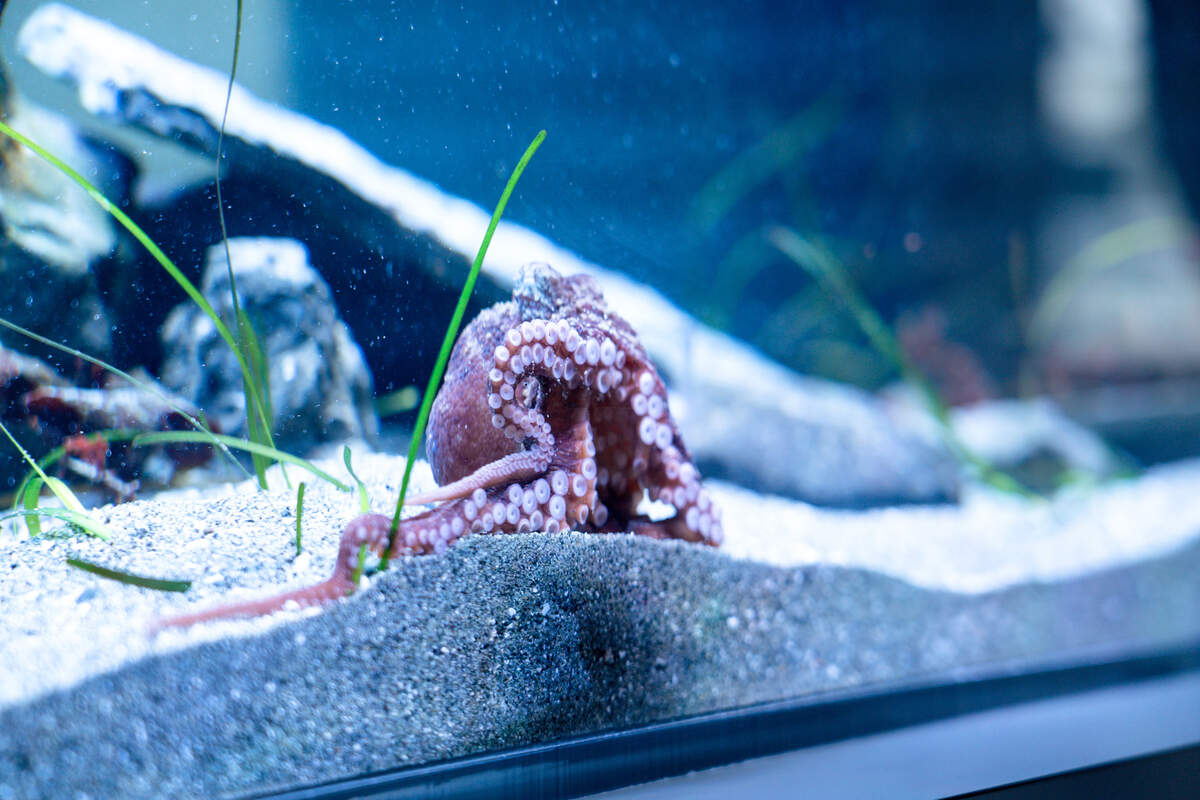
Pancake the octopus was moved from the MaST Center Aquarium in Des Moines after not getting along with his octopus tankmate. Octopus are generally solitary creatures and Pancake had been separated to a 20-gallon tank prior to his relocation to Harbor WildWatch’s 300-gallon environment.
Easton noted that he’s become quite at home in the tank, even pulling some eelgrass and a shell into his den. Because red octopus only have a short lifespan of two years, Easton said the team is lovingly calling this Pancake’s retirement home.
The walls of this room have beautiful, informative signage about kelp that continues into the next room. Large banners walk through the dynamic history of bull kelp next to Harbor WildWatch’s fascinating animal skull collection. Two more tanks lead visitors back to the entry, housing kelp crabs, sculpin, several species of anemones, and more local marine life.
To top it off, the team has added more interactive small details: a printed scavenger hunt, coloring sheets, colorful on-theme artwork on the walls, and a microscope to examine samples of seaweed and algae from the tanks. If visitors have questions, they can look to a Marine Life Center volunteer – 37 new volunteers have already signed up.
“The eagerness and response of Harbor WildWatch volunteers has been amazing,” Executive Director Lindsey Stover said. “We are so excited to offer new opportunities for them to get involved.”
Harbor WildWatch’s new lease with the city of Gig Harbor
Harbor WildWatch has been in this city-owned building since 2014 under a five-year lease renewal agreement. Their terms required the volunteer-run operation of a visitor center alongside their programs and interpretive center.
The opportunity to make a big change came last year at the end of another five-year lease period. In a unanimous decision on Nov. 13, the Gig Harbor City Council voted to renew Harbor WildWatch’s lease in the historic building with two changes: increasing the lease term to 20 years and relocating the city’s visitor center to the Chamber of Commerce. These changes have allowed the environmental education nonprofit to expand and reopen as the Harbor WildWatch Marine Life Center.
This decision not only demonstrates a city-led commitment to environmental stewardship, but it also backs a pillar organization in the Gig Harbor community. Harbor WildWatch was founded 20 years ago by a resident who wanted to introduce the public to the wonders of the Puget Sound. This soon developed into free public and school programs as well as a junior naturalist training program. Today, they deliver more than 300 environmental education and monitoring programs every year.
“It’s exciting to have the city really believe in us and support one of the anchor nonprofits here with year-round activities that attract people to our city,” said Stover.
Future plans include a mural on the exterior and adding new technology for visitor engagement and maintaining exhibits.
Harbor WildWatch Marine Life Center hours
The Harbor WildWatch Marine Life Center is open Wednesday through Sunday from 11 a.m. to 6 p.m. Their later hours are an adjustment from the previous 4 p.m. closure time to offer a space that kids can enjoy after school, grown-ups can visit after work, and interested teens can volunteer when school gets out.
Stover said the team also envisions the later hours supporting businesses in historic downtown by offering a family-friendly space to bring the whole family before (or after) dinner and shopping. Entry is always free, but donations are welcome and directly support the important work of the environmental education nonprofit.

Carly Vester has been writing an environmental column for The Peninsula Gateway since 2019. Her storytelling focuses on the intersection of people and the outdoors — from adventures across the West, to our environment and the rich history surrounding it. Her documentary films have screened internationally, and her writing has been published locally and regionally.