Voters rejected higher property taxes in Gig Harbor. Here’s what the city will do next
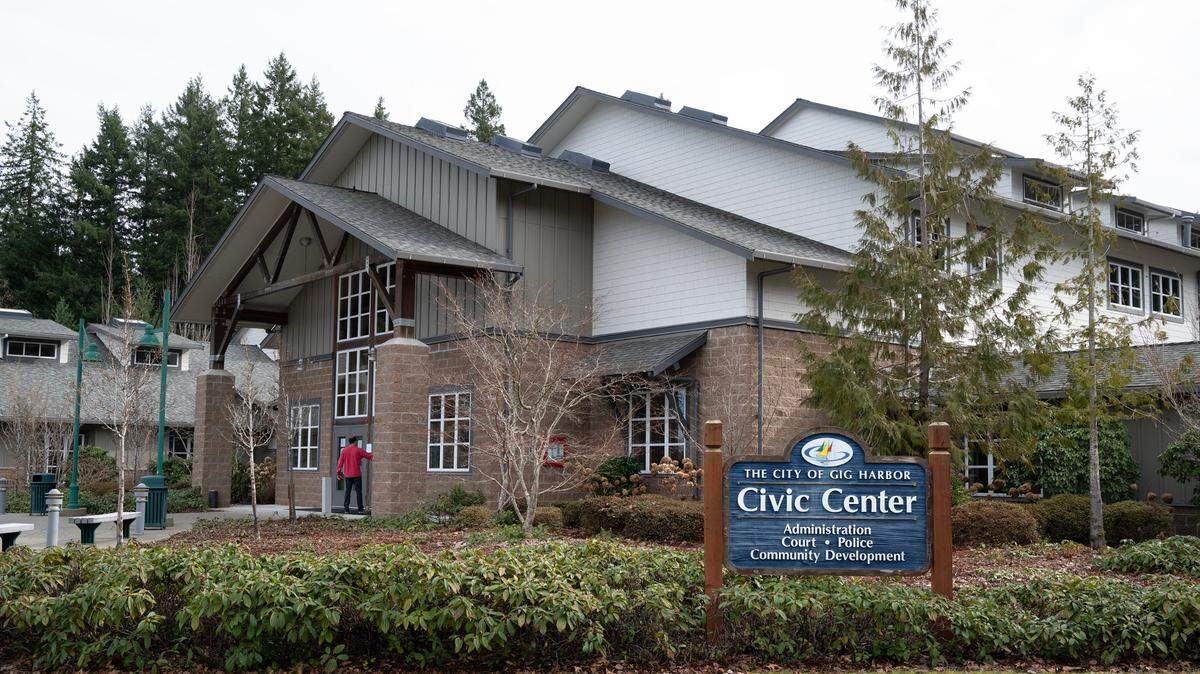
Voters just said “no” to higher property taxes that would help address a $3 million shortfall Gig Harbor will face at the end of 2025.
Now, city leaders are deciding what comes next.
“I really respect the voters’ decision, and I am really grateful for the people who participated,” Mayor Tracie Markley told the Gateway on Friday. “It gave us a really good, clear understanding of what the voters want and what they don’t want.”
Sixty-nine percent of voters (2,699) rejected the levy lid lift measure on the April 23 special election ballot, according to results as of April 24.
Thirty-one percent (1,198) voted “yes.”
The Pierce County Auditor’s Office will do the next ballot count Friday, but the outcome is clear.
For the first time in 40 years, the city asked residents to increase property taxes (the owner of a $750,000 home would have paid an additional $300 a year), and the measure failed.
A property tax increase is off the table for now. The city doesn’t plan to put another levy lid lift on the ballot in August, Markley said.
That’s because of what the city heard from residents this time around, she said, including about the impact of recent fire and school levies that voters approved.
“Those are just starting to hit people’s property tax bills,” Markley said. “They are feeling the increase and just simply couldn’t afford another one. That’s what we heard from pretty much everyone that we talked to.”
The council discussed next steps at a study session April 25, and it will hold a series of meetings in May to talk about possible revenue sources and potential cuts, Markley said. Council members need some direction before June to start working on their next budget.
City Administrator Katrina Knutson told the council at the study session that she was at a round table of city managers in Pierce County earlier that day.
“They all watched what happened here,” she said, and many are or were considering a similar measure.
“I think they’re shifting off,” she said. “Talking to Puyallup, they had a levy and two bonds fail. Edgewood had their levy fail. I think a lot of this is: ‘It’s too much.’ ... It really is a sentiment that I think is maybe across the state? I don’t know.”
The campaign against the levy lid lift said in a statement to the Gateway on Friday: “70% of voters voting against a proposition in a special election and just under 50% voter turnout is unprecedented.”
It went on to say, in part: “The City budget is $178 million for a city of 6 square miles. ... I’m sure if they look hard enough, there are areas that can be tightened up.”
A B&O tax could be next for Gig Harbor
On the Gig Harbor council’s agenda for May is researching a potential city business-and-occupation tax. The council will discuss what a B&O tax would look like, how it might structure it, and how much revenue it would bring in.
Asked how she’s thinking about a potential B&O tax, Markley told the Gateway she initially was hesitant.
“Then I talked with some of my colleagues in some other cities that have recently implemented this, and they brought up some really good points,” she said.
One that resonated with her, she said, is that Gig Harbor’s population roughly doubles during the day, as visitors come into the city to shop, go to restaurants and have medical appointments, among other things.
Those visits add to wear and tear on the roads, increase the need for police services, among other things, she said, and a B&O tax would be a way for visitors to share the burden of paying for those services.
“I feel a little bit more comfortable with that,” she said. “And also the council has the ability to structure it in a way that will not impact small businesses.”
Markley also said every department in the city will propose cuts, beyond what they’ve already done, “while preserving the staff that we currently have.”
Every department already made adjustments, she said, but now they’ll be “looking even more closely at every line item.”
“Council was really specific that they do not want to cut staff,” Markley said.
The $3 million shortfall the city is facing at the end of 2025 if it doesn’t act does not include 10 positions that the city already froze starting in February 2023, Markley said.
That saved about $1.5 million in the general fund.
Markley said the hope is to bring back some of those positions. She said a couple are critical, such as the risk-and-safety manager role, and that in some instances they really need to be filled for the city to stay in compliance with state law.
Why is the city of Gig Harbor facing a revenue shortfall?
Markley said the council reduced the minimum lot size allowed in the city in 2019, which meant developers couldn’t build as many homes on one parcel.
The city is also running out of land for large developments.
Plus, inflation and interest rates have made it more expensive to build, she said.
All of that has significantly decreased the revenue the city gets from building permits, building inspections and sales tax related to development (think fewer trips to The Home Depot for lumber).
“I wish it was different, but here we are,” Markley said.
The city’s finance director has been saying to former city leaders and councils for at least 10 years, Markley said, that they’re “not going to be able to sustain these one-time revenues,” and that they have to plan for when development slows.
“We wanted to get ahead of this,” Markley said. “We’re not in a crisis right now, we’re trying to get ahead of what will be a crisis situation at the end of ‘25 if we don’t find a way to make up this budget shortfall. We’re not in an emergency right now. We’re trying to be proactive.”
Other revenue the city is considering
While they won’t see a city property tax measure on the Aug. 6 ballot, Gig Harbor voters will see a public safety sales tax of 0.1 percent. That would bring in an estimated $1 million a year, the Gateway reported.
The council would have discretion on where to designate some of that funding, but 30 percent would have to be spent on public safety, Markley said.
“I believe that council’s desire is to use as much of it for public safety as possible,” she said.
Markley also noted that 15 percent off the top of sales tax the city collects goes to Pierce County.
She said the city will research the possibility of using its transportation benefit district funds for street maintenance.
The city started getting that revenue in 2020 and has raised more than $7,750,000.
Right now, based on what voters approved in 2019, the city can only use that two-tenths of a cent sales tax for capital projects from “fogline to fogline,” Markley said.
The council could choose to change that, to use some of those funds for ongoing street maintenance.