Locals want to save popular Pierce County forest from logging. Their plan hit roadblock
On the heavily-wooded land of the Key Peninsula, the local park district wants to remove the risk of a state timber harvest forever — or at least on 360 acres of it.
360 Trails, a forested recreation area with trails frequented by hikers, runners, mountain bikers, bird-watchers and horseback riders from the Key Peninsula and surrounding areas, sits on the northern end of the peninsula at 10405 State Route 302 and spans an acreage matching its name. The local park district Key Pen Parks leases the property for recreation and acquired an additional 40 acres in 2019, according to a comprehensive plan released in 2020, but the original 360 acres are owned by the state.
That distinction is important. Because the state has a legal obligation to fund schools, counties and other local services with the land it’s been entrusted with, called “state trust lands,” it could order a timber harvest — or other revenue-generating activity, such as leasing the land for agriculture or clean energy infrastructure — at any time. The state manages millions of acres in trust lands from the federal government, granted at statehood in 1889, as well as another 546,000 acres acquired from counties in the 1920s and 1930s, according to the Department of Natural Resources website.
Receiving over 30 letters of support and the results of a survey showing 93% support for a lease transfer to Key Pen Parks, the parks district applied to take ownership of 360 Trails from the Department of Natural Resources through the state’s Trust Land Transfer program.
They didn’t make the list of approved properties this year, according to a Department of Natural Resources press release. Key Pen Parks Executive Director Tracey Perkosky said the plan is to apply again in the next cycle.
Here’s how the process works to transfer state trust lands to local public agencies or tribes.
How does the state approve trust land transfers?
Parcels owned by the state as “trust lands,” acquired either from the federal government at statehood or from the counties in the 1920s and 1930s, are eligible for transfer to a local public agency or federally-recognized tribe if they’re deemed “economically underperforming,” which means that they don’t generate much revenue for the state, according to the Department of Natural Resources website. The state has a legal obligation to generate money for schools, counties and other local services with its trust lands.
Ryan Rodruck, state lands communications manager for the Department of Natural Resources, said anyone can nominate a parcel for transfer, but there has to be a “receiving agency” that will be responsible for managing it. A committee scores eligible applications in five categories, weighted differently: community involvement and support, ecological values, economic values, public benefits and tribal support. The highest scoring parcel is placed at the top of the list for a transfer, then the second-highest scoring parcel and down the list.
The board of the Department of Natural Resources must then approve the list, with the authority to reorder or remove parcels if it chooses. The final list of parcels will be transferred, subject to funding from the state Legislature.
Eight parcels were approved by the board Sept. 4 for a legislative funding request, according to the news release. None were in Pierce County.
Perkosky said the Department of Natural Resources recently shared with Key Pen Parks areas it could improve in its application. These included talking more about the economic benefits of the parcel and working more closely with their local Native American tribe for input.
Next year’s application cycle will open in the spring or summer of 2025, she said. This past cycle was the first time Key Pen Parks applied for a lease transfer of 360 Trails.
How would a timber harvest impact 360 Trails?
Asked what 360 Trails means to the Key Peninsula community, Perkosky said people love the trees.
“Here on the (Key Peninsula), there’s been a lot of logging going on both on public and private land, and I think people are really feeling the loss of the trees,” Perkosky said. “And so I think there’s a great love and appreciation for them.”
In letters Perkosky shared with The News Tribune, over 30 people expressed support for the lease transfer. Those included elected officials such as U.S. Rep. Derek Kilmer, state Sen. Emily Randall, state Rep. Spencer Hutchins, state Rep. Michelle Caldier, Pierce County Council chair Ryan N. Mello and others, as well as several residents. There were also several coaches and parents with kids involved in local mountain biking teams that use the trails, such as Key Pen Pirates Composite Team and Washington Student Cycling League.
Many letters using similar language mentioned that there was no replanting effort after a timber harvest in the 360 Trails area many years ago, allowing an explosion of Scotch broom growth in the cleared areas. Scotch broom is an invasive species, according to the Washington Invasive Species Council website.
This timber harvest occurred before the lease began, Perkosky told The News Tribune via email Oct. 28. The Department of Natural Resources was trying a new process that involved leaving more trees standing during the harvest and allowing them to drop seeds instead of a formal replanting effort, she wrote.
Supporters also wrote in many letters that 360 Trails contains two salmon-bearing streams. Salmon recently returned for the first time in decades to one of them because of the removal of nearby culverts, according to the letters.
Key Central Forest, another property managed by Key Pen Parks under a 50-year lease from the Department of Natural Resources, was closed earlier this year for a timber harvest on its west side. It reopened to the public June 7, and its east side will be harvested for timber at a date to be scheduled, according to the Key Pen Parks website.
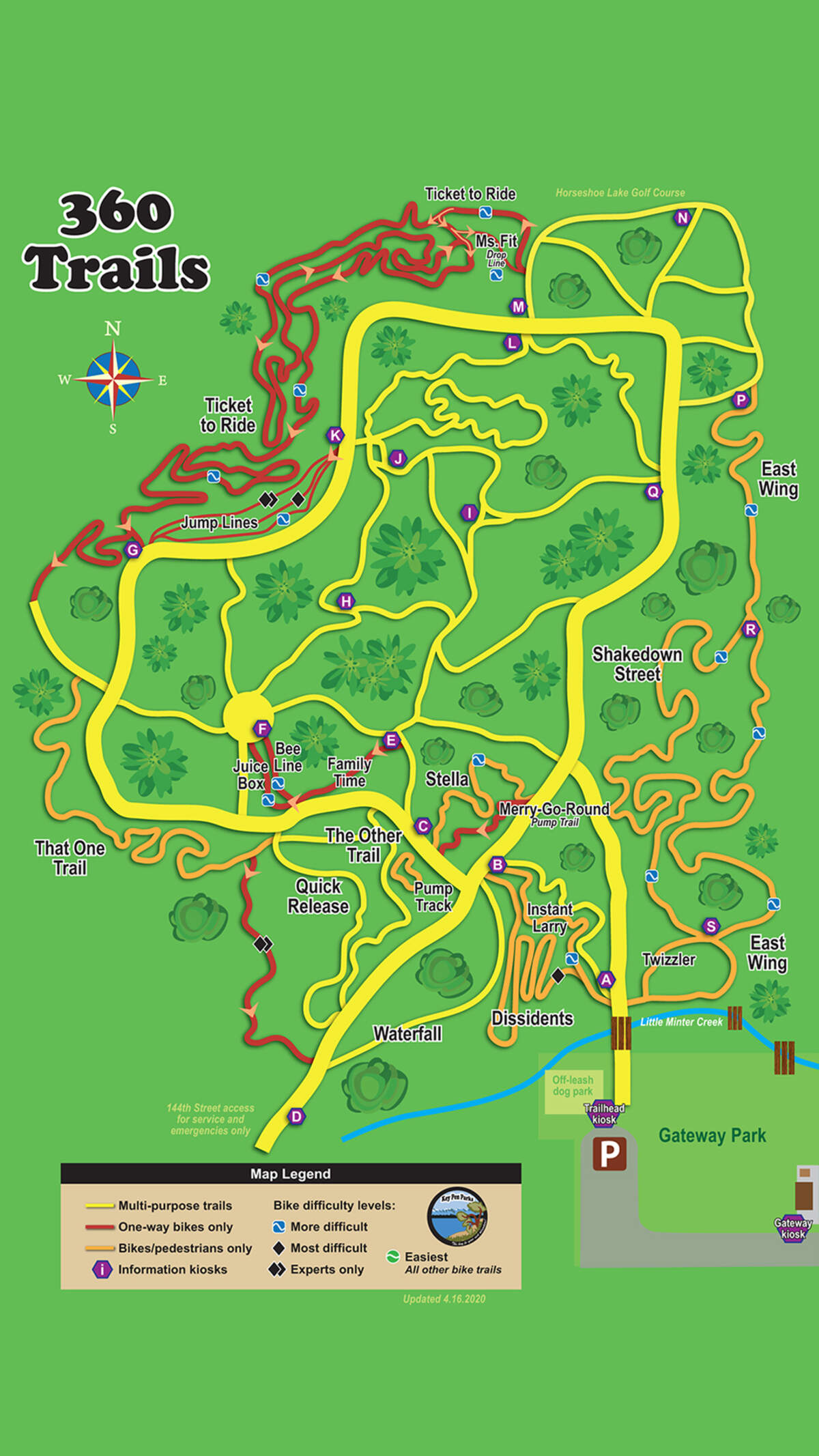
Perkosky said the park district believes that it’s likely 360 Trails would be harvested for timber after Key Central Forest. The district doesn’t get a “ton of notice” before a timber harvest would occur, and the Department of Natural Resources decides that timing based on tree growth, she told The News Tribune.
While harvesters wouldn’t clear the whole land at once, she said losing some of the forest would impact the character of the property as a whole.
“360 Trails is actually 360 acres . . . even losing a section of that would just change that property and change some of the feelings that you get from recreating on the trails,” Perkosky said.
Not everyone was in support of an immediate transfer. Dan Wehmeier, Key Peninsula resident and owner of forestry company Wehmeier LLC, wrote a letter saying he believes the transfer isn’t a good idea. He told The News Tribune via phone Oct. 28 he believes the state can better handle any potential liabilities from dead trees standing in the forest.
If one of those dead trees fell and hit someone, causing injury or death, the state would be responsible for it. If that happened and the park district owned the land, it could be subject to a major lawsuit, he said.
360 Trails needs the forestry and timber management expertise that the state provides because there’s a root fungus in the park that is causing some of the trees to die, according to Wehmeier.
Key Pen Parks staff doesn’t have this in-house expertise, though the parks district says on its website it would hire a permanent forester or a contractor to help manage the forest if the lease transfer is granted.
Perkosky said the parks district maintains the trails and is responsible for taking down hazard trees or removing trees that fall and block trails. The Department of Natural Resources has a forester who goes in and looks at the overall health of the trees, their growth and how much timber is available. The Department also handles the replanting of trees after a harvest, she said.
This story was originally published October 30, 2024 at 5:00 AM.