Could Pierce County quickly evacuate during a wildfire? Some would have to escape by water
If an evacuation order was issued in Pierce County, a lot of people would probably go via car.
Not Anne Nesbit. She’d go by boat.
“I live far enough down, I’m not even going to attempt the road,” Nesbit said. “We’re going to, if it’s a fire situation, probably hit the water because I do anticipate some rough traversing.”
Nesbit is the fire prevention specialist for Key Peninsula Fire, where she’s worked since 2008. She’s also a longtime resident on the peninsula and the fire department’s public information officer.
The peninsula is about 60 square miles and has several small rural commercial centers, according to a Community Plan Pierce County adopted for the area in 2007.
A little over 15,000 people live on the peninsula and Anderson Island off its tip, per the 2020 U.S. Census.
The devastation from the wildfires in Los Angeles County forced over 82,000 people to evacuate their homes in communities in the Pacific Palisades and Altadena, among others, and another 90,400 have been warned they may need to, as of an AP report Wednesday.
A wildfire of that scale isn’t impossible in Pierce County, The News Tribune recently reported. What would an evacuation look like in Pierce County, including areas like the Key Peninsula, in the event of a large-scale wildfire? The News Tribune spoke to emergency management, fire department officials and others to find out.
Evacuation procedures
Fire personnel, law enforcement and emergency management work together in the event of an evacuation order, according to the acting director of the Pierce County Department of Emergency Management, Amy Gillespie.
While fire and law enforcement determine the evacuation area, Pierce County Emergency Management supports communication with residents via their emergency notification system, Gillespie said. That includes Pierce County ALERT (PCALERT), a system that sends emergency notifications to anyone who signs up and is geared toward people who live and/or work in the county. Registrants have the option to receive notifications via phone call, text, email or online, according to the PCALERT brochure.
The department can also send live emergency alerts via TV and radio broadcasts, and alerts to wireless phones through the Federal Emergency Management Agency (FEMA), Gillespie said. First responders may also go door-to-door telling people to evacuate and send out their own media announcements.
“Ready, Set, Go!” is an evacuation campaign many agencies in Pierce County use to help people decide when to evacuate in an emergency. It breaks the evacuation process into three phases:
- Level 1: Be Ready
- Level 2: Be Set
- Level 3: Go Now
At the “Ready” phase, people should be aware of danger in their area and should tune into local news, check on neighbors and prepare a plan or emergency kit if they don’t already have one. At the “Set” phase, people should be ready to leave, and the “Go” phase means danger is imminent.
Residents shouldn’t necessarily wait to hear “go” to head out the door, according to Gillespie and others who spoke with The News Tribune. You should leave as soon as you feel unsafe — and especially if you need extra help or time to evacuate. That includes those with disabilities, medical conditions, small children and/or large animals, according to the campaign.
The “Ready, Set, Go!” campaign is also used by other counties in western Washington, and has been used even longer on the eastern side of the state to deal with wildfires, Pierce County Emergency Management spokesperson Mike Halliday said.
Gillespie emphasized the importance of having a plan and practicing evacuation routes in advance. Asked if some areas of Pierce County are considered more challenging to evacuate than others, she said yes.
“We’re constantly evaluating what road systems are in place, directions of travel, stoplights, stop signs where we need to have support from different agencies to make sure that we can move people throughout,” she said.
She didn’t offer specific examples of challenging-to-evacuate areas, but said that Pierce County Emergency Management takes a holistic view of an area’s geographic challenges. That could include single-lane roads, bridges or limited exit routes. They’ll share that information with on-scene incident commanders from law enforcement and fire, who decide the boundaries of the evacuation area in an emergency.
Pierce County Emergency Management also is equipped to set up an evacuation center for individuals to go to where they can meet up with family members, get updates and receive help safely retrieving items such as medication, Gillespie said. If the fire continues, they’ll also set up shelters for people who can’t return to their homes and then assess damages and assist with applying for federal aid grants after the fire is contained.
In July 2023, Pierce County followed this process after a wildfire broke out near McKenna, according to a 2023 annual report from Pierce County Emergency Management. The department sent out a PCALERT telling residents to evacuate and worked with a local property owner to provide temporary shelter space.
Geographic challenges
There aren’t many ways onto or off of the Key Peninsula.
If you’re coming from Tacoma, one of the main roads in is state Route 302, which crosses into the peninsula via the Purdy Bridge. The highway merges with Key Peninsula Highway Northwest, which snakes down into the southern end of the peninsula.
The peninsula is heavily forested and has many two-way roads.
Key Peninsula resident Dan Wehmeier told The News Tribune there’s only one road near the city of Home. If something happened to that road, he thinks people on the south end of the peninsula would have to escape by water, via boat or swimming, he said.
“Just coming out here in the afternoon, just a normal day coming home from work, it’s backed up pretty bad,” Wehmeier said. “So imagine the panic you’d have when everybody’s trying to run from a fire.”
Wehmeier is also the owner of a forestry management company, Wehmeier LLC, currently working on a 76.8-acre project on the Key Peninsula to clear wildfire fuel on the peninsula. It’s heavily funded through a cost share program with the state Department of Natural Resources for local forest landowners, he said.
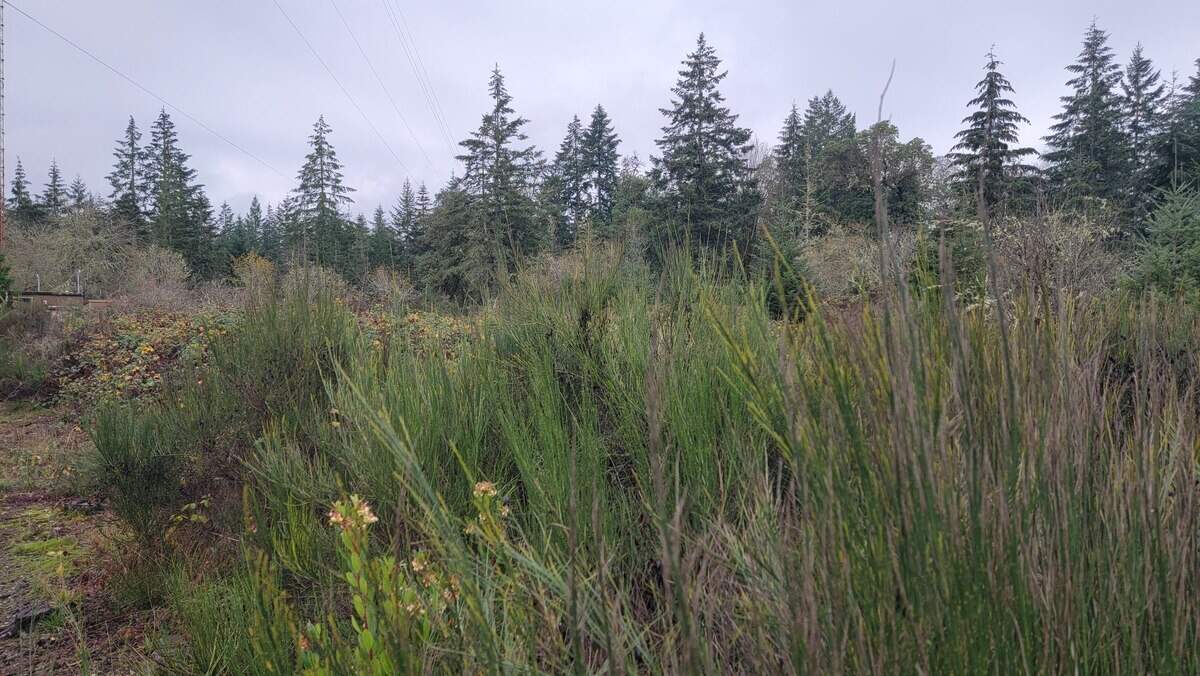
James Moore, climate resiliency program manager for Pierce Conservation District, agreed that the Key Peninsula could face evacuation challenges. Part of Moore’s job involves helping communities prepare for wildfires with grants from the Tacoma-Pierce County Health Department. The Key Peninsula is one of his areas of focus.
“Any place after Home on the Key Peninsula is just one road in, one road out,” he said. “Trying to get someone who is needing a wheel chair or a walker or a cane onto a boat versus driving out is not going to be easy.”
Pierce County Emergency Management is heading the creation of a countywide Community Wildfire Protection Plan (CWPP), which should include information about areas of the county with heightened wildfire risk, Moore said.
Pierce County Emergency Management interim director Amy Gillespie confirmed that the agency is in the final stages of developing that plan. She said it won’t go into the specifics of evacuation routes for different communities because wildfires are more unpredictable than, say, floods where people can take pre-mapped routes to higher ground. A lahar is another example: the county already has maps of evacuation routes for communities that could be endangered by dangerous volcanic mudflow from Mount Rainier.
Wildfires are unpredictable and require more intricate route planning, Gillespie said. Emergency responders have to consider the wind direction, wildfire fuel available, humidity and other weather patterns the fire is creating to decide the safest evacuation routes.
Know your routes and have a plan
Key Peninsula Fire Department spokesperson Anne Nesbit said that the fire department is working on an agreement with Pierce County Emergency Management that will include information about services, transportation, shelters and possible mass evacuation routes on the peninsula. It will include pinch points where they’d advise residents to avoid, and safe places where people may be able to shelter-in-place.
That agreement is in the infancy stage, and she wasn’t able to provide a timeline for when it will be completed.
Part of their message to residents is encouraging them to think ahead for themselves. Many residents will have to make a plan to evacuate their animals because the fire department has to prioritize evacuating people, she said.
“Of course (getting off the peninsula) is going to be a challenge, and that’s where we ask, if you need to leave early, leave early,” she said. “Don’t wait for the last minute.
“It’s really sad to see these tragedies happening around us, but we can also learn a lot from them.”
The U.S. government maintains a website with what residents should know about emergency evacuation at ready.gov/evacuation. The state Department of Natural Resources also has a website devoted to wildfire preparedness.
Washington state offers micro grants of up to $4,000 to communities looking to implement their own wildfire preparedness plan, through Firewise USA.