This Pierce County chief is retiring after 30 years of policing. Here’s what he’d change
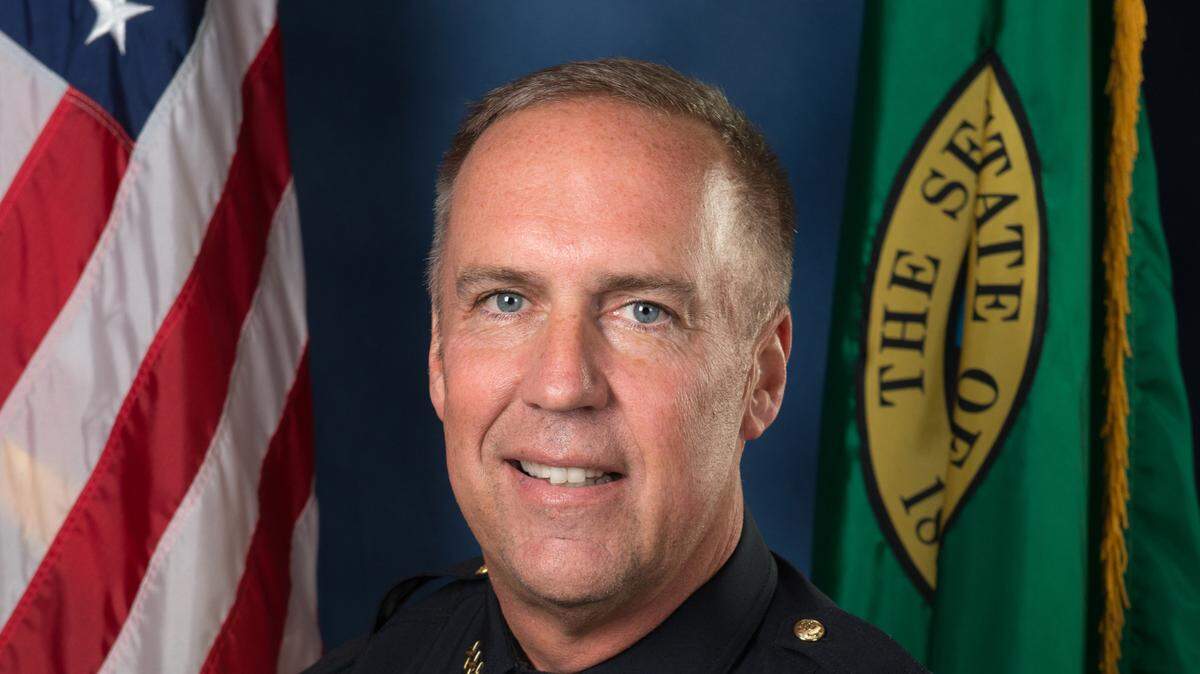
With three decades of experience under his belt, Gig Harbor Police Chief Kelly Busey gets straight to the point.
The chief, now 60, doesn’t miss a beat when asked about the department’s vision, the number of officers he oversees — currently 23, plus three civilian employees — or what he wanted to accomplish for the department before his retirement in June, marking a career of over 30 years in law enforcement.
When a reporter visited Busey’s office at the police headquarters March 28 for a Q&A about his career and what he’s learned, the police chief took out a miniature composition notebook. It easily fit in his palm.
“I probably started carrying this around 2008,” he said. “I would drive past a place and have a memory and then go, ‘Oh, yeah, I should write that down.’”
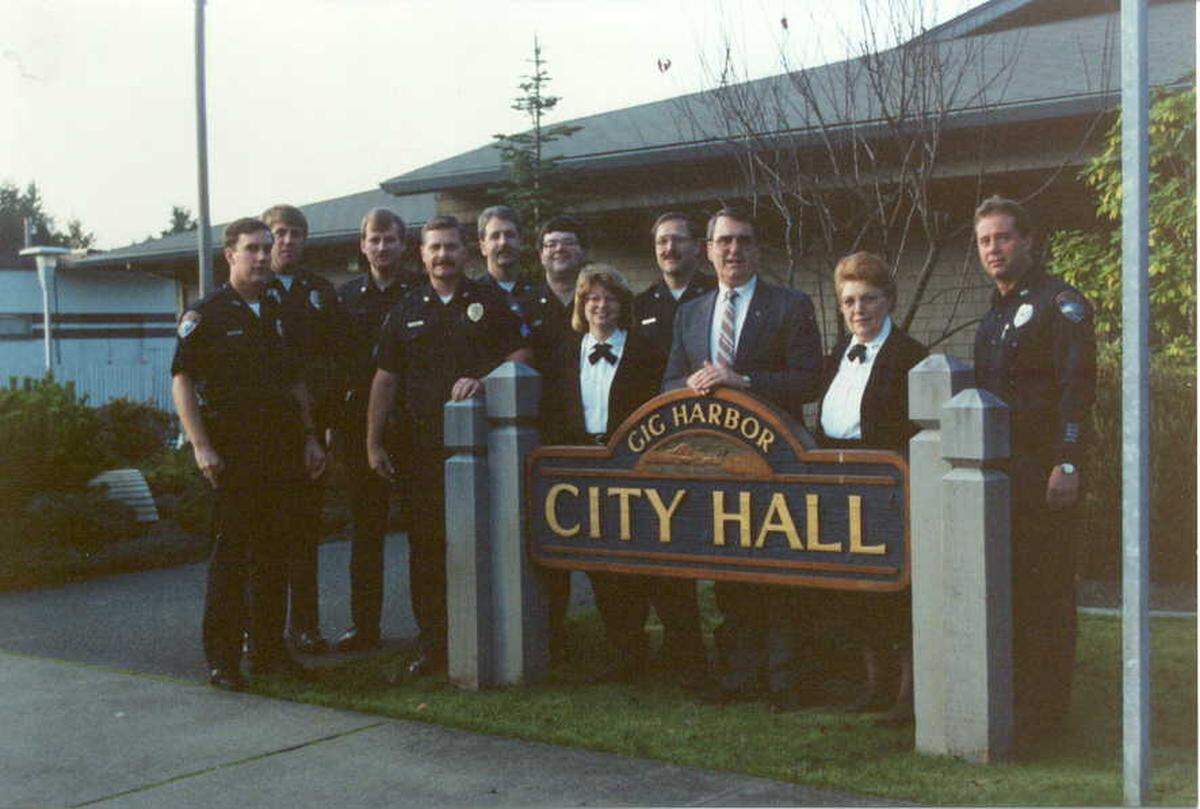
The police chief first joined the Gig Harbor Police Department in 1991, a year after he moved to the city in 1990, he told The News Tribune. He was born in the Silverdale area, served in the Coast Guard and worked as a yacht broker in Seattle selling sailboats before becoming an entry-level police officer. He became chief in 2014.

This interview has been edited for length and clarity.
What sticks out to you from your time in Gig Harbor?
The thing I’m most proud of is the people I’ve been able to hire. We’ve been extra picky on who we hire, because we have such a good relationship with our citizens and our businesses. We haven’t had a sustained citizen complaint in over 12 years, which is unbelievable. You’d expect a department of this size to have maybe two sustained citizen complaints a year, and those would usually be “the officer was rude to me on a traffic stop,” right, something like that, something minor, but still. We’ve had none of that, and I think it’s because of the people we have in the way they do their jobs. So what I’d be most proud of is the people we’ve hired.
The recruiting and retention in the state for the last several years has been tough. The laws that have been passed have made it tough to be a police officer in the state of Washington. Many good cops have gone to other states. The talent pool that we’re getting, attracting people into this job is not what it used to be. On top of that, we want to make sure that we’re hiring the best of the best. We didn’t want to do this with hiring incentives or bonuses. A lot of departments pay officers, you know, 10, 15, 25,000 dollars to come to work there. I never wanted to do that, because I wanted people to come here, because they wanted to be here, not for a one-time bonus. And we have a very tough screening process, but we also added one thing that I don’t know of any other police department in the country that does. We add an emotional intelligence screening to our hiring process — how well you know yourself, what your hot points are, where you go on fight or flight. And we, we take a look at that too, in addition to the normal psychological polygraph, interviews, background. So that’s something I don’t think anybody else does, but I think it’s very important, and it keeps people from overreacting. Our use of force incidents are very low.
I think it’s the way of the future. I really think that’s an important thing. We can teach almost anybody the mechanics of being a police officer. We can’t give them the consistent right demeanor under stress unless they know themselves, unless they have that ability already and know how to keep their calm.
Can you speak about trends in crime you’ve seen over your career?
The ‘90s were meth. The ‘90s was what I call the meth era. More than half the people I took to jail had methamphetamine on them. Crazy. We dealt with that by restricting the precursor drugs, the ephedrine and stuff like that, and that helped cool that down quite a bit. Now, fentanyl is king.
Mental health is huge. For the first two decades of my career here, mental health calls were not very common here. Now we’re getting multiple calls a day, whereas we would get one or two a month. Now it’s multiple per day. Yesterday (March 27) we had three.
And that’s kind of sad. I could talk for days about how broken our mental health system is, and the standards for involuntary intervention are not working ... . There’s basically two criteria where we can forcibly intervene, we can involuntarily commit someone. They have to be a danger to themselves or others — and that’s not just a passing minor danger, they have to really be a threat to themselves, or they have to be gravely disabled, and that’s basically unable to care for themselves, basic functions of life. And aside from that, we can’t intervene. Not all states have that strict of a threshold ... . Other states have laws that allow for a little more flexibility in that intervention.
I wrote an op-ed for The News Tribune years ago, called “What (to do) about Jim” ... . It’s done nothing but get worse since then. I can write a sequel to that one to show how ridiculous our mental health system is.
If you could change anything related to the police department or police system, what would it be?
I would change two things. One would be improve the resources and the ability to intervene for somebody in a mental health situation. The second is that I would wish we could address recidivism a lot more, repeat offenders. Somebody who gets in trouble once, OK, we can work with that. But recidivism, career criminals need to be dealt with more harshly.
I teach classes at the women’s prison ... and I’m convinced that we need to spend a lot more time when somebody’s incarcerated, showing them, teaching them how to be good citizens. We’re not doing that, and I’ve learned that through teaching these classes through the Rotary Club. They don’t have skills, and they’ve never been shown these skills. I’ll deal with the inmates at WCCW (Washington Corrections Center for Women) and we’ll start with even basic life skills like shaking hands. They don’t understand the eye contact and how to shake hands, let alone go into a job interview, or how to put your resume together or a family budget. And I’ve seen success stories where we give people some of those skills and they make that successful transition. I think our incarceration system, I wish I could change that quite a bit and focus on life skills, what a responsible citizen looks like.
Why was now the time you decided to retire?
This job can take a lot out of you. It has stresses that a lot of other jobs don’t have. But there were a couple of boxes I wanted to have checked before I left. One, I wanted to get the department structure right, so we added that second lieutenant position. So in this budget, we now have two lieutenants, and this department has needed that for a few years. We were overloading the current lieutenant and myself. So we needed to spread that out just a little bit more. And then I wanted to achieve accreditation. Those were the two big things before I walked away. That way I can walk away and say, “listen, the department’s in the best shape I can possibly make it.” The next person can continue to build.
Any interesting stories from your time here at Gig Harbor, a case that comes to mind?
I’ll tell you the most satisfying case. Now, I’ll put it in context: I’ve had the big car chases and the bank robbers and the scary moments dealing with real, real bad guys. But the most rewarding one to me was helping an elderly lady who didn’t really have all of her mental faculties about her. She was living independently, but she deserved some assistance. She had a guy move in who did nothing but take advantage of her. He was an alcoholic, and he abused her. He started draining her bank account and was very, very mean to her, and she had no ability to deal with this. And I got called there one night, and this guy was drunk in the backyard and had defecated all over himself, and it was just a bad, bad scene, and I learned the back story.
And I helped her, through days, get rid of this guy, get him out of her house, clean up her bank account, get protective orders, and get her back on her feet. And that reminded me why I got into this. I can tell you stories all day about real bad guys and guns and all that kind of stuff. But the fact that I was able to help someone — she may not have even realized the magnitude of it, but it was true public service. It’s not the most thrilling one in the world, but it’s the one that means the most to me ... . (That was) probably in the mid ‘90s.
What’s next for you?
I’m going to take the summer off, I think. But I still have tread on the tires, so I’m going to see what’s out there.
This story was originally published April 22, 2025 at 10:00 AM.