Who took down Pride flags on Pierce County bridge? Answers about the ‘flag war’
AI-generated summary reviewed by our newsroom.
- WSDOT removed Pride flags from Purdy Bridge citing traffic safety concerns.
- Bridge flag dispute sparked 200+ social media comments and community debate.
- State prohibits unauthorized flags on bridges due to driver distraction and safety risks.
Some two dozen rainbow Pride flags that appeared on the Purdy Bridge in mid-June were taken down by the Washington State Department of Transportation because they were a traffic safety hazard, a department spokesperson told The News Tribune.
Speculation about who took the flags down and whether they had a right to do so became a topic of heated exchanges on Key Peninsula community Facebook pages. One post on June 18 responding to the apparent disappearance of the flags received 214 comments.
Others posted replies saying they were tired of arguments related to the flags and wanted to move on.
Asked if she knew anything about the incident, Key Peninsula Fire Department spokesperson Anne Nesbit said she had seen the conversations on social media and described it as a “flag war.”
“People are kind of joking about it now,” she said.
The fire department hasn’t responded to any incidents related to the flags, and they aren’t responsible for regulating flags on the bridge, she told The News Tribune.
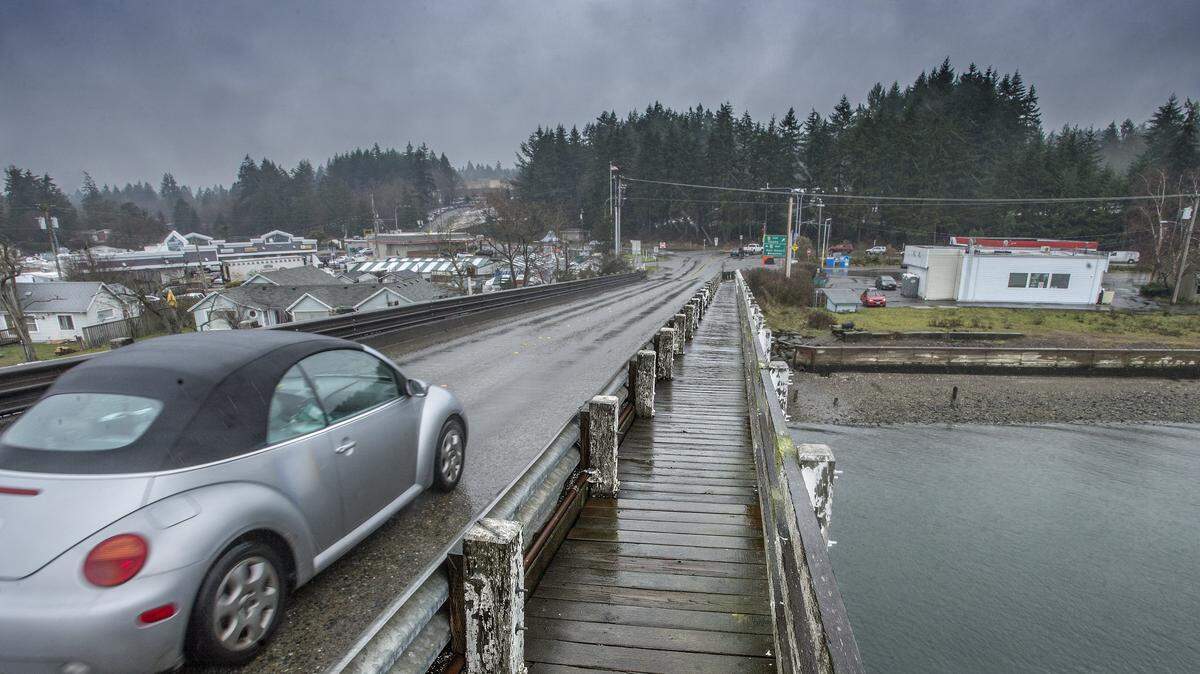
The Purdy Bridge runs along state Route 302 and is owned by the state Department of Transportation. It’s 550 feet long and was built in the 1930s, according to The News Tribune’s reporting. The bridge runs over the Purdy Sand Spit and connects the Key Peninsula with the Purdy area north of Gig Harbor.
The state Department of Transportation estimates that crews took down the Pride flags between June 10 and June 11, according to an email from agency spokesperson April Leigh. She wrote that it is against the law “to attach any unapproved banners, signs, etc. to state-owned bridge structures” because it presents a traffic safety hazard, and she linked to a state law authorizing the removal of such hazards when they pose a danger to people or vehicles traveling on state highways.
These banners or signs “can detach and fly into windshields in active traffic or get wrapped around moving vehicles,” and they can also present a distraction to drivers, she wrote.
People may hold flags or banners in areas accessible to the public, but they can’t affix them to structures where they no longer have control over them.
Posts on social media suggested that another flag removal incident may have happened a few days later.
In a video reposted on a Key Peninsula Facebook page, a person appeared to be walking along the Purdy Bridge and taking down flags, followed by a child. The narrator in the video alleged that the person was taking down Pride flags the morning of June 14.
The News Tribune sent a link to the video to the Department of Transportation and asked if the person was affiliated with WSDOT. Spokesperson Cara Mitchell wrote in an email that they “can’t authenticate the video,” but added that “When in the field, WSDOT crews wear safety vests, protective gear and will be in official state vehicles of varying types.”
Asked if maintenance crews monitor the bridge regularly to ensure it is free of safety hazards, and how frequently they come out, Leigh wrote that the department’s maintenance teams “address safety hazards when they notice them in their daily work on state roadways, or when (the department) receive(s) a report about them.”
A member of the public alerted the department to the Pride flags, and maintenance staff removed them in one go, Leigh wrote.
The News Tribune also asked about social media reports of U.S. flags that temporarily appeared on the bridge around Memorial Day. Leigh confirmed that there were U.S. flags previously posted on the bridge. A Department of Transportation staff member noticed the U.S. flags in the course of their daily work, but upon returning found that the flags had already been taken down, she wrote.
“Both the American flags and the Pride flags were in the same location,” she wrote. “They were taped to the backside of the guardrail posts on the south side of the bridge, next to the eastbound travel lane for vehicles.”