Will Gig Harbor get multifamily housing downtown? It’s on the city’s radar
AI-generated summary reviewed by our newsroom.
- Gig Harbor budgeted $100,000 in 2025–26 to create a Judson Subarea Plan.
- Council and property owners will consider housing, parking and street improvements.
- City expects subarea plan to take at least through 2026, with implementation following.
With its shops, restaurants and proximity to the waterfront, the Peninsula Shopping Center is an easy place to spend an afternoon in downtown Gig Harbor.
The city thinks it could be more.
Gig Harbor allocated $100,000 in its 2025-2026 biennial budget toward a subarea plan for the area around Judson Street, around the retail center. A subarea plan guides growth and development in a smaller area within a city or county and can be added to the jurisdiction’s Comprehensive Plan, a larger document outlining its plans to manage growth over the next 20 years.
The Judson Subarea Plan would encompass about six blocks, Community Development Director Eric Baker told the Pierce County Council at a committee meeting June 10. The city of Gig Harbor has already increased density allowances at the site and is “looking at increasing housing opportunities in there,” he said at the meeting. He described the Peninsula Shopping Center in his presentation as an “underutilized property that has great redevelopment potential.”
At their Oct. 27 meeting, the city council passed a development code update that increased allowable density in the Downtown Business zone from eight to 12 units per acre. That zone includes the Peninsula Shopping Center and shops clustered near the intersection of Pioneer Way and Harborview Drive, according to the city’s zoning map.
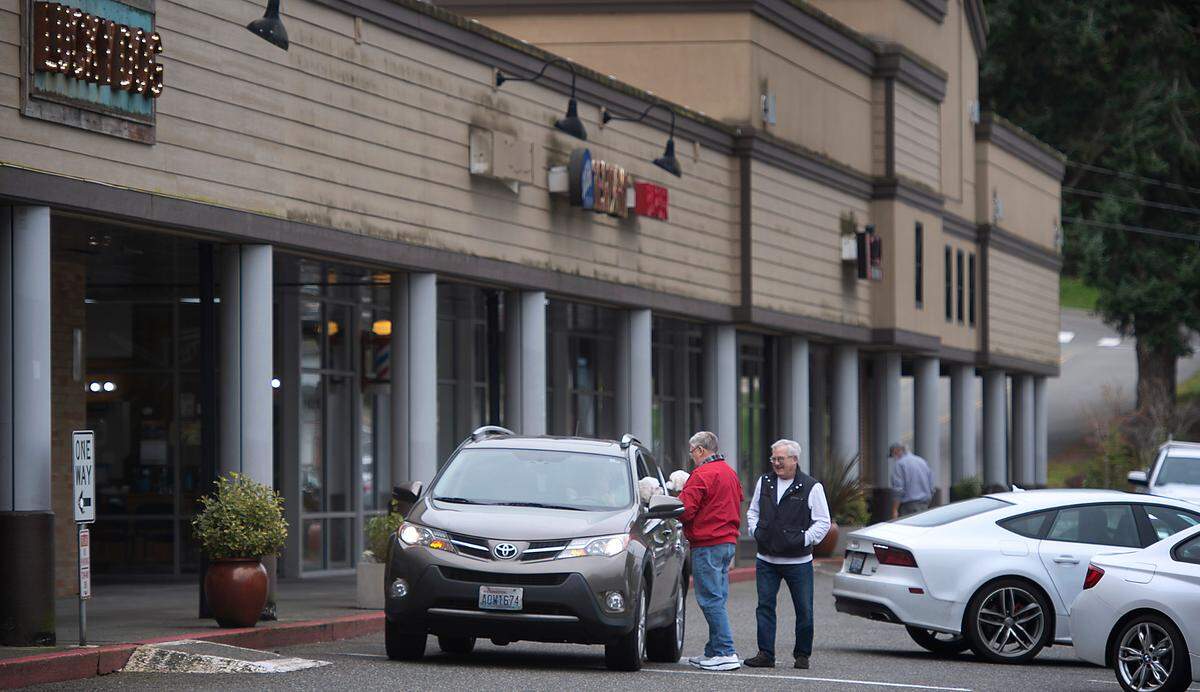
As of December, the plan remains in the early stages of discussion. The city council and mayor discussed it briefly during their retreat Feb. 28 as one of the priorities for the city’s planning division over 2025-2026.
Owned by an LLC governed jointly by members of The Rush Companies and the Milgard family, the Peninsula Shopping Center is a long-standing plaza in downtown Gig Harbor that has seen several vacancies in recent years. Rush refreshed the center with a fresh coat of paint, modern exterior lighting and other improvements and hosted a community block party in September to celebrate the center’s revitalization.
Tenants that have moved into the site within the last year include Fusion Donut Café, Club Pilates, Big Nate’s Trading Cards and wholesale clothing store Sample Sale. JAX Luxury Salon will join the list next spring, The News Tribune reported.
The largest space at the center, a roughly 25,000 square-foot anchor retail spot, remains available for lease and in previous years hosted Thriftway, QFC and 7 Seas Brewing. Town & Country Market, originally interested in a location at the Village at Harbor Hill, eyed the space downtown for a while before deciding to pull out, The News Tribune reported. A smaller space of about 1,421 square feet is also available for lease, according to the Rush website.
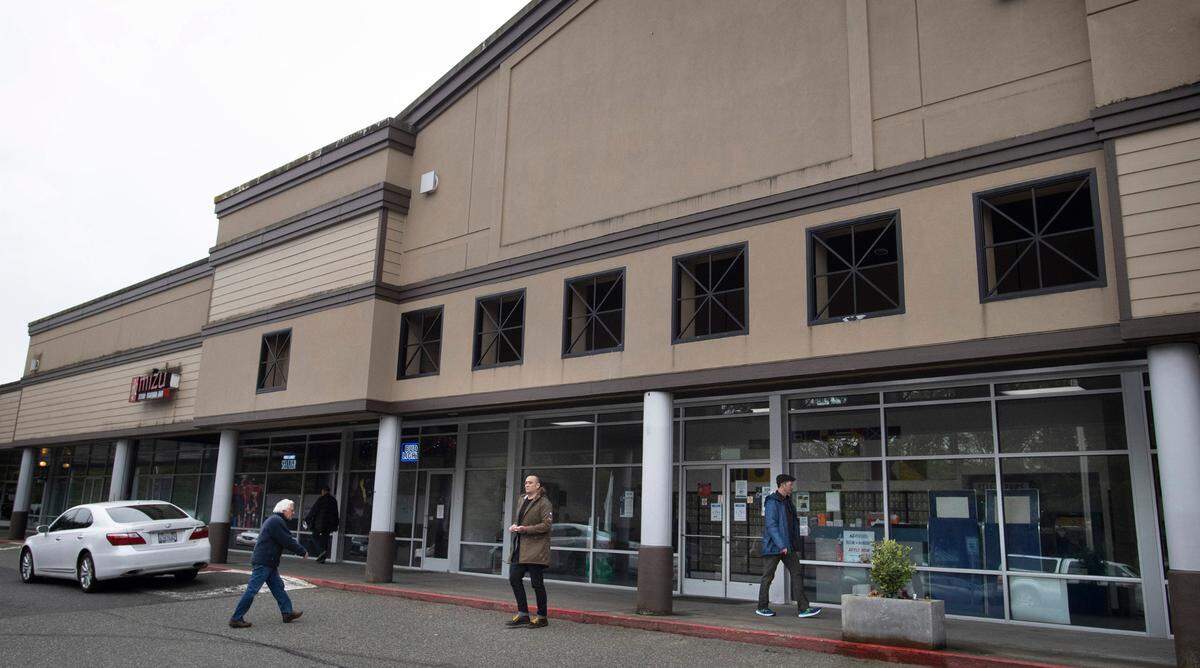
A spokesperson for The Rush Companies declined to comment on the developer’s involvement or interest in the city’s subarea plan, as well as whether Rush would be open to mixed-use development at the Peninsula Shopping Center in the future.
While discussing the future plan at the city council retreat Feb. 28, Gig Harbor Mayor Mary Barber said that Rush has communicated their interest in the planning process.
The News Tribune did a Q&A with Baker to learn more about the city’s plans to draft a Judson Subarea Plan to guide potential redevelopment near the shopping center. This interview has been lightly edited for length and clarity.
What does the city mean by “redevelopment?” Does that mean remodeling the space or exploring other uses for the site?
Any or all. Obviously, the existing shopping center area had some new businesses that are going into it, but I know that the property owners as a whole have been interested in potentially thinking about multifamily of some kind down in that area. I know that the small business community definitely would like to have more people living around them year-round. But not too many. There’s that delicate balance, because again, downtown is really the jewel of Gig Harbor, and we want to make sure that we are maintaining that while still providing opportunities for multifamily, providing opportunities for formalized public parking, potentially street improvements, other public spaces. This could be any or all of these.
And of course, it is going to involve both public property and private property because obviously Judson Street ... would be a component of that project.
What would be the boundaries of the plan?
If you look at the Comprehensive Plan map, you can ... look at the land use map and you’ll see an area that I believe is called Downtown Business and it’s pink on the map. It would be the entirety of that area for certain. It may not expand beyond that. Again, the council has made no determination on the boundaries, or the breadth of what the conversation is.
The retail center has had vacancies for some time and has faced challenges landing an anchor retail tenant. Why has it been difficult to revitalize the area?
I would probably defer that answer to both Rush as the owner of the property, but also potentially the Chamber of Commerce, who can talk about some of those (answers). Obviously, that space is larger. It requires a larger tenant. It requires larger upkeep. Folks who are looking to occupy those spaces are oftentimes in industries that are not growing as much ... obviously, smaller grocers are struggling. They’re not occupying these spaces. Pharmacies would be another example. Pharmacies, obviously, are becoming fewer. So I believe that in general, the number of tenants looking for a space of that size is challenged.
... And of course, breaking up a space like that isn’t just a matter of putting up walls. It is substantially more complicated due to the fact that it has higher ceilings. It has HVAC equipment that is intended to serve the entirety of the space.
How has the city engaged property owners and the business community thus far?
We’re still at the very beginning. With the new council coming on board in January, one of the conversations we’re going to want to have is again, establishing those sideboards and establishing what the public outreach campaign looks like. So, at this point, the formal process has not kicked off, though conversations that are going to educate that process have been going on for decades and continue to go on on a daily basis.
So I do expect that that conversation ... is going to involve not just the owner of the Peninsula Shopping Center, but anyone else who may be in that downtown business area, as well as folks ... who live around businesses around that downtown area, as well as other key stakeholders.
When does the city hope to complete the plan?
I would expect that we’re going to be making progress in 2026, but probably depending on how the conversation goes, 2027 may be a more likely end date.
And when I say end date, this is going to be an iterative phased process. The subarea plan was only going to be the intro. That’s going to basically establish what the community is looking for as well as expectations between the public and the private sector. The implementation of that is going to take multiple phases, which could take a number of years after that.
I just want to make it clear that we don’t expect that in 2027, that area is going to look substantially different, (rather) that we will have plans on what different may look like moving into the future.
Does the plan move toward some kind of deliverable report?
Yes. It would have to be a Comprehensive Plan amendment ... it would have implications to our capital facilities planning, our goals and policies. ... We would go through the Comprehensive Plan amendment process, which again has its own public outreach and process required for it.
Will there be opportunities for public comment and engagement?
Definitely, though I will say that (public comment) ... is only going to be a very, very small part of all the public outreach that is going to be included in this. I do expect both virtual and in-person workshops, individual stakeholder meetings, possible additional public hearings along the way to educate the council because the subarea plan, when you’re talking about public-private partnerships, you need to make sure that the decision makers, the ones who will ultimately be approving or denying any idea, are coming along with you, not just, “Hey, here’s a draft. What do you think?”
If the subarea plan includes multifamily as an option, could that increase the Peninsula Shopping Center’s appeal to a potential anchor retail tenant?
I would definitely discuss that with both the Chamber and the Waterfront Alliance, but in general, retailers, especially retailers looking to fill that ... amount of space, really want as many people to live in close proximity to them as possible and would like it if not everybody has to drive to them, given they have to address parking, they have to address traffic. ... more people living in the downtown, I think, would benefit that space, but also would likely benefit all of the retailers downtown by providing more people living year-round in the harbor, hopefully providing business year-round.
What would the possible redevelopment of the Peninsula Shopping Center mean for the city’s long term goals?
Obviously, the city of Gig Harbor is facing a series of growth pressures. We want to ensure that when we do accommodate new growth to the area, whether it be multifamily or other types of housing, that we’re doing it very thoughtfully. And we are locating it in areas that have high possibility of success and provide for a greater public benefit.
The Judson area and the waterfront area is a small piece of the downtown that could be appropriate for a discussion of greater development, but I do want to be clear that that conversation is “maybe,” not “will be,” as we need to ensure that both we protect what makes Gig Harbor great, while also providing for so many of the state requirements to accommodate growth, especially accommodate growth in particular ways, such as higher-density housing.
This story was originally published December 3, 2025 at 5:00 AM.