Pierce County court to decide if controversial retirement community can expand
AI-generated summary reviewed by our newsroom.
- Pierce County Superior Court will review challenges to Kensington Gardens' subdivision.
- Hearing Examiner found villas inconsistent with Rural 5 zone and county plans.
- Both sides filed separate land use petitions that could be consolidated.
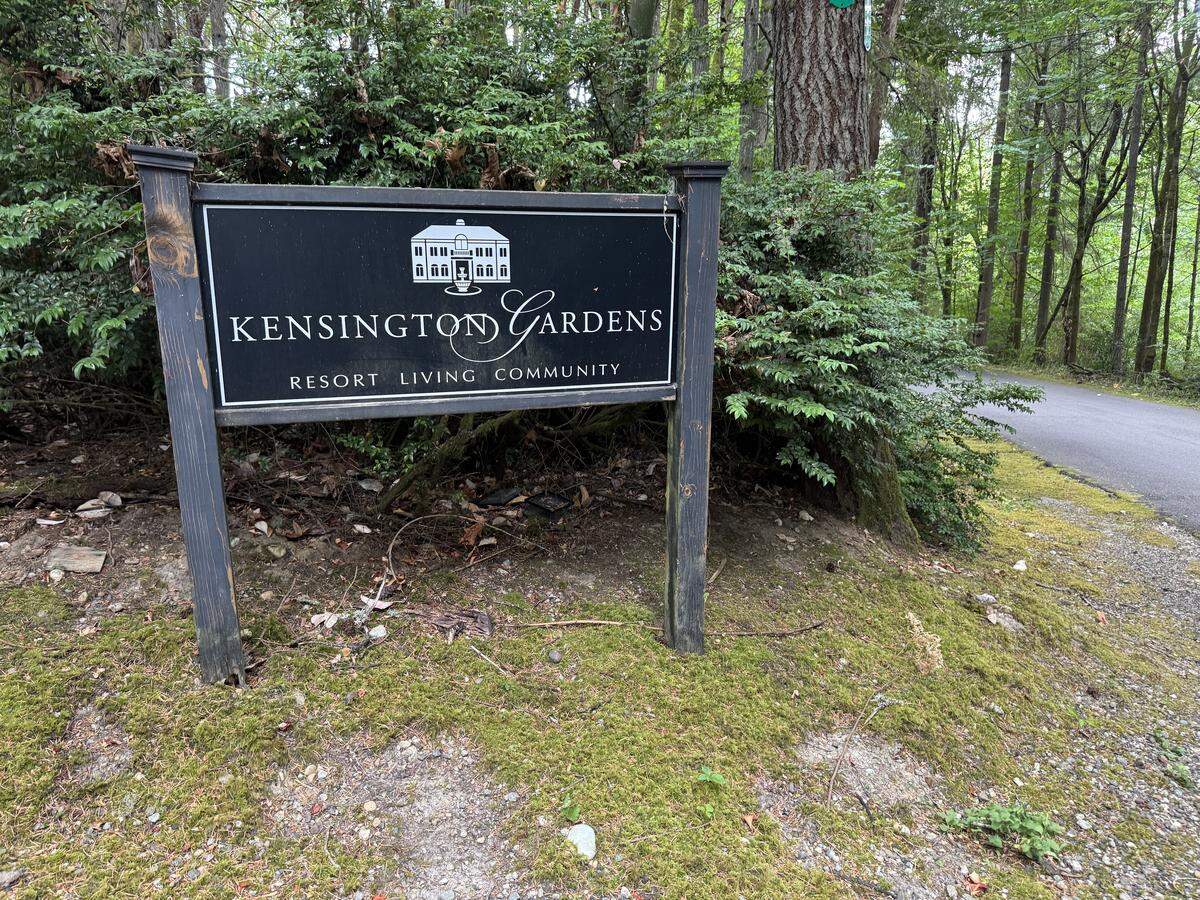
The dispute over Kensington Gardens, a luxury retirement community outside of Gig Harbor, has moved to Pierce County Superior Court.
Once an event and wedding venue, the resort-style property featuring manicured hedges, European-style architecture and rooms filled with natural light has been at the center of a prolonged land-use dispute involving the estate’s owners and neighboring homeowners.
In August, The News Tribune reported that Dana and Erika Zimmerman, who live across from Kensington Gardens in a home that’s been in their family for generations, started a petition in 2021 opposing permits for the development. They collected over 1,000 signatures and went on to challenge Kensington Gardens co-owners, Mark and Kelly Watson, in hearings before the Pierce County Hearing Examiner last year, along with others opposed to the Watsons’ plan to build four additional villas on the property, The News Tribune reported.
A Pierce County Superior Court judge will decide the key issue — whether Kensington Gardens’ proposed villas can be considered single-family homes permitted in the rural area — and whether the property can expand as planned.
The Zimmermans, along with nearly 60 others who submitted similar comments to the hearing examiner last year, argued that the new villas would bring in extra traffic, harm wetlands and contribute to unwanted growth in the rural area. The Watsons, meanwhile, hold that the villas would have minimal impacts on the natural environment and the community, and say that their unique accommodations for older adults are a much-needed service for the Gig Harbor area’s aging population.
Located on Olson Drive Northwest, Kensington Gardens has three buildings: an eight-suite building called Hawksworth Villa, a smaller 11-bedroom house called Regent Park that provides more personalized care, and an office building. As of January, Hawksworth Villa has 14 residents and Regent Park has six.
After the Pierce County Hearing Examiner rejected the Watsons’ proposal to subdivide their 23.5-acre property for future construction, the Watsons appealed to the court by filing a land use petition Dec. 30.
The Zimmermans also filed their own land use petition, asking the court to review the Hearing Examiner’s decision and issue a ruling correcting what they allege are still unaddressed issues.
The judge’s ruling centers on the proposed subdivision and won’t affect the use of Kensington Gardens’ existing residences, Reuben Schutz, an attorney representing Kensington Gardens Holdings LLC, confirmed in an email.
Pierce County Hearing Examiner ruled against Kensington Gardens
In his report and decision Dec. 12, the Pierce County Hearing Examiner Robert E. Mack rejected Kensington Gardens’ proposed subdivision. The future villas can’t be considered single-family residences permitted in the area’s Rural 5 (R5) zone, and don’t support the goals of the county Comprehensive Plan and the Gig Harbor Peninsula Community Plan for preserving rural areas, he wrote.
“The proposed residential structures are not merely stand-alone and separated buildings; they are part of a campus whose management serves as more than a landlord,” the decision states. “The residential buildings — the Villas — are not usual types of single-family structures normal in rural Pierce County.”
Mack wrote of the difficulty of classifying the proposed villas in his decision:
“They are designed primarily for retirees or elderly persons — but KG says they are not retirement homes. They house up to sixteen persons, not all of whom are related, who receive food, health, and other services — but KG says they are not group homes or multifamily residences. They contain individual suites, with living rooms, bedrooms, storage and food preparation areas — but KG insists that the entire 18,000 square foot building is a single ‘Dwelling Unit’ that does not contain individual dwelling units.”
Kelly Watson said in a phone call that she is “extremely disappointed” with the hearing examiner’s ruling. She maintained that the county code supports Kensington Gardens’ plans and emphasized that older adults should have housing options in rural areas, not just in urban or commercial areas.
“And you cannot say that this segment of the population can only be in a certain place,” Watson said.
Residents at Kensington Gardens are “stressed out” about the ongoing dispute, she told The News Tribune. In a press release Jan. 9, Watson defended Kensington Gardens’ model of providing housing and care for older adults and wrote that county regulations and media coverage of the dispute have put their housing development at risk.
“We never imagined improving care for elders would require such perseverance,” Watson said in the release. “We followed the rules, adapted when regulations changed, and kept residents safe. Our guiding principle has always been to act with integrity and honor — even when doing so is difficult and comes at great personal cost.”
Dana Zimmerman said in a phone call Monday that he and his wife Erika filed a separate land use petition in part because they felt that the hearing examiner didn’t address whether Kensington Gardens could be considered a residential care facility. They also disagree with the hearing examiner’s treatment of issues such as the criteria for deeming a residence as “shared housing,” he wrote in an email.
“More broadly, how you classify a use matters,” he wrote. “If you call something a single-family home, it gets evaluated one way. If it’s actually more like a multi-unit care facility, the rules for protecting wetlands and managing wastewater are stricter (as they should be). The environmental reviews here were done assuming single-family homes, but the Examiner himself concluded these aren’t single-family homes. That’s a problem we need the Court to fix.”
He said he hopes the court case is able to wrap up within the year.
“ ... I really hope this is the end,” he said. “That would certainly be a relief to us and to all of our neighbors in the area as well ... . I really hope that this puts the matter at rest.”
Watsons’ appeal says that hearing examiner went beyond county code
In their petition to the court, the Watsons argued that the hearing examiner made his decision “by elevating subjective design opinions over code definitions that govern what is a ‘dwelling unit.’”
The Pierce County code defines a “dwelling unit” as one occupied by a “housekeeping unit,” a group that functions like a family “jointly sharing common areas, living expenses, and household activities and responsibilities such as meals and chores.” This dwelling unit includes “permanent provisions for living and sleeping, kitchen facilities, and sanitation facilities, and is occupied on a long-term basis for living or sleeping purposes.”
Meanwhile, state law says that a county can’t “regulate or limit the number of unrelated persons that may occupy a household or dwelling unit.”
Kensington Gardens’ first villa met the county’s requirements and was approved as a single-family dwelling unit, and future villas would as well, the Watsons’ petition argued.
They also wrote that any proposed development will stay in line with the neighborhood’s rural nature, maintaining the acres of wooded open space separating Kensington Gardens from the nearest public road and obeying rules such as minimum lot requirements and setbacks. These will be hammered out in their final form when building permits are filed, their petition said.
Cease-and-desist order resolved for Kensington Gardens’ adult family home
Separately, Kensington Gardens also resolved a cease-and-desist order issued by the Washington State Department of Social and Health Services in July, Watson told The News Tribune. That order applied to their adult family home, Regent Park, where residents unable to live independently can receive care from service providers.
The News Tribune reported that the notice from DSHS alleged Kensington Gardens had been operating an unlicensed adult family home on the property, making them subject to a $5,000 civil fine. State law defines an adult family home as a residential home licensed to provide care and services to up to six adults not related to the service provider (up to eight with approval from DSHS). The Watsons appealed that order to the state Office of Administrative Hearings, arguing that Kensington Gardens offers care through an affiliated entity separate from their LLC providing housing. That affiliated entity, Kensington Gardens Corporation, was licensed as an in-home services agency through the state Department of Health in 2022, and the Watsons had retired their adult family home licenses as a result, Watson told The News Tribune.
Watson said they ultimately decided not to wait for the outcome of their appeal, which could have taken until at least February. They withdrew their appeal in November and negotiated to become licensed again as an adult family home, receiving their license Dec. 16, she said.
Petitions filed in court may bring dispute closer to an end
The two land use petitions are separate but could become part of the same case in the future, Adam Faber, a spokesperson for the Pierce County Prosecuting Attorney’s Office, wrote in an email.
“They are considered separate cases, but they’re related to each other and arise out of the same Hearing Examiner hearing,” Faber wrote. “It’s possible that they get consolidated into one in the future. It is also possible that they remain separate, and thus there is the possibility, if that occurs, that rulings could happen at different times.”
Initial land use petition act hearings in both cases are scheduled for Feb. 13, Pierce County court records show. These initial hearings provide an opportunity for parties to talk about procedural issues upfront and motions that they expect to file, as required by state law for land use petitions. Trials for both cases are scheduled for mid-May.
In land use petition act cases, the “record is created on the Hearing Examiner’s level,” and parties don’t supply further witnesses or testimony to the court, Reuben Schutz, an attorney representing Kensington Gardens Holdings LLC, explained in a phone call. Parties file briefs and arguments with the court.
The Superior Court judge can uphold the hearing examiner’s decision, reverse it or send it back to the hearing examiner for changes or further steps, according to state law. Schutz said “there’s quite a lot of discretion to the Superior Court judge on a remedy.”
If either of the parties wish to challenge the judge’s decision, they can appeal it to the state Court of Appeals and the state Supreme Court. The state Supreme Court decides which cases to accept.