Popular tile game mahjong gains traction in Gig Harbor. How do you play?
AI-generated summary reviewed by our newsroom.
- Mahjong is a tile game from China becoming increasingly popular in the United States.
- A Gig Harbor resident founded “Mahj with Mandee” to teach American mahjong classes.
- Other mahjong variations have ongoing history in Asian and Asian American communities.
Historians believe mahjong, a game where players seek to create specific sequences of tiles, started in China and spread to other countries including the U.S. around the turn of the twentieth century.
In recent years, the game and its many variations have enjoyed an explosion of interest in America’s Gen Z and millennial population, seen in the numerous mahjong clubs, events and meetups popping up across the country. Media outlets nationwide have spotlighted the game and its popularity in big metro areas, from Seattle to Los Angeles to New York.
But the game has also made inroads in smaller communities. Mandee Wheelus, 44, saw it as soon as she made her first social media post earlier this year about offering mahjong classes in Gig Harbor.
“I put that one post up and I swear, I had like hundreds of messages, 100s of comments (saying) that ‘Oh my gosh, I’ve been waiting for you, I’ve been waiting for this, I’ve been waiting to learn this game,’” she told The News Tribune.
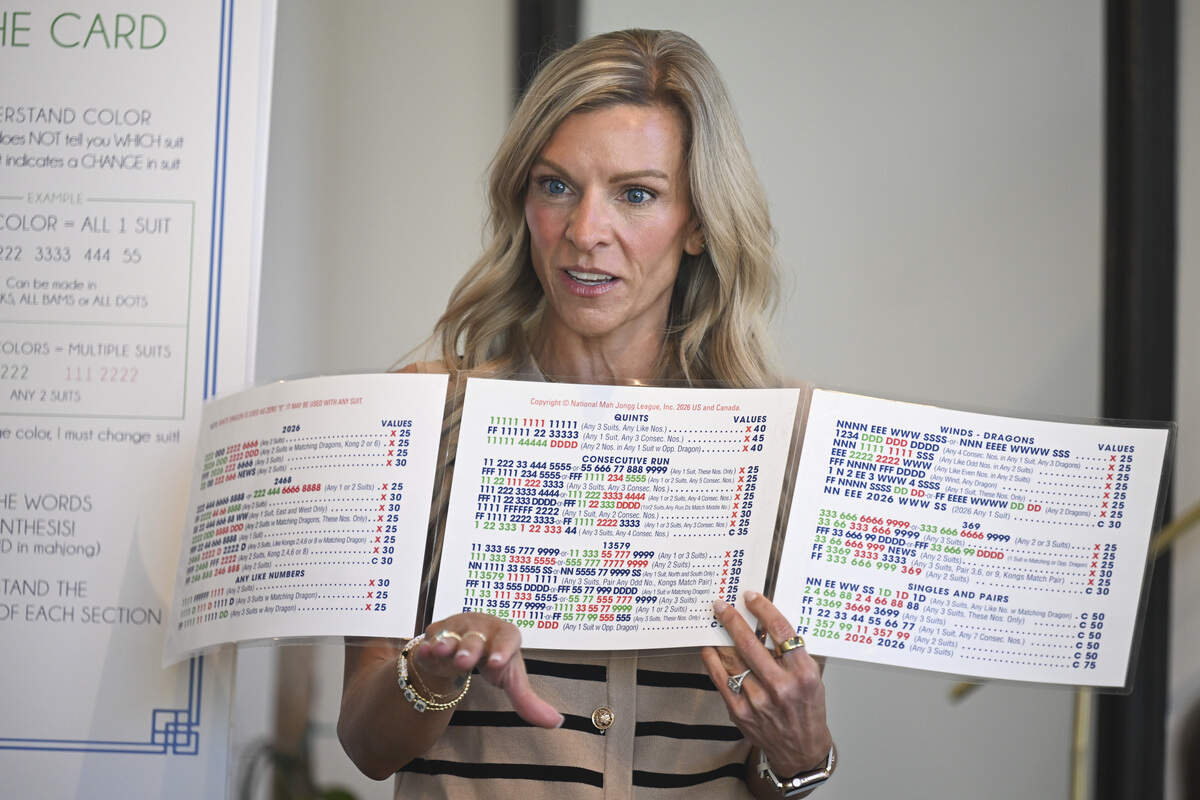
Wheelus explained how to play American mahjong — which has several differences from Chinese, Hong Kong, Taiwanese and other variations of the game — to a small group of students at a Thursday morning class in Gig Harbor. Walking into the class, tables had rows of multicolored tiles and mahjong “quick guide” cards for each guest.

Standing next to a white poster board with tile illustrations, Wheelus said: “I promise, I promise it’ll make more sense as we move forward and are actually playing with the tiles.”
Those interested in signing up for a class with Wheelus can visit her website, which has links to register for classes. As of April, she’s hosting her classes in two locations, an event venue called the Kindship Studio in the Uptown shopping center and a downtown boutique, Local Whimsy. She also teaches mahjong at private events. Classes are offered several times a month and include both “Mahjong 101” classes and guided/open play nights where Wheelus doesn’t provide formal teaching but is available to answer questions and offer tips during the game. Registration fees depend on the class but range from $25 to $65.
Events need a minimum of eight people to sign-up or are subject to cancellation, in which case guests will be refunded. Otherwise, all ticket sales are final, according to the website.
Caasi Dickens, co-owner of Local Whimsy, had attended two of Wheelus’s classes and was planning a third when she spoke to The News Tribune April 17. She said that Wheelus goes “above and beyond” in creating a space for guests to focus on the game, from the table settings to spots for snacks.
The rising popularity of mahjong
Wheelus said she was working for a clothing store in Gig Harbor when she discovered the game from people she followed on Instagram.
She bought herself some tiles on Amazon and started teaching herself to play. YouTube wasn’t very helpful, she said. Soon, she was playing every day — and getting her family into it, too.
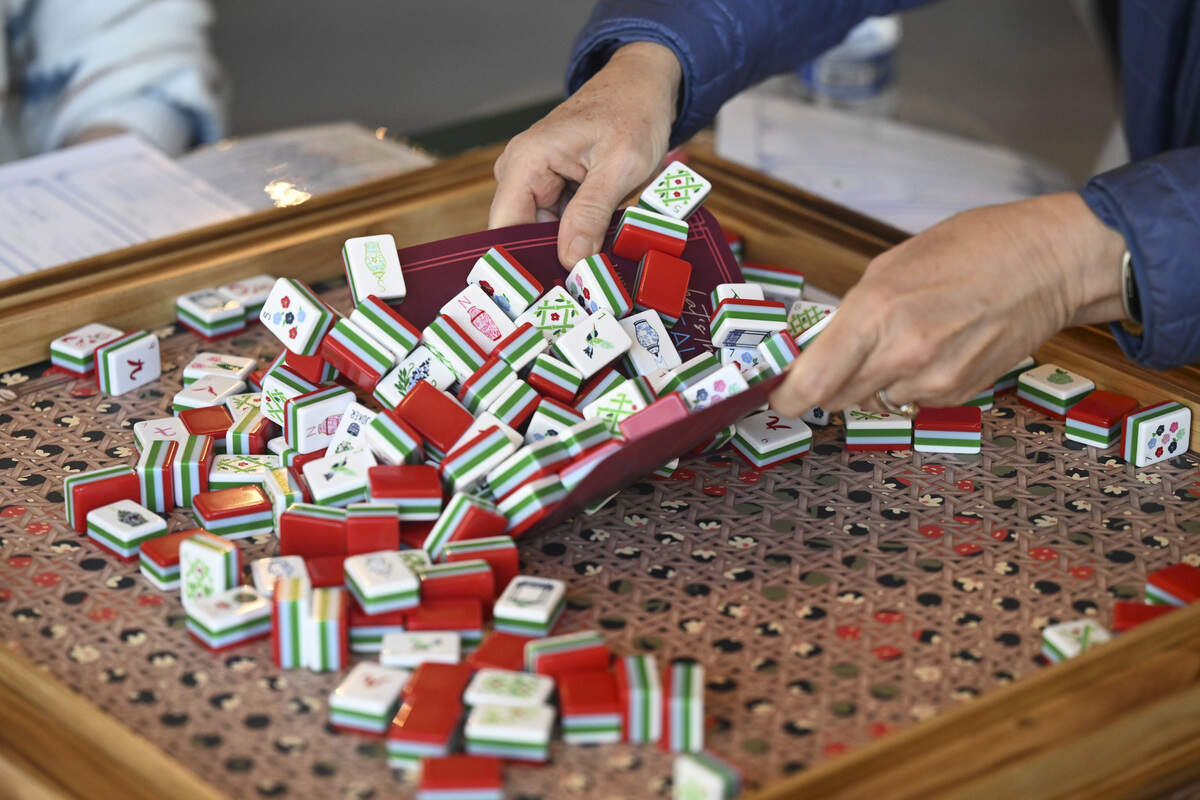
“Normally, I do puzzles and all of that over Thanksgiving and Christmas,” she said. “But I made them play mahjong the entire time, and they loved it too.”
Around six months later, Wheelus founded her own teaching business, “Mahj with Mandee,” offering mahjong classes and open play events in Gig Harbor.
Wheelus said she likes the aesthetics of the tiles, the way it uses your brain, and the way that it brings people together.
“I don’t know about anybody else, but I don’t love small talk,” she said. “ ... It puts a lot of pressure on you sometimes. And so this, you all have the common goal of just sitting down to the table to play a game.”
Searches for mahjong events shot up by 365% from 2023 to 2024, Eventbrite reported after analyzing events across nine major U.S. cities. The increased attention has also generated controversy.
“If you’ve been online lately, you’ve probably noticed that mahjong is having a moment,” travel and culture writer Laura Zhang wrote in a post on her Substack publication, “Golden Hour.” She went on to argue that much of the media coverage has platformed American-style mahjong and “its aesthetics and profitability, rather than mahjong’s origins, cultural depth, and 40+ regional variants.”
In recent years, American mahjong companies such as The Mahjong Line have been criticized for cultural appropriation in their promotion of the game and stylized tile sets. Many of these sets from companies including The Mahjong Line are sold at prices upwards of $300 or $400 each. The company released a public apology in 2021, after its redesign of the tiles.
“While our intent is to inspire and engage with a new generation of American mahjong players, we recognize our failure to pay proper homage to the game’s Chinese heritage,” the company said, according to NBC News reporting. “Using words like ‘refresh’ were hurtful to many and we are deeply sorry. “
Wheelus said that she’s aware of the controversy around mahjong, and understands that the American version is “much more commercialized.” She enjoys the stylized American sets and table designs, but said she makes a point of using verbiage from the Chinese version of the game, such as words like “kong” and “pung” for sets of four and three tiles, respectively.
“I like to blend a bit of both,” she said. “I love the beauty of the tables, of the artistry that some people put into it, but I also love the culture and the history of it.”
Variations of mahjong
In her book “Mahjong: House Rules from Across the Asian Diaspora,” Nicole Wong explains a number of different mahjong variations, including Old Style Chinese, Hong Kong, Japanese, Taiwanese, Filipino, Singaporean, Malaysian and American styles of play. The main objective is the same — to be the first player to arrange your tiles into particular winning sequences — but each variation has differences, from how points are scored to how many tiles players get.
American mahjong, sometimes spelled “mah-jongg,” was born in the 1930s, according to Wong. The variation became popular in Jewish American communities and is largely helmed by the National Mah Jongg League (NMJL), which publishes an updated rule card each year and organizes its own slate of events and groups.
Unlike other versions of the game, American style mahjong is played using joker tiles, which can be used as any tile, Wong writes. It also involves a process called the “Charleston,” where players exchange tiles before the game begins.
Sean Herrera, 20, is the organizer and founder of the Emerald City Tile Club, a mahjong social club in Seattle that hosts game nights at Stoup Brewing in Capitol Hill. He noted that American mahjong isn’t really played at ECTC, where most of the attendees are young Asians and Asian Americans in their 20s. Herrera, who is Filipino American, played mahjong with his dad growing up and started the group as a way to socialize with his friends.
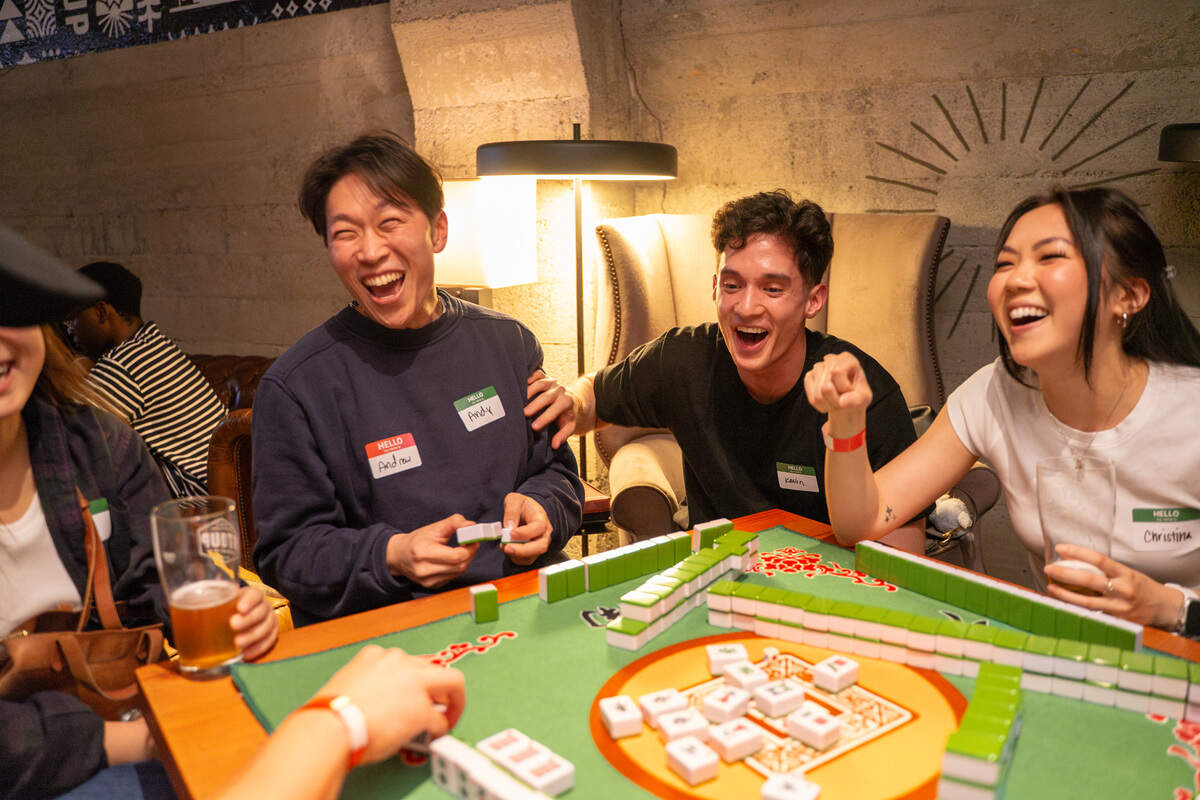
“... Even though there’s a broader moment for mahjong and its coverage overall in major cities (and) adjacent areas ... the traditional Hong Kong and Taiwanese and Chinese variants of the game are having kind of its own movement,” Herrera said, pointing to clubs like ECTC and Green Tile Social Club in New York.
How to play mahjong
In her book, Wong writes that mahjong “is a ‘pick and discard’ game, similar to games like gin rummy, gin, spades, and Rummikub.” Essentially, the goal of a single hand of mahjong is to be the first player to create a winning sequence of tiles with combinations of matching or consecutive sets, she writes.
A condensed explanation of how to play mahjong, based on Wong’s book, is below.
The game is typically played with four people and has four rounds in one game: East, South, West and North. There are a total of 144 tiles, though some variations don’t use them all (American mahjong includes an additional eight joker tiles). Like a deck of cards, the tiles have numbers (0-9) and suits (circles, bamboo and characters) which also go by other names, depending on the style of play.
There are also two sets of value tiles: winds, which are marked with East, South, West and North; and dragons, which are red, green and white.

Flower tiles include four flower tiles (plum, orchid, chrysanthemum and bamboo) and four season tiles (spring, summer, autumn and winter). Both sets are usually numbered 1 to 4.
After seating themselves around the table, players shuffle all of the tiles face-down on the table and then arrange them in four walls of equal length, stacked two tiles high. After the starting player is designated, that player rolls the dice to determine where to begin removing tiles, and the other players follow suit.
Players then begin discarding tiles into the middle of the table and picking up either discarded tiles or tiles from walls. A winning mahjong hand includes sequences of sets (three or four identical tiles), runs (three consecutive tiles of one suit) and one pair (two identical tiles). Some tiles, like the flower tiles, add points during scoring but don’t count toward the winning hand.