What are solar panels doing on the site of an old Pierce County landfill?
AI-generated summary reviewed by our newsroom.
- Pierce County installed a solar array at Purdy Landfill to connect to the PenLight grid.
- The solar array is funded by a $2.3M grant from the state Department of Commerce.
- Revenue from the solar project will go toward energy efficiency and assistance programs.
If you’ve recently driven to the Purdy Transfer Station, you might have noticed something different.
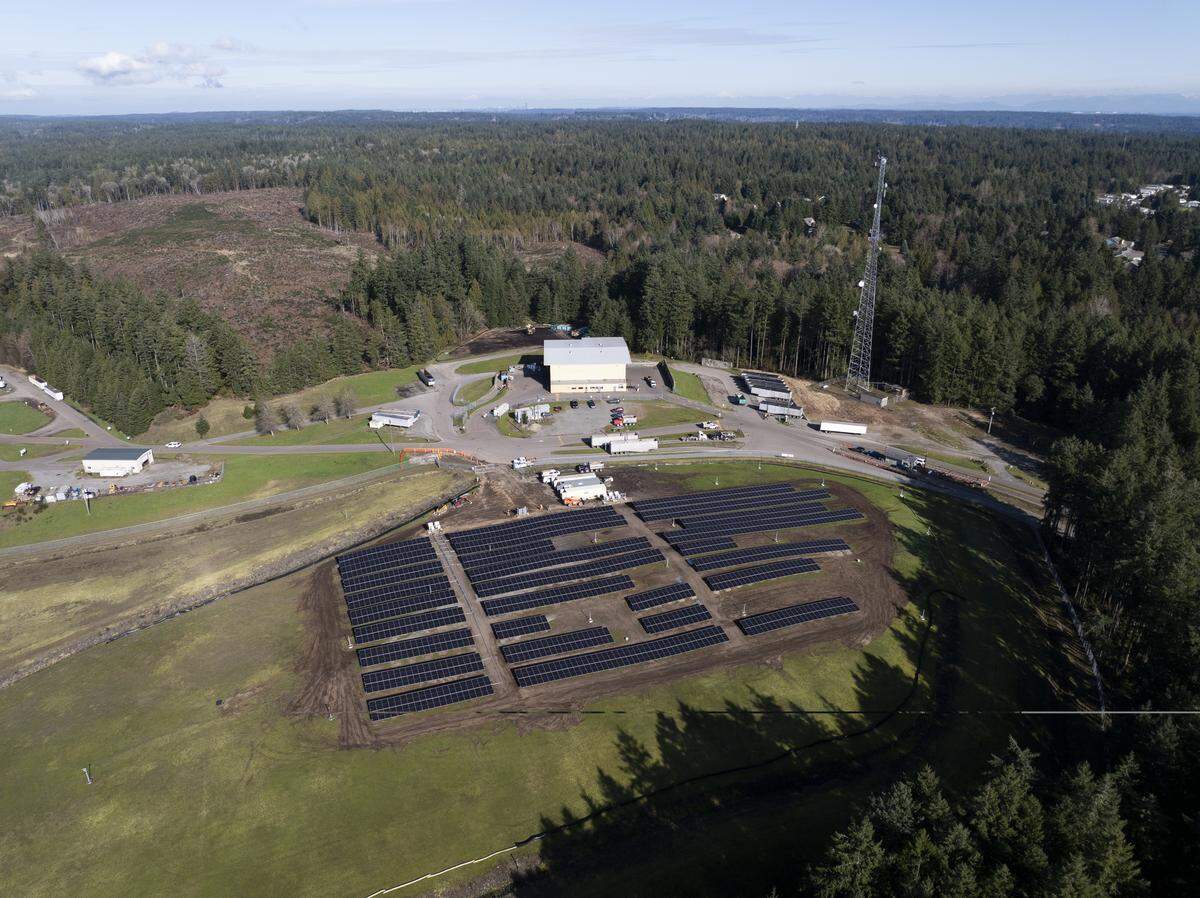
In March, contractors finished installing a large array of solar panels on the southern part of the Purdy Landfill, near the waste and recycling center. The panels are expected to generate over 1 million kilowatt-hours of energy each year, which is “enough to power approximately 100 homes, or to drive an electric car around the Earth 120 times,” according to Pierce County’s website.
The solar array at 14515 54th Ave. NW will connect to the Peninsula Light Company grid and is funded through a $2.3 million grant from the state Department of Commerce Clean Energy Program. Pierce County spokesperson Michelle Kircher told The News Tribune April 27 that the county was working with Peninsula Light Co. to finalize the terms of their agreements.
“PenLight currently receives nearly all of our power through the Bonneville Power Administration, which provides clean, reliable energy that is largely carbon free,” PenLight spokesperson Britni Wickens wrote in a February email. “If interconnected, the County’s solar project would provide a small portion of our overall energy needs — estimated at about 0.2% of our total load.”
Wickens wrote that the solar project “would not impact members’ electricity rates.”
The county intends to invest their net revenue from the solar project into the community through “energy assistance and efficiency projects benefitting low-income residents on Key Peninsula,” the county’s website says.
It’s not clear yet what those will be. Pierce County staff are looking to gather input from residents.
“We will host workshops, distribute surveys, and conduct interviews to identify how the revenue should be used to ease energy burden, increase energy efficiency, and reduce pollution in Key Peninsula and beyond,” she wrote.
Why is Pierce County pursuing solar at this site? Kircher explained that the county is acting on feedback from the community.
In 2021, the Pierce County Council and then-County Executive Bruce Dammeier passed a plan to reduce countywide greenhouse gas emissions. “Transitioning to renewable energy, community solar projects, and increasing awareness of energy assistance programs are top community priorities,” the plan said. The county’s goal is to cut greenhouse gas emissions by 45% from 2015 to 2030.
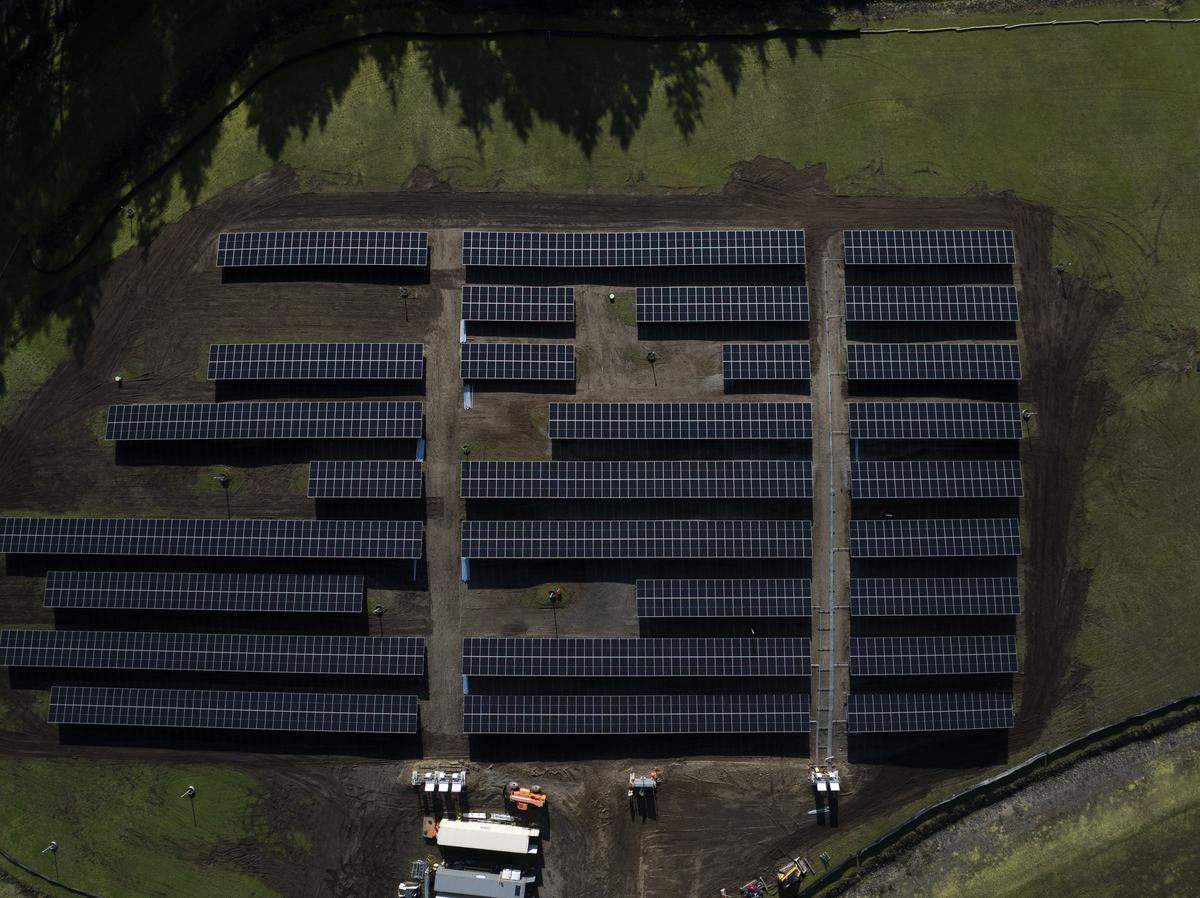
The Purdy Landfill is 15 acres and operated from 1941 to 1989, according to a report from the Tacoma-Pierce County Health Department. For years, the landfill’s excavated pits accumulated sewage and household waste from residents of the Gig Harbor area and University Place. In the years following, crews covered the landfill with layers of soil and a synthetic liner and seeded the top with grass.
The 12-inch soil cap can’t be regraded or significantly disturbed, which is why the site works well for a ground-mounted solar array, the Pierce County website says, and Kircher said the spot gets good sun exposure.
Kircher wrote that the county is already using the site for education, hosting tours with Workforce Central and Goodwill as well as environmental science students from Clover Park Technical College.
Some solar arrays use what’s known as battery energy storage systems, or BESS, to store energy and provide back-up power to homes and businesses when needed. Some communities have raised concerns about the potential fire risk of these systems, though the U.S. Environmental Protection Agency reports that these incidents have been less common since 2020.
Kircher said that the Purdy solar project “will not utilize any kind of battery energy storage system (BESS) at this time.” The county is working on code to regulate BESS and where these systems can be installed.
“BESS elevate the usefulness of solar energy projects by capturing excess power when the sun is shining, then make that power available later when there may be higher demand,” she wrote. “The County could consider a BESS at this site in the future.”
Is the South Sound sunny enough for solar? Kircher said a common misconception is that Washington state isn’t well-suited for solar energy.
“The Pacific Northwest receives more sunlight annually than Germany - the leading global user of solar,” she wrote. “Our location north of the 45th parallel means we experience exceptionally long summer days compared to other parts of the country, and western Washington’s relatively cool climate (not getting too hot) is ideal for solar panels to operate efficiently.”
More information about solar energy is available on the county’s educational materials online.