
Rockfish live long, but need help to prosper
The “charismatic megafauna” at the beach unknowingly steal the show. Tide-poolers seek sea stars and large crabs in the intertidal zone; barnacles and limpets often go unnoticed or crunched underfoot. Every ecosystem, whether water or land, has its underappreciated species.
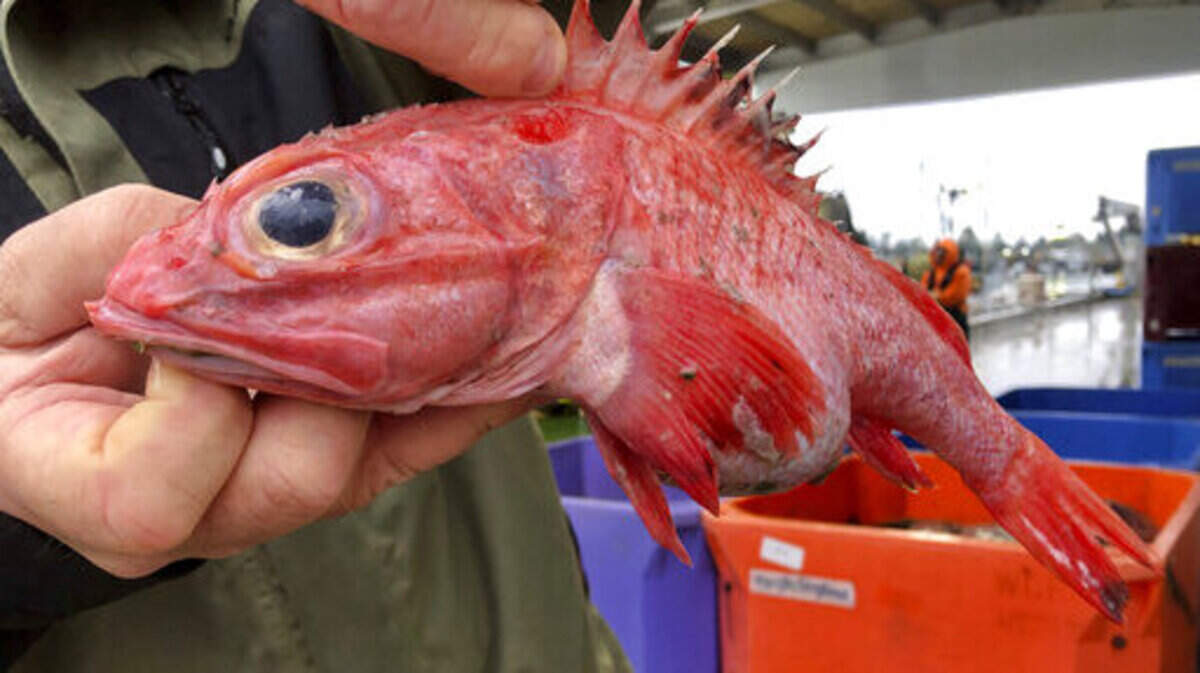
Rockfish fall into this category. The Puget Sound and greater Salish Sea are home to around 28 different species of rockfish, all of which sport a rainbow of different colored scales and patterns.
100-year lives
Outside of their colorful flare, their impressive life story is what draws me in. These are fish that can live for an average of 100 years up to thousands of feet deep, making them among the longest-lived of all fish.
Consequently, their incredible aging is also part of their struggle. Rockfish reproduce slowly — more like humans than fish. Most species don’t reach sexual maturity until they are at least 17 years old, sometimes older in certain species. In comparison, salmon spawn around 2-4 years old. Baby rockfish — born live — spend their first couple of months in the water column before finding a home in eelgrass, kelp, and rocky areas. As they get older, they move into deeper water.
Populations began declining in the 1970’s for a complicated list of reasons, overfishing and changing conditions in our waterways being the greatest. Because it takes rockfish so many years to come of spawning age, their numbers declined faster than they could repopulate.
As of 2010, anglers are no longer permitted to take rockfish in the Puget Sound. Federally, Yelloweye and Canary rockfish are listed as endangered, and Boccacio rockfish are threatened.
The decline spurred efforts to monitor and manage rockfish in the Puget Sound, particularly in their most susceptible juvenile stages. Today, surveys are regularly conducted by Washington Fish and Wildlife as well as smaller organizations and citizen-scientist SCUBA divers. In Tacoma’s waters, NOAA partners with nonprofits Harbor WildWatch and Paua Marine Research Group, as well as recreation diving groups like Tacoma SCUBA dive club, for a monthly survey for year of young rockfish.
The bladder problem
Rockfish also happen to be difficult to safely catch-and-release. When reeled to the surface from depth, the gas in their swim bladder expands. This results in barotrauma, a pressure-related injury that can cause traumatic swelling of the rockfish’s body, esophagus, or eyes. Swim bladders are an appendage in species of bony fish to help control their buoyancy, allowing them to “float” at depth without wasting energy by constantly swimming.
To release rockfish safely, anglers must return them to the depth at which they were caught. Usually they use some combination of a weight and barbless hook. All Alaskan sportfishing vessels must have deep-water release gear; likewise, in Oregon, the Department of Fish and Wildlife encourages recompression education for anglers to help safely catch-and-release rockfish.
So, maybe the rockfish’s complicated struggle could actually be seen as resiliency. These are fish that push the boundaries on anything “standard” in fish — from their lifespan to how vibrantly different every species is colored. Rockfish survive all the challenges of youth and teen age, with the added difficulties of waterway impacts, before they can reproduce. With the increased management efforts and education, my hope is that these fish continue to be a resilient species in the Puget Sound and beyond.
Carly Vester is a staff member of Harbor Wildwatch. She writes for The Gateway on the environment.
This story was originally published May 12, 2020 at 11:28 AM.