
Those ‘rubber tire’ thingies on the beach? They’re signs of life
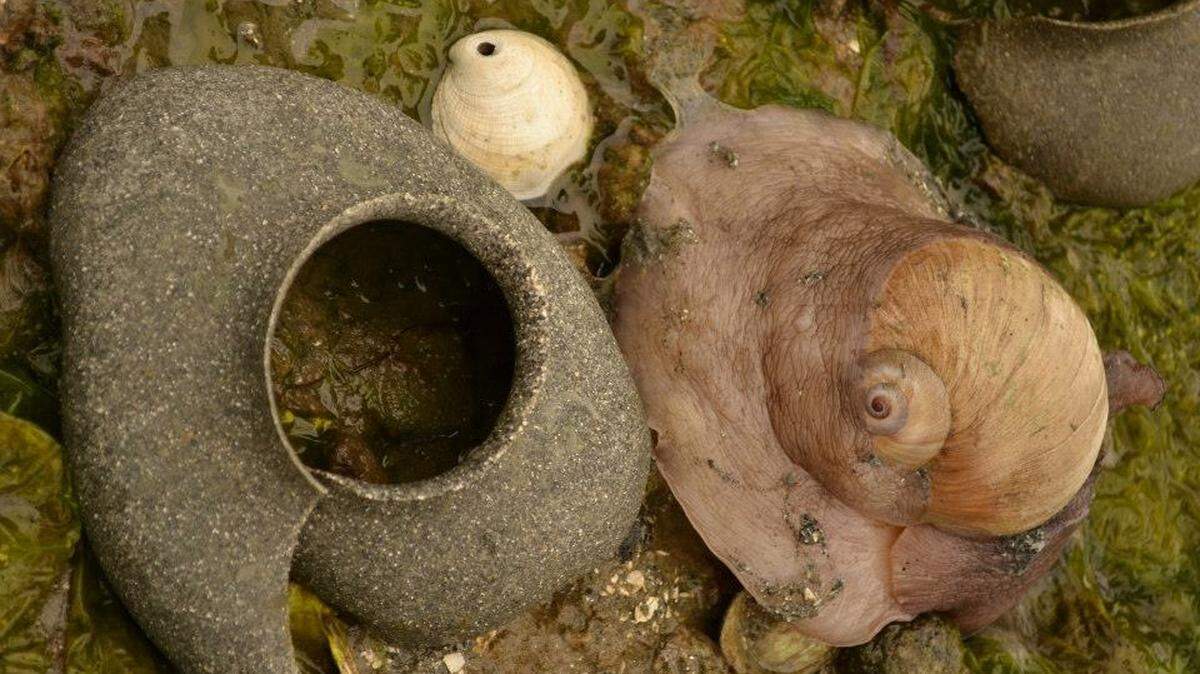
Every year, as the weather gets warmer, we begin to see new signs of life on our beaches. Admittedly, they are usually difficult to discern.
Mushy white ribbons in some seaweed, what looks like part of a rubber tire lodged in the mud, yellow mochi cakes on the underside of a rock. New marine life isn’t exactly eggs in a neatly made nest: it’s messy and often unidentifiable.
Moon snail eggs are commonly mistaken for beach trash. Round and rubber-like in texture, well-meaning beachgoers have scooped them up thinking they are part of an old toilet plunger, gasket, or piece of car tire. Far from trash, these cases – also called sand collars – have about half a million eggs sandwiched between a layer of snail mucus and beach sand. The sandy hue of the cases vary, depending on the texture and type of sand at that particular beach.
Moon snails (Neverita lewisii) are slimy aquatic snails, often the size of a dinner plate, commonly found in the Puget Sound’s intertidal zone. They’re carnivores, feasting on clams almost exclusively. Their tongue, called a radula, scrapes a hole through clam shells until it can damage the adductor muscle that holds the shell closed. A perfectly round hole “drilled” through a clam shell, near the hinge, is a good clue that these snails are nearby. A full-grown snail consumes a clam every four days or so.
Sand collars remain on the beach for about six weeks, then disintegrate, allowing the snail larvae to drift away in the water current as plankton. We start seeing egg cases in the springtime and commonly throughout the summer. The cases are also hardy – no need to move them back into water, the returning tide will take care of that.
Other creatures’ eggs are kind of… well, blobby. (I love using extra-scientific words like this).
Smaller snails, like the bubble snail, lay fluffy, yellow ribbons of eggs on seaweed. When the tide goes out, these gelatinous egg cases look like a half inch-wide snot strand. Nudibranchs, also known as sea slugs, lay similar white-colored ribbon egg cases. Some are lacy like an intricate, knitted doily; others resemble a small, slimy frosting flower on a cupcake.
And then there’s the Plainfin Midshipman (Porichthys notatus). The most obvious indicator of these fish are neon yellow eggs on the underside of rocks. Males claim their “nest” underneath a sizeable rock in the intertidal zone and solicit a female fish (or several females). Then, the male will brood the eggs: protecting, fanning, and occasionally hydrating them with water if the tide gets too low. This job lasts an average of 45-days, until the eggs hatch and the larvae become juveniles and leave the nest.
If these eggs are spotted while beach combing, I recommend two courses of action. The first is making sure to place the rock back where it was found. Exposed fish eggs will dry up, become food for a predator (seagulls, crows, and eagles at the top of this list), and leave the father fish in a precarious position. Anytime a rock is rolled over, it needs to be rolled back!
Secondly, these fish are venomous. They have venom in the spines covering their gills and can be extremely painful for bare hands to come into contact with. I have bandaged multiple bleeding hands from them and heard stories of the pain being excruciating. If there’s a fishy splash underneath a rock, steer clear from trying to handle it! In most cases, this fish is doing just fine in its puddle under the rock.
Summer is a great time to be curious on our beaches, particularly when the shore, normally submerged, has her watery cover thrown back at low-tide. Check a tide chart before exploring and take advantage of the sunny weather to see what new signs of life can be identified!
Carly Vester is a staff member of Harbor Wildwatch. See writes for the Gateway about the environment.