
Seals in Gig Harbor creek? It can happen. Here’s why they’re active this time of year

I can’t think of a single outing in Gig Harbor Bay that hasn’t included curious company from a pinniped.
Harbor seals and sea lions seem especially active this time of year with quieter boat traffic and salmon returning. They have been likened to the “dogs of the sea” from their curiosity. Splashes, flippers in the air, and an echoing cacophony of groans and low-pitched calls say ‘tis the season!
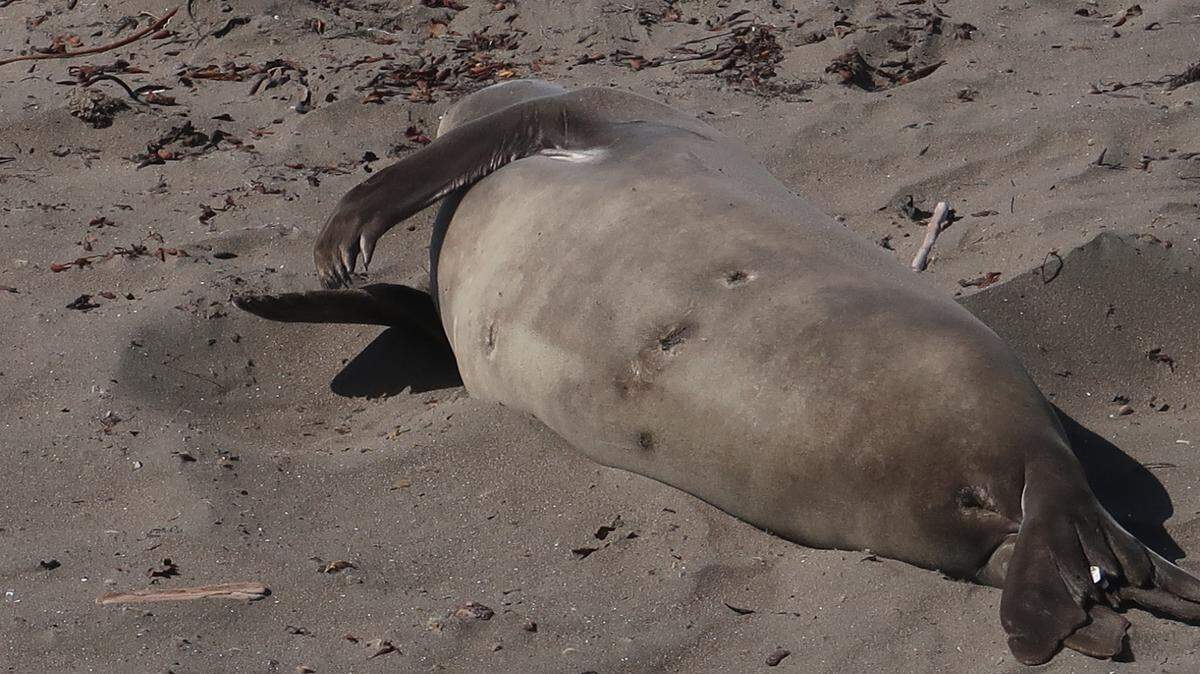
Identifying a harbor seal or sea lion by appearance is usually easy. Harbor seals are smaller, gray and spotted, and noticeably lack external ears. On land, harbor seals belly crawl, their bodies more aquadynamic with hind flippers that angle backwards and don’t rotate.
Sea lions, on the other hand, can rotate their flippers and awkwardly “walk” on land. Sea lions are noisy, groaning like someone with a holiday belly ache. They have ear flaps for outer ears and are ruddy brown in color. On average, they weigh 600-800 pounds; harbor seals only weigh up to half that amount.
Both species incorporate salmon into their diets, though the sea lions’ hunt is usually more apparent with lots of splashing. Occasionally, a cunning harbor seal will swim up Donkey Creek during salmon spawning season in hopes of a meal, but their preference is generally smaller fish.
Research is still underway about sea lions’ impact to salmon runs with concern toward Southern Resident Orca populations. In turn, sea lions’ main predators are transient orcas, or Bigg’s killer whales. And while salmon are part of sea lions’ diet, their decline is much bigger – and more contentious – than consumption by these pinnipeds.
Human impacts have severely changed salmon habitat, and until these issues are addressed, we will continue to see certain salmon populations declining.
Sea lions and seals also splash around for other reasons, and occasionally it looks like peculiar or distressed behavior. Sometimes they will swim with one flipper in the air in a common behavior called evaporative cooling. To regulate their body temperature, they’ll float with one flipper out of the water. This is so their capillaries (which are close to the surface of their skin) can catch sunbeams and warm their bodies.
Both seal and sea lions are warm-bodied mammals, meaning they like to keep their internal temperature around 99.5 to 100 degrees Fahrenheit. To cool down, they put their flipper into the water and then raise it back up into the air, which cools them off during the evaporation process (thermoregulation).
A raft of sea lions is when large groups of these marine mammals group up, strategizing their hunt, vocalizing together, and resting. In fact, researchers believe that rafting is an alternative to hauling out on shore for rest. Harbor seals are shyer and prefer unpopulated, quiet areas to haul out, including beaches and – sometimes – docks.
It is against the law to disturb or approach both species, so be sure to give them 50 yards (150 feet) or more on land or in the water, and keep an eye out on the water this time of year for a splash or big-eyed, whiskered, curious face.
This story was originally published November 30, 2021 at 5:00 AM.