
Gig Harbor’s police chief has a wish list for state legislators. Here’s what he’d like
As we approach the holiday season, I would like to submit my wish list for what I would like us all to receive.
I specifically use the word “holiday” because many of these requests cannot be delivered until the Legislature convenes again in January, but if I were to write a letter to Santa and the Legislature, here would be my requests:
Revisions to the police reform bills: A series of poorly executed laws were passed last session which resulted in confusion among law enforcement and some notable unintended consequences.
The ability to use reasonable force to enact involuntary mental health commitments was eliminated in this legislation, leaving first responders largely helpless in intervening with a person experiencing crisis until a crime has been committed. It is also unclear as to which, if any, less lethal weapons are authorized for use in otherwise deadly force situations. Police pursuits are highly restricted, occasionally prohibiting an officer from pursuing dangerous people when immediate action is necessary to apprehend them.
The use of force to detain someone under reasonable suspicion, a legal standard by which a police officer has the right to briefly detain a suspect for investigatory purposes that has been supported by the courts for decades, has also been eliminated. The very heart of proactive policing includes the ability to detain someone who is likely engaged in criminal behavior. Oftentimes, by the time probable cause for arrest is established, the suspect is long gone. These changes all have decreased our ability to keep communities safe.
Reimagining incarceration: I have personally been involved in delivering actual life skills re-entry training to those who are preparing to leave prisons and have seen the success in this approach. Instead of locking someone away for a set of time to learn additional ways to commit crimes from fellow inmates, a more sound investment would be to provide tangible life skills to inmates before launching them back onto the streets, many to seek their prior way of life – the only life known to them. Our state should be a leader in providing these skills to truly change lives. Trust me, it would work.
Proper correction to the Blake decision: In early 2021, the Washington Supreme Court issued an unexpected decision declaring the state’s drug possession statute unconstitutional absent proof that the suspect “knew” they were in possession of the illegal drugs. Instead of simply inserting the word “knowingly” into the statute, the Legislature decided to make all drug possession – including meth and heroin – gross misdemeanors and then, only authorize arrest on a suspect’s third such violation.
Essentially, the drug offender gets a minimum of two “Get Out of Jail Free” cards. A grossly underfunded treatment program was attached to this legislation which has yet to yield any success.
The correct solution is to incentivize treatment and establish a drug court that has teeth.
Use incarceration (aka accountability) as a lever to require drug addicts to successfully complete legitimate rehabilitation. Do most drug addicts belong in jail? No, but many peripheral crimes (and instances of homelessness) can be traced directly back to illegal drug use. Lowering the bar to allow for increasingly rampant drug abuse is not a sound strategy.
Adequate funding for mental health treatment: Mental health issues are dramatically on the rise. The need for proper services has received nothing more than a nod of recognition from those with the ability to introduce the proper fix. I’m certainly not an eager advocate of any new tax, but I know that if we don’t properly fund mental health resources now, we will pay a lot more later. This also includes a complete overhaul of our disjointed mental health treatment system filled with contract providers who don’t effectively coordinate among themselves.
Scrutiny of the state’s authority to involuntarily intervene on behalf of someone in need should occur. Currently, only those who are a danger to themselves or others or who are gravely disabled can be involuntarily committed, even for outpatient services. We should look to other states, which have more realistic standards for early intervention while still protecting that person’s rights and dignity.
Civility: At our core, I believe we all want a world where we treat each other with courtesy, respect, and graciousness. We live in a higher-faster-stronger society where dominance and insensitivity run rampant. In our increasingly audacious society, we need security and peace. We need to relax and seek to understand each other as opposed to politicize and polarize every issue. I believe that we can do just that.
I hope Santa and our legislators are listening.
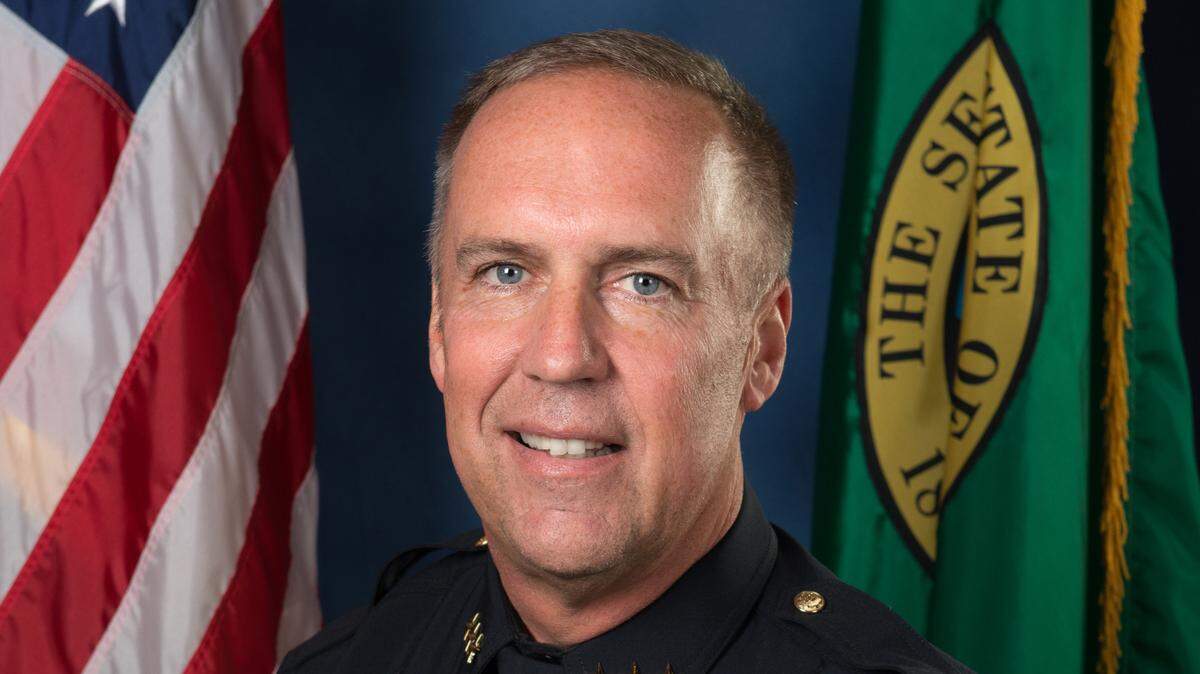
Kelly Busey has been with the Gig Harbor Police Department for over 30 years and has served as chief for the past seven.