
Common thread of all of Huston's activities: Serving the community
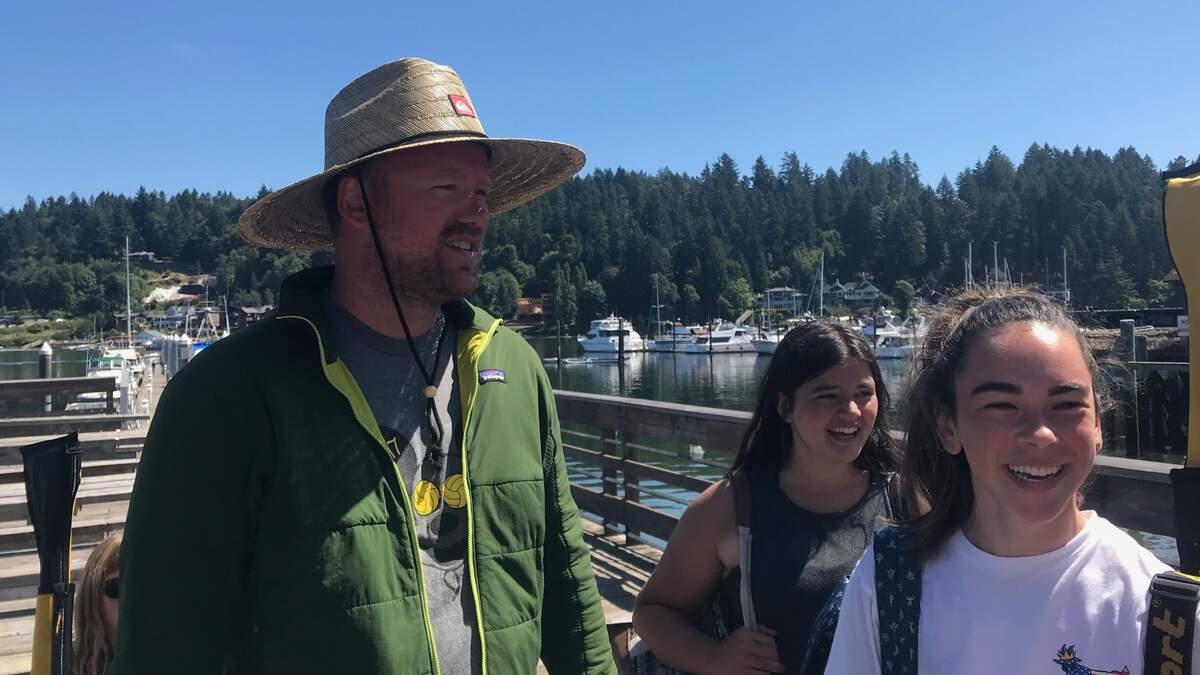
Aaron Huston stays busy and is getting busier.
Huston is a full-time nurse practitioner working at St. Anthony Hospital – CHI Franciscan Health in Gig Harbor. He’s also the head coach of the Narrows Swim Club, a canoe coach for the Gig Harbor Canoe and Kayak Race Team, founder of Team Highlander, a youth Olympic weightlifting club, a chess coach and president of the board of directors for the Peninsula Youth Orchestra.
And let’s not forget, he's the father of three kids, ages 13, 12, and 9.
And the 39-year-old Purdy resident is adding one more thing to his schedule. He’s the head canoe coach for Team USA, a year-round position focused on getting the country’s best competitive canoeists ready for competition, and trying to build the sport throughout the country.
The odd combination of jobs and hobbies is held together by one-common thread: Serving the community — in particular, the community’s youth.
“I don’t want to sound corny, but I honestly believe that service is really important and demonstrating it to my own kids and to everyone — volunteering and serving others is important,” Huston said.
For GHCKRT head coach and founder Alan Anderson, Huston has been a godsend.
“He’s been fantastic,” Anderson said. “I maintain the head coach title — I don’t know why that is. He’s doing all the work.”
This month, Huston is working with some of the nation’s top canoeists, who are in Gig Harbor for training. The athletes are preparing for the Junior Worlds competitions in Bulgaria in late July, USA Canoe/Kayak Sprint Nationals in Oklahoma in August and the Olympic Hopes Regatta in Poland in September.
Huston is out on the water every day, giving one-on-one attention to each paddler. And for the kids from out of town, he’s tasked with airport pickups, making sure the athletes have housing, food, etc.
Being the Team USA canoe coach has no shortage of responsibilities, which is fine by Huston.
“It’s an honor,” he said. “It’s great to be part of a great sport around the country. It’s a really small sport, so it’s a tight-knit community, but it’s growing a lot.”
Huston works night shifts — usually on weekends — at the hospital, from 7 p.m. to 7 a.m. Then it's straight to weight training. Then to the water. Then a break, before afternoon practice. Then in the evening, he coaches swim practice with the Narrows Swim Club.
“It seems to me, the name of the game is providing access to opportunities for kids,” Huston said. “I believe strongly in that, whether that’s chess, basketball, orchestra, paddling or whatever. When there’s a lot of good opportunities for kids, I think that’s really good for the community. That’s kind of where my heart is.”
Part of Huston’s background is in strength training and weightlifting. It’s something he has brought to the GHCKRT.
17-year-old canoeist Ben Gregory said the difference has been obvious. As a 12-year-old, Gregory came into the program weighing 72 pounds.
“I was the tiniest kid,” Gregory said. “I’ve come a long way. It’s been intense. We didn’t do that much strength work before. Now, we do it every day of the week. He has a program that has been working well with a lot of us. It’s been really helpful.”
Huston doesn’t have an extensive competitive paddling background. But what he lacks in that area, he makes up for tenfold with his commitment to be a great coach.
“It’ just the ability to apply yourself and to provide a support system for the athletes — that’s what he’s doing,” Anderson said. “Sure, I can teach you some technique, but I’m there to support your dreams. … He’s fantastic to work with. The team’s survival depends on having people like that, someone that really cares about the kids. He’s always giving back to the community.”
Compared to Europe, paddling is a tiny sport in the United States. If the U.S. wants to compete on the international stage, more clubs like Gig Harbor have to start popping up elsewhere in the country.
“I think it’s important that we realize our potential,” Huston said. “We have great coaches, great athletes, so it’s on us with the national program to kind of put all the pieces together to try to get results. I think once we start getting good results consistently, hopefully we can gain some funding, get some more recognition. We have to build the base of the sport. We need there to be 40 or 50 teams of 70 athletes each for us to get big enough to do really well.”
Huston is hopeful for the future of the country’s canoe and kayak programs.
“We’ve got some really good people in good positions and I’m hopeful for the future,” he said. “It’s just going to take time.”